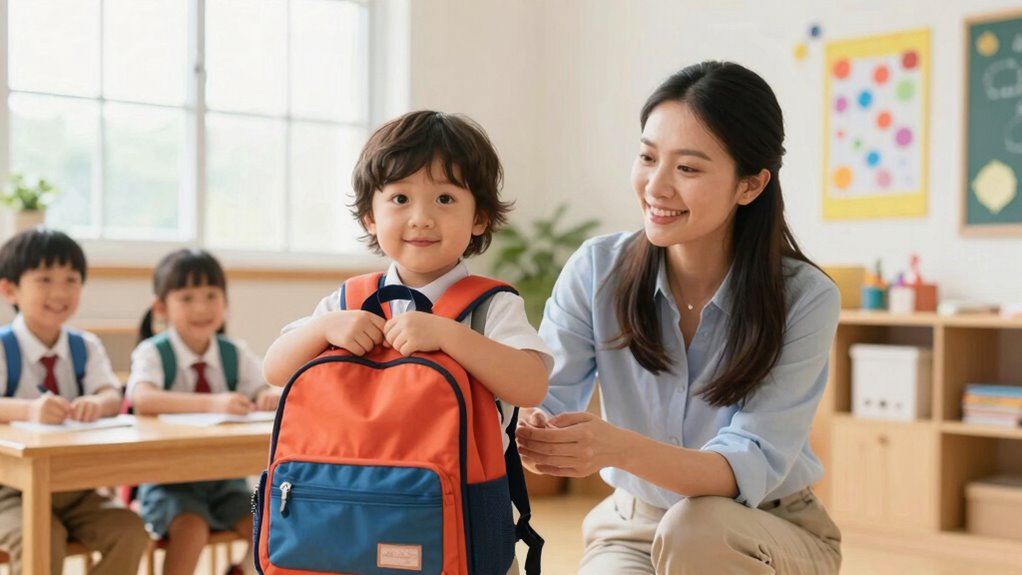

To help your child move smoothly from preschool to kindergarten, start by familiarizing them with the playground and classroom routines, practicing these at home to build predictability. Create a supportive environment by discussing new experiences and encouraging expression of feelings. Establish a comforting goodbye routine, and attend orientation to meet teachers and ask questions. By doing these, you’ll ease their anxieties and boost their confidence. Keep learning more tips to make this change easier for your child.

Turn the school run and nap time into listening time
- Thousands of audiobooks, podcasts and originals
- Listen on your phone, tablet or Echo — also offline
- Cancel anytime
Key Takeaways
- Visit and explore the kindergarten environment beforehand to build familiarity and reduce anxiety.
- Practice daily routines like lining up and putting away belongings to create predictability.
- Encourage children to express feelings and ask questions to normalize emotions and build confidence.
- Establish consistent goodbye routines to provide comfort and reassurance each day.
- Attend orientation and meet teachers early to foster trust and ease the transition process.
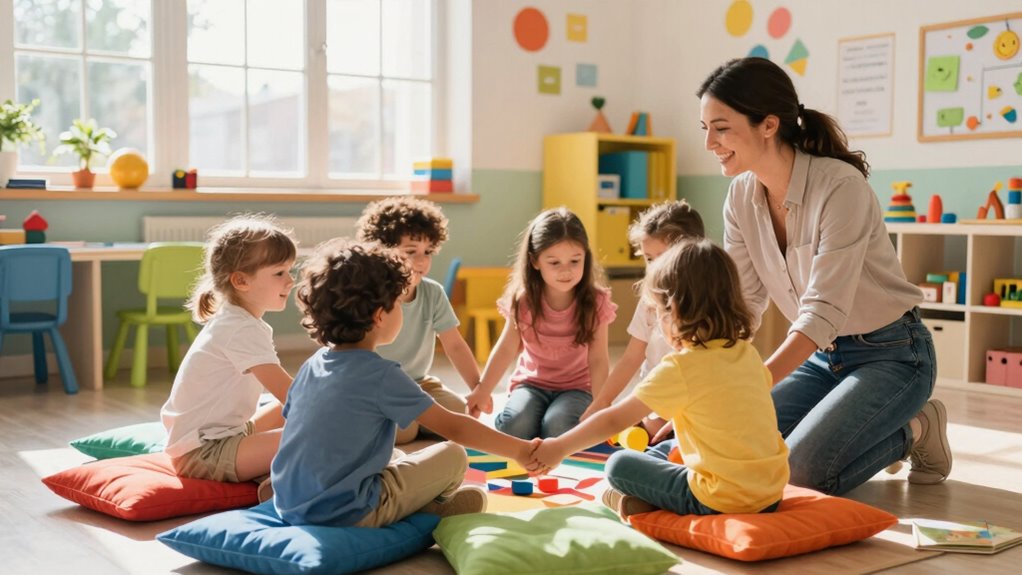
Starting kindergarten is a big milestone for both kids and parents, and a smooth shift can set the tone for a successful school experience. You can help ease your child’s fears by preparing them for the new environment and routines they’ll encounter. One of the most important factors is ensuring they feel confident about their safety, especially on the playground. Talk to them about playground safety rules, like waiting their turn, not pushing others, and watching out for their friends. If possible, visit the school’s playground beforehand so your child can become familiar with the space. When they see that the area is safe and well-maintained, it reduces anxiety and builds trust in their surroundings.
Helping children feel safe on the playground builds confidence and eases anxiety about starting kindergarten.
Establishing clear classroom routines before school starts makes a big difference. Practice daily habits like putting away belongings, lining up quietly, and raising their hand to speak. These routines create a sense of predictability, helping your child feel more in control and less overwhelmed. You might role-play some of these routines at home, so they know what to expect. Reinforcing these habits over time helps your child transition smoothly into the classroom, reducing confusion and fear. Remember, consistency is key—if they know what’s coming next, they’ll feel more secure. Additionally, understanding a safe and engaging environment can significantly boost their confidence and comfort levels. Creating a supportive environment at home by talking about the new experiences can also make a difference in easing their worries. Recognizing the importance of biodiversity and a healthy environment can inspire children to appreciate their surroundings and foster a sense of responsibility early on. Knowing about child development can help parents tailor their support to their child’s specific needs during this transition.
You should also encourage your child to express their feelings and ask questions about kindergarten. Sometimes, children feel nervous because they don’t understand what to expect. Reassure them that it’s normal to feel a little scared and emphasize how exciting it is to make new friends and learn new things. Share stories about your own experiences in school or read books about starting kindergarten to normalize their feelings.
Building a connection between home and school can also ease anxiety. Attend orientation sessions, meet your child’s teacher, and discuss any concerns you have. When your child sees you actively involved, they’ll sense that their new environment is safe and welcoming. Additionally, developing a goodbye routine—like a special hug or wave—gives your child a comforting ritual to look forward to each day. Being aware of educational strategies can help you support your child’s growth and adaptation in this new chapter.
kindergarten transition social story books
As an affiliate, we earn on qualifying purchases.
As an affiliate, we earn on qualifying purchases.
Frequently Asked Questions
How Can I Prepare My Child for an Unfamiliar Classroom Environment?
You can prepare your child for an unfamiliar classroom by practicing classroom routines at home, making them familiar and comfortable. Talk about the daily schedule and what to expect, helping reduce anxiety. Encourage social skills by arranging playdates or role-playing social scenarios, so they feel confident interacting with new peers. Visiting the classroom beforehand can also ease nerves, making the environment more familiar and less intimidating for your child.
What Are Signs My Child Is Experiencing Anxiety About Kindergarten?
Your child’s anxiety might be as obvious as a lighthouse in a storm, showing through clinginess, frequent tears, or complaints about school. They may withdraw from activities or express fears about new environments. Celebrating milestones can boost confidence, while calming routines provide a safe haven amid change. Watch for these signs, and gently reassure your child, helping them feel secure and supported as they navigate their new kindergarten world.
How Do I Talk to My Child About New Teachers and Classmates?
You can help your child by sharing stories about your own positive experiences with new teachers and classmates, making the idea of kindergarten less intimidating. Use role-playing to practice meeting new people and introducing themselves, which builds confidence. Encourage your child to ask questions and express feelings about starting school. Listening and validating their worries helps ease anxiety, making the shift smoother and more exciting for both of you.
When Should I Start Discussing Kindergarten Expectations With My Child?
You should start discussing kindergarten expectations about a month before school begins, planting seeds like a gardener tends to flowers. Use social stories and role-playing to make these conversations engaging, helping your child understand what to expect. This approach eases anxiety by turning the unknown into familiar territory, giving your child confidence to step into kindergarten with a sense of adventure rather than fear.
How Can I Support My Child’s Emotional Needs During Transition?
You can support your child’s emotional needs during this change by fostering trust building and encouraging emotional expression. Listen actively when they share feelings, validate their worries, and reassure them you’re there for support. Create a safe space where they feel comfortable expressing emotions. Establish routines that promote stability, and spend quality time together to strengthen your bond. This approach helps your child feel secure, confident, and ready for kindergarten.
Conclusion
As you prepare your child for this exciting new chapter, remember that patience and reassurance are key. By creating positive experiences and addressing their concerns, you help build their confidence and ease their fears. Isn’t it rewarding to see your little one grow more independent and enthusiastic to learn? With your support and understanding, their shift to kindergarten can become a smooth, joyful journey—setting the stage for a lifetime of curiosity and growth.
Fall Picks
fall essentials
As an affiliate, we earn on qualifying purchases.