
When you choose a mattress height for loft and bunk beds, safety becomes even more important because it affects how easily your child can get in and out, as well as prevent falls. A mattress that’s too thick might make it harder to climb, while one that’s too thin could compromise support and durability. Proper height guarantees the guardrails work effectively and creates a secure sleeping environment. Keep going to discover how to pick the best height for safety and comfort.
Key Takeaways
- Proper mattress height ensures safe access and reduces fall risk when climbing or descending loft and bunk beds.
- Excessive height can interfere with guardrail effectiveness, increasing the chance of falling during sleep or movement.
- Correct mattress height maintains compliance with safety standards for guardrails and bed clearance.
- Adequate mattress thickness supports the child’s safety and comfort, especially in elevated beds.
- Properly chosen mattress height enhances overall stability, preventing gaps and accidents in loft and bunk bed setups.
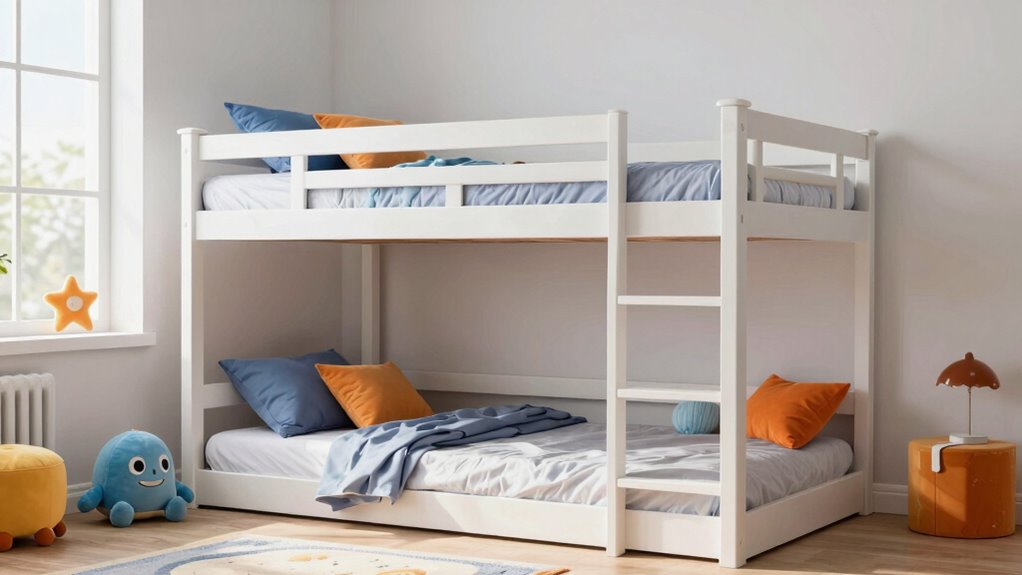
Choosing the right mattress height for your child is more important than you might think, as it directly impacts their safety, comfort, and independence. When it comes to loft and bunk beds, this becomes even more critical. These beds are fun and space-efficient, but they also come with potential risks if not properly designed or used. Making certain the mattress height aligns with safety standards helps prevent accidents, like falls, and promotes a secure sleeping environment. You want a mattress that’s low enough so your child can easily get in and out of bed without risking injury, especially during nighttime movements or emergencies.
Safety standards play a key role in selecting the right mattress height. Many manufacturers produce beds that meet strict safety guidelines, including guardrail height and distance from the mattress to the top of the guardrails. A mattress that’s too thick can make it easier for your child to fall over the rail, increasing injury risk. Conversely, a mattress that’s too thin might compromise comfort and durability, which affects sleep quality over time. You should choose a mattress that strikes a balance: thick enough to provide comfort and support but low enough to keep your child safe. Also, safety standards ensure the materials used are non-toxic and durable, which is essential for children’s health and longevity of the mattress. Additionally, selecting a mattress with appropriate firmness ensures proper spinal support and safety during sleep. Ensuring the mattress material quality is high can also help extend the lifespan and maintain safety over time. Considering durability features in the mattress can help resist the active movements of children and reduce the need for frequent replacements.
Furthermore, selecting a mattress with reinforced edges can improve overall safety, especially in beds used by active children who tend to move around a lot during sleep. A high-quality, durable mattress maintains its shape and support over time, even with frequent use. When selecting a mattress for a loft or bunk bed, look for models with reinforced edges and sturdy materials that won’t sag or wear out quickly. This not only enhances safety but also ensures the mattress remains supportive and comfortable, reducing the need for frequent replacements. Mattress durability also contributes to safety because a worn-out or sagging mattress can create gaps or unstable sleeping surfaces, increasing the risk of falls or discomfort.

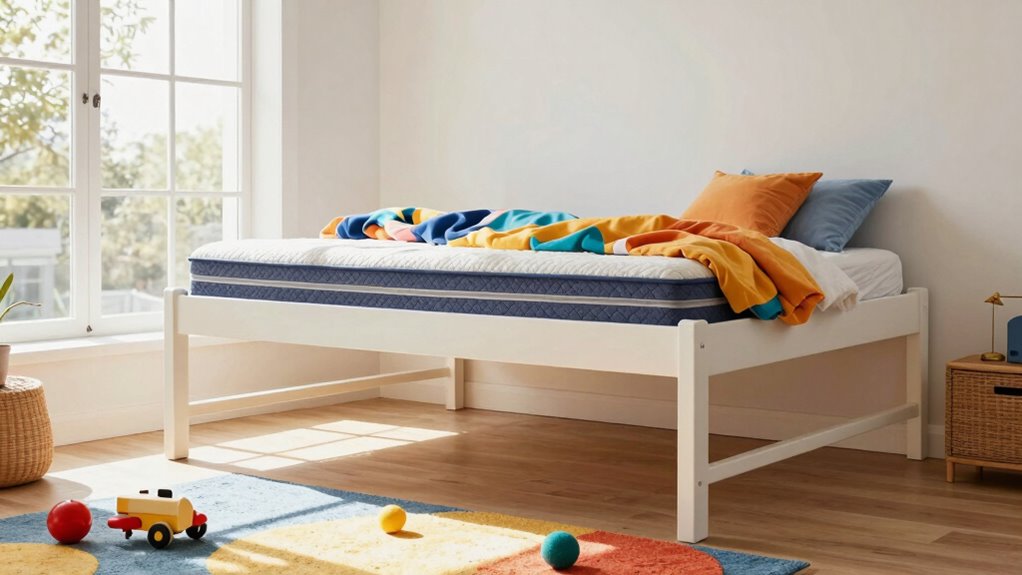
Twin Mattress 5 inch, Medium Firm for Support & Pressure Relief – Cooling Gel Memory Foam – Fiberglass-Free & Certified Safe for Kids – Compatible for Bunk Beds, Daybeds, Trundle (Mattress in a Box)
- Ideal Profile for Bunk Beds: 5-inch support for raised frames
- Cooling Gel Memory Foam: Draws heat away for cool sleep
- Fiberglass-Free & Safe: Certified non-toxic for children
As an affiliate, we earn on qualifying purchases.
As an affiliate, we earn on qualifying purchases.
Frequently Asked Questions
How Do Mattress Height Differences Affect Safety in Loft Beds?
Mattress height differences directly impact safety in loft beds by influencing the risk of falls. You should follow safety regulations and conduct a thorough risk assessment to choose an appropriate mattress height. Higher mattresses may provide more comfort but increase fall risk, especially for active kids. Opt for lower mattresses to enhance safety, and always guarantee guardrails are sturdy and properly installed to prevent accidents.
What Are the Best Mattress Heights for Small Children?
For small children, opt for a mattress height of around 5 to 8 inches, balancing comfort and safety. This height guarantees mattress durability and fits well with most bed frame compatibility, reducing the risk of falls or injuries. You want a mattress that’s sturdy enough to withstand daily use while fitting snugly within the bed frame, especially for loft and bunk beds, where safety is a top priority.
Can Thicker Mattresses Impact Bed Stability?
Thicker mattresses can impact bed stability, especially if they’re too soft or heavy, making them harder to support securely. Your choice of mattress firmness and material matters—firmer options and lighter materials help maintain stability. For loft and bunk beds, avoid overly thick or plush mattresses that could cause imbalance or safety issues. Always check the bed’s weight limit and verify the mattress fits snugly to prevent accidents.
How Does Mattress Height Influence Sleep Quality?
Think of your mattress as the foundation of your sleep castle; the right height keeps your sleep posture steady and your dreams smooth. When mattress height aligns with firmness and your body’s contours, you’re more likely to wake refreshed and pain-free. Too high or low, and you might feel like your sleep is teetering on a tightrope. Choose wisely to create a stable, cozy sleep haven that supports restful nights.
Are There Special Mattress Types Recommended for Loft Beds?
Yes, for loft beds, you should choose mattresses with medium firmness for safety and comfort. Opt for materials like foam or latex, which provide good support without being too soft or too hard. These materials help prevent falls and guarantee your kid stays comfortable throughout the night. Avoid overly plush or soft mattresses, as they can be unsafe in loft beds and may compromise sleep quality.
Conclusion
Choosing the right mattress height for your kid’s loft or bunk bed is like finding the perfect balance on a tightrope—too high, and safety becomes a leap of faith; too low, and comfort takes a nosedive. When you pick wisely, you’re crafting a sturdy castle in the sky, where dreams soar safely and comfortably. So, measure twice, think twice, and build a haven where your child’s imagination can truly take flight.