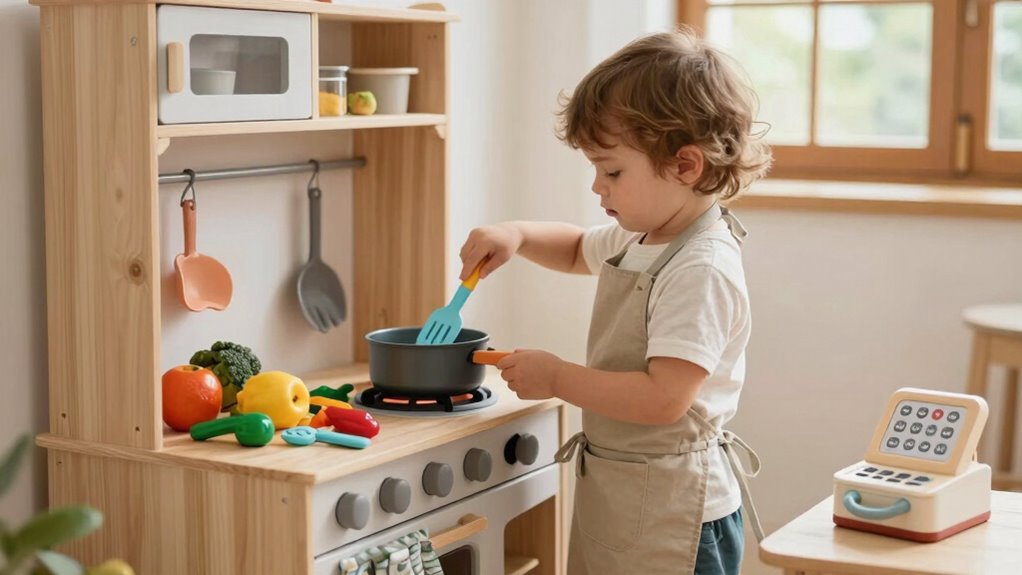

Pretend kitchens teach kids more practical skills than you might expect by encouraging safe handling of utensils, hot surfaces, and sharp objects in a pretend setting. They also develop organization, problem-solving, and confidence as children plan meals and tidy their space. These activities foster responsibility and safety awareness that carry over into real cooking. If you keep exploring, you’ll discover how play can shape their lifelong skills more deeply than you thought.

Turn the school run and nap time into listening time
- Thousands of audiobooks, podcasts and originals
- Listen on your phone, tablet or Echo — also offline
- Cancel anytime
Key Takeaways
- Pretend kitchens develop safety awareness by mimicking real kitchen hazards in a low-stakes environment.
- They enhance organizational and problem-solving skills through sorting, planning, and arranging play items.
- Engaging in imaginative scenarios fosters independence, responsibility, and confidence in handling kitchen tasks.
- Play promotes critical thinking by encouraging children to recognize hazards and practice safety protocols.
- Skills learned during pretend play often transfer to real-life cooking, instilling lasting safety and organizational habits.
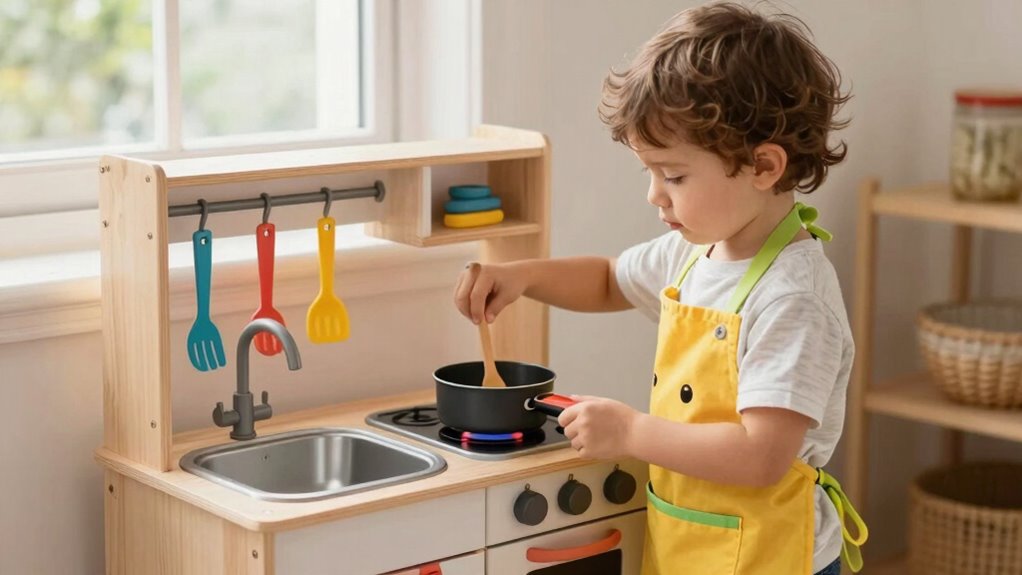
Many children learn valuable life skills by playing with pretend kitchens, turning imaginative play into real-world lessons. As you watch your child “cook” and “serve,” you might not realize how much they’re absorbing about essential kitchen concepts. Pretend kitchens are more than just toys—they’re tools for teaching important skills like cooking safety and kitchen organization that will serve them well in the future. When your child mimics your actions during pretend meals, they start to understand the importance of handling utensils carefully, respecting hot surfaces, and following basic food safety rules. They learn to avoid cross-contamination by “washing” their hands or “cleaning” their pretend cutting boards, mirroring real kitchen habits that keep everyone safe.
Pretend kitchens teach kids safety, organization, and responsibility through imaginative play.
Kitchen organization is another vital lesson your child picks up during imaginative play. In their pretend kitchen, they might sort pots and pans, arrange utensils, or plan a meal, all of which help develop their ability to keep things tidy and understand the importance of a well-organized space. These activities encourage problem-solving as they figure out where each item belongs and how to access what they need quickly. This focus on organization builds foundational skills that will make real cooking less chaotic and more manageable as they grow older. Plus, they start to see how a tidy kitchen isn’t just about aesthetics—it’s about efficiency and safety, reducing the risk of accidents and making meal prep smoother.
You might be surprised how much your child’s pretend play prepares them for real kitchen scenarios. They learn to recognize hazards, like the dangers of hot surfaces or sharp objects, and to handle tools carefully. Because they’re practicing safety rules in a low-stakes environment, they’re more likely to remember and apply them later when cooking with you. Their imaginative play also fosters independence and confidence, as they experiment with different “recipes” and take responsibility for “dinner.” Over time, these lessons become ingrained habits, transforming pretend kitchen activities into genuine skills that will benefit them well beyond childhood. Developing kitchen safety awareness now can have lasting impacts on their ability to navigate real cooking situations safely. Additionally, understanding kitchen ergonomics during play helps children recognize how proper workspace design can prevent accidents and reduce fatigue, which are crucial for safe cooking practices.
In addition, engaging in pretend cooking can help children understand the importance of kitchen safety and proper handling of appliances, which are critical skills for real-life cooking. Creating a safe and organized environment during play helps reinforce the importance of safety protocols, which are often emphasized in practical knowledge and ergonomic workspace design. In the end, playing with pretend kitchens isn’t just about fun. It’s a strategic way to teach safety, organization, and responsibility—lessons that often surpass what parents expect. As you engage with their imaginative scenarios, you’re helping them develop critical skills that will make real-world cooking safer, easier, and more enjoyable. So, next time you see your child “stirring” a pot or “setting” the table, remember that they’re quietly mastering skills that will last a lifetime.
pretend kitchen playset for kids
As an affiliate, we earn on qualifying purchases.
As an affiliate, we earn on qualifying purchases.
Frequently Asked Questions
How Do Pretend Kitchens Influence Children’s Social Development?
Pretend kitchens boost your child’s social development by encouraging role playing scenarios, where they practice sharing, cooperation, and communication. As they interact with peers or adults, they develop essential social interaction skills like taking turns, listening, and expressing themselves. These playful exchanges help your child understand social cues and build confidence, making everyday social situations easier and more natural as they grow.
Are There Specific Age Groups That Benefit Most From Pretend Kitchens?
You’ll find that preschoolers and early elementary kids benefit most from pretend kitchens. During this stage, children engage in role play and imaginative play, which help develop their social, emotional, and cognitive skills. These activities encourage them to imitate real-life scenarios, fostering creativity and problem-solving. As they explore different roles in pretend kitchens, they learn important life skills, build confidence, and improve communication, making this a valuable developmental activity.
Can Pretend Kitchens Help Children Develop Emotional Intelligence?
Yes, pretend kitchens can help children develop emotional intelligence. As you watch them role-play, they practice emotional awareness by recognizing feelings in their characters. They also build empathy development by imagining others’ perspectives, understanding different emotions, and responding appropriately. These activities encourage kids to navigate social interactions more thoughtfully, fostering a deeper understanding of emotions that benefit their overall emotional intelligence and interpersonal skills.
What Safety Considerations Should Parents Keep in Mind?
Think of your pretend kitchen as a mini culinary adventure, but safety’s your secret recipe. Childproof appliances to keep tiny fingers from mishaps, and teach safe cooking practices like washing hands and avoiding sharp objects. Always supervise playtime, ensuring kids stay within safe boundaries. Remember, blending fun with safety creates a delicious experience, transforming pretend play into a secure, educational feast that nurtures both skills and confidence.
How Do Pretend Kitchens Compare to Digital Learning Tools?
You find that pretend kitchens offer hands-on, tactile experiences that digital learning tools like virtual simulations and interactive apps can’t fully replicate. While digital tools provide engaging, visual learning, pretend kitchens foster creativity, social skills, and practical understanding through real-world play. Both have value, but combining them enhances your child’s learning, giving them a well-rounded skill set that prepares them better for real-life situations.
Conclusion
You might be surprised to learn that kids who play with pretend kitchens develop essential skills like problem-solving and teamwork early on. In fact, studies show children engaged in imaginative play are 30% more likely to demonstrate better social skills later. So, next time your child’s cooking up a storm, remember they’re not just having fun—they’re building a foundation for real-life success. Embrace their creativity; it’s more valuable than you think.
Halloween Picks
halloween
As an affiliate, we earn on qualifying purchases.