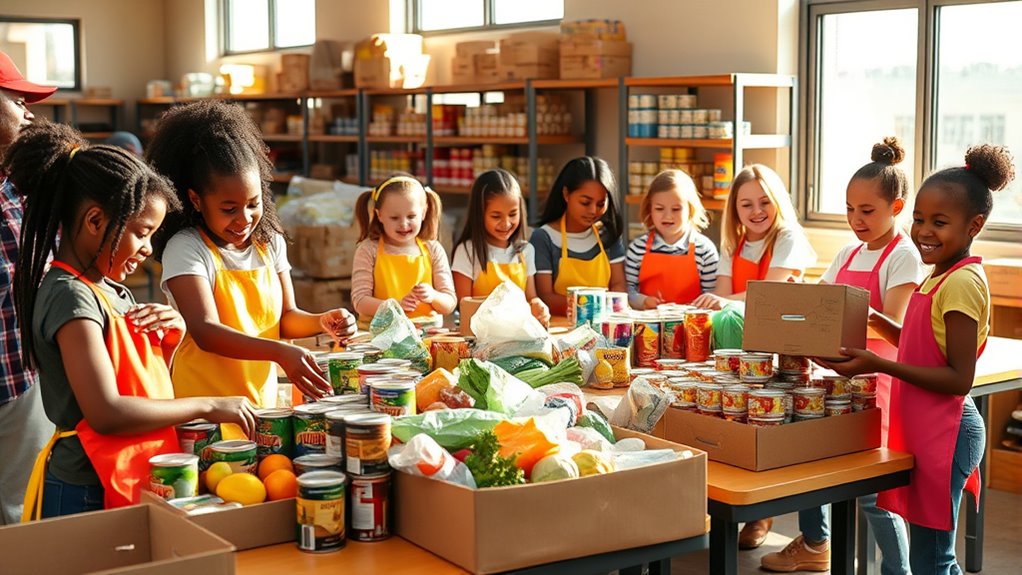

To help kids understand food insecurity, explain how some families can’t always access healthy, nutritious food and show why it matters for growth and health. You can involve them in community activities like volunteering at food pantries, where they see real-life examples of families in need. These experiences foster empathy and awareness, making the issue more relatable. Keep going to discover more ways to teach children about supporting those facing food insecurity.

Turn the school run and nap time into listening time
- Thousands of audiobooks, podcasts and originals
- Listen on your phone, tablet or Echo — also offline
- Cancel anytime
Key Takeaways
- Use simple examples and stories to explain food insecurity’s impact on families and children’s daily lives.
- Teach kids about balanced diets and food groups to emphasize healthy eating choices.
- Involve children in community activities like food drives and pantry visits to provide real-world understanding.
- Organize age-appropriate workshops on nutrition followed by volunteering to connect education with action.
- Encourage ongoing empathy and participation in community efforts to support food security for those in need.

Have you ever wondered how to help kids grasp the reality of food insecurity? It’s a challenging topic, but one that can be made approachable through targeted efforts like nutrition education and community outreach. By teaching children about the importance of proper nutrition and the challenges some families face, you empower them with understanding and empathy. You can start by explaining how not everyone has consistent access to healthy food and why that matters for their growth and development. Using simple, relatable examples helps kids see the impact of food insecurity on people’s lives. Incorporating nutrition education into conversations or activities allows children to learn about balanced diets, food groups, and the significance of nutritious choices. When they understand what makes food healthy, they’re more likely to grasp why those without reliable access struggle to maintain good health.
Teaching kids about food insecurity fosters empathy and understanding through simple explanations and relatable examples.
Community outreach plays a pivotal role in helping kids connect with the real-world implications of food insecurity. Participating in local food drives, volunteering at food pantries, or visiting community centers makes the issue tangible. When children see the lines of families seeking assistance or help pack boxes of food, they realize the scope of food insecurity and feel motivated to contribute. These hands-on experiences foster compassion and a sense of responsibility, transforming abstract concepts into personal understanding. Furthermore, community outreach provides opportunities for children to ask questions and learn directly from those affected, which deepens their awareness and empathy. Introducing nutrition education alongside community service can further enhance their understanding of how proper food choices support health and well-being.
To make these lessons more impactful, you can organize activities that combine nutrition education with community outreach. For example, hosting a workshop where kids learn about healthy eating and then help prepare or distribute food at a local pantry creates a meaningful connection. Such initiatives show children that their actions can make a difference while teaching them about the importance of supporting their community. It’s essential to keep conversations age-appropriate and engaging, emphasizing that food insecurity isn’t just a distant issue but one that touches many lives, including people they might know personally.
Ultimately, helping kids understand food insecurity isn’t just about sharing facts; it’s about inspiring compassion and action. By integrating nutrition education with community outreach, you give children the tools to comprehend this complex issue and motivate them to become active participants in creating positive change. The more they learn and experience firsthand, the more likely they are to develop lifelong empathy and a desire to help those in need.
children's nutrition education books
As an affiliate, we earn on qualifying purchases.
As an affiliate, we earn on qualifying purchases.
Frequently Asked Questions
How Can Children Handle Emotional Responses to Food Insecurity?
You can help children handle emotional responses to food insecurity by teaching them coping strategies like talking openly about their feelings and practicing relaxation techniques. Encourage their emotional resilience by validating their emotions and providing a safe space for expression. Remind them that it’s okay to feel upset, and empower them with tools to manage those feelings. Supporting their emotional strength helps them navigate tough times more confidently and calmly.
What Age Is Appropriate for Kids to Start Volunteering?
You can start volunteering with your kids around age 8 or 10, depending on their maturity and volunteer readiness. Age considerations matter because younger children might find certain tasks overwhelming or unsuitable. By choosing age-appropriate activities, you guarantee they stay engaged and safe. Always assess your child’s comfort level and provide guidance, so they feel confident and enjoy giving back while understanding the importance of helping others.
How Do You Discuss Sensitive Topics Like Hunger With Children?
You might find that discussing hunger sparks empathy development in children, often unexpectedly. Use age-appropriate language to gently introduce the topic, like explaining that some kids don’t have enough food to eat. Keep the conversation honest yet simple, and encourage questions. By approaching it with sensitivity, you help your child understand the issue and foster compassion, all while connecting the topic to everyday actions they can understand and relate to.
Are There Specific Foods Children Should Donate to Pantries?
You should donate nutrient-rich foods like canned beans, vegetables, and fruits, along with non-perishable items such as rice, pasta, and oatmeal. These foods provide essential nutrients kids need for growth and health. Focus on shelf-stable options that are easy to store and distribute, ensuring children in need receive balanced, nourishing meals. Your donations can make a real difference by offering nutritious options for families facing food insecurity.
How Can Families Incorporate Food Insecurity Education Into Daily Routines?
Did you know nearly 1 in 8 Americans face food insecurity? To teach your kids daily, involve them in meal planning and grocery shopping, emphasizing the importance of affordable, nutritious choices. Discuss how some families struggle to access enough food and encourage empathy. Make it a routine to donate leftovers or shop with a purpose, helping your children understand the value of sharing and the reality many families face.
Conclusion
By teaching kids about food insecurity and involving them in volunteer work, you’re shaping compassionate, aware individuals. Imagine a world where everyone understands the struggles others face and actively helps. Isn’t that a future worth working toward? When you encourage your children to volunteer at food pantries, you’re not just helping others—you’re inspiring kindness and empathy that can last a lifetime. Together, you can make a real difference, one act of kindness at a time.
Fall Picks
fall essentials
As an affiliate, we earn on qualifying purchases.