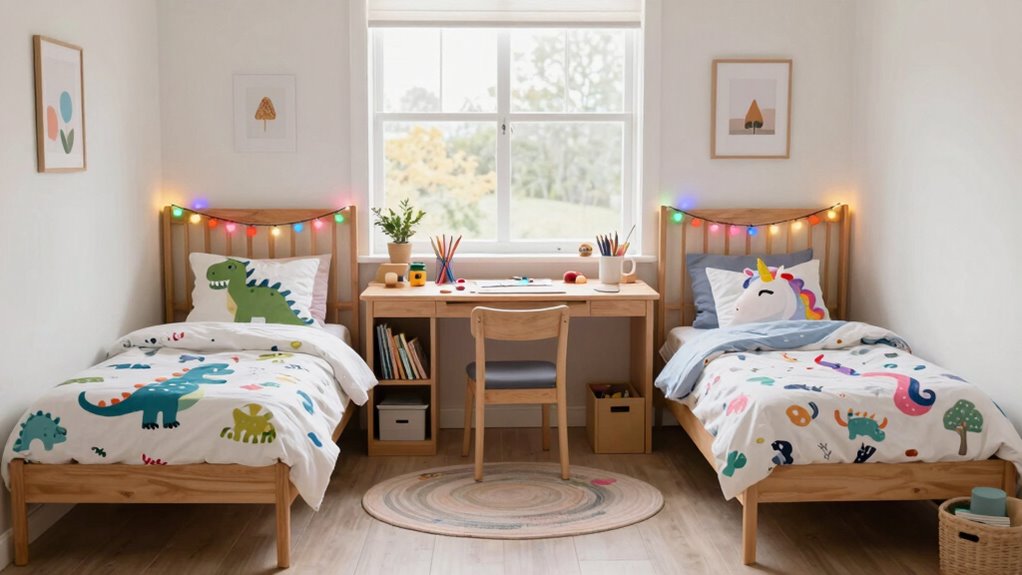

To help kids share a room without constant conflict, establish clear boundaries that respect each child’s privacy and comfort. Use physical markers or personal zones to create designated spaces, and encourage open communication about emotional and physical needs. Develop routines and rules for sharing and noise levels, and teach conflict resolution techniques to handle disagreements calmly. By setting consistent boundaries and fostering respect, you’ll create a peaceful shared space—stay with us for more tips on making it work smoothly.

Turn the school run and nap time into listening time
- Thousands of audiobooks, podcasts and originals
- Listen on your phone, tablet or Echo — also offline
- Cancel anytime
Key Takeaways
- Establish clear boundaries and designate personal spaces with visual markers to promote respect and independence.
- Foster open communication about emotional and physical needs to build mutual understanding.
- Create routines and rules for sharing, noise levels, and responsibilities to reduce conflicts.
- Teach conflict resolution skills and empower children to set boundaries calmly and constructively.
- Regularly reinforce boundaries and respect, encouraging ongoing dialogue to maintain harmony.
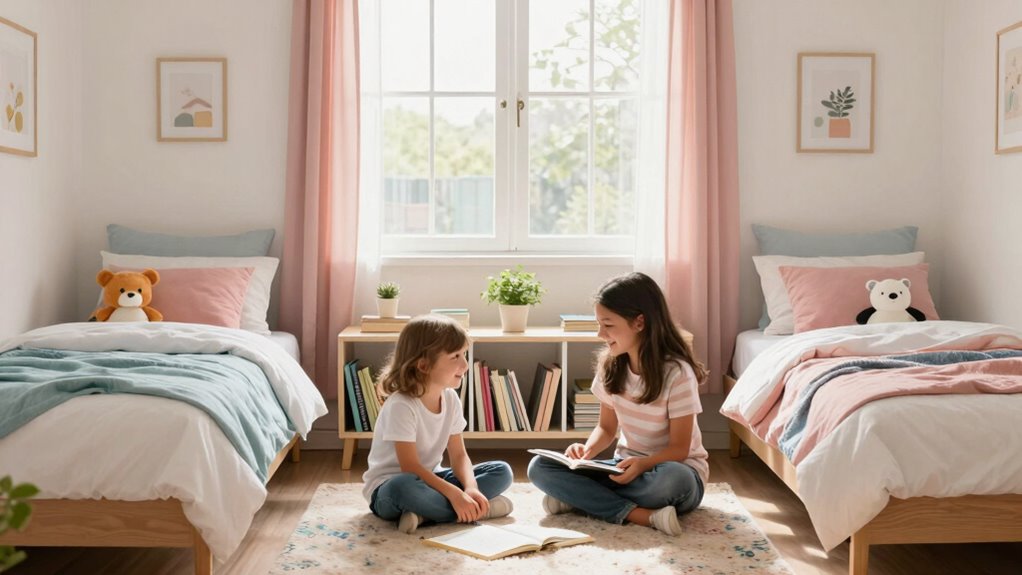
Sharing a room can be a challenging shift for kids, but with the right approach, it can also foster teamwork and friendship. When you’re helping your children navigate sharing boundaries and respecting personal space, it’s essential to start with clear communication. Explain that everyone has different needs for privacy and comfort, and that respecting each other’s boundaries is key to a peaceful shared space. Encourage your kids to express what makes them feel comfortable or uncomfortable, so they understand the importance of mutual respect. Setting these expectations early helps prevent misunderstandings and reduces conflicts down the line. Creating designated zones within the room can also make a big difference. If space allows, assign each child their own area, whether it’s a specific corner, shelf, or bed. This helps establish personal space, which is crucial for kids to feel secure and independent. If the room is smaller, teach your children to establish visual or symbolic boundaries, like using a curtain or a fun marker on the floor, to indicate personal territory. Reinforcing that these boundaries are to be respected fosters a sense of safety and autonomy. It’s helpful to regularly revisit these boundaries, especially if conflicts arise, so everyone keeps understanding what’s expected. Additionally, incorporating biodiversity principles such as respecting different needs and fostering harmony can help children appreciate diversity and cooperation in shared spaces. Teaching your kids about sharing boundaries isn’t just about physical space; it’s also about emotional boundaries. Encourage them to communicate openly if they need alone time or if they’re feeling overwhelmed. Make it clear that it’s okay to ask for a break or to have quiet moments alone, even in a shared room. Respect for personal space extends beyond just physical boundaries—it’s about recognizing and honoring each other’s emotional needs as well. This understanding helps reduce tension and builds empathy between siblings. In addition, help your kids develop routines that promote harmony, like taking turns choosing activities or sharing responsibilities for tidying up. When children understand they are part of a team, they’re more likely to cooperate and respect each other’s space. Consistent rules about noise levels, bedtime, and personal belongings also create a structured environment that minimizes conflicts. Recognizing the importance of shared space management can help children learn how to coexist peacefully and develop important social skills. Furthermore, understanding boundary-setting techniques can empower your children to handle conflicts independently and build their confidence in managing shared spaces. Teaching children about conflict resolution strategies can also be beneficial in helping them navigate disagreements calmly and constructively. Remember, patience is key; adjusting to sharing a room takes time, and setbacks are normal. With ongoing guidance and reinforcement of boundaries, your children can learn to coexist peacefully, turning their shared space into a place of friendship and collaboration.
As an affiliate, we earn on qualifying purchases.
Frequently Asked Questions
How Do I Handle Disagreements Over Personal Belongings?
When disagreements over personal belongings happen, you can teach conflict resolution by encouraging your kids to communicate calmly and respectfully. Help them set clear personal boundaries, like designated spaces for their items. Remind them to listen to each other’s feelings and find compromises. Reinforce that respecting personal boundaries prevents conflicts and promotes harmony. Consistent guidance will help your kids develop healthy habits for managing disagreements about personal belongings.
What if One Child Is Significantly Older Than the Other?
Like a wise old sage once said, “Know thy neighbor,” especially with a significant age gap. You should create designated zones, respecting each child’s privacy needs. Consider separate beds, curtains, or shelves, and establish boundaries. Encourage the older child to be understanding and the younger to respect boundaries. Open communication helps ease tensions, ensuring both children feel valued and secure in their shared space.
How Can I Encourage Kids to Develop Their Own Space?
You can encourage kids to develop their own space by setting clear personal boundaries, like designated areas or storage for each child. Support their individual interests by allowing them to decorate their space with favorite items or hobbies. This fosters a sense of ownership and independence, making them feel secure. Regularly talk about respecting each other’s personal boundaries, helping them understand the importance of maintaining their own space while sharing a room peacefully.
What Are Effective Ways to Establish Shared Routines?
To establish shared routines, you should create clear sharing schedules that outline specific times for each child’s activities. Consistency is key, so stick to routine schedules daily to build predictability and reduce conflicts. Encourage your kids to communicate their needs and opinions about the routines, and adjust as necessary. By maintaining routine consistency, your children learn cooperation and respect for each other’s shared space, making coexistence smoother and more harmonious.
How Do I Prevent Favoritism in Shared Room Arrangements?
To prevent favoritism in shared room arrangements, you focus on promoting sibling bonding and respecting privacy boundaries. Rotate sleeping spots or storage areas so no one feels favored. Encourage equal responsibilities and praise efforts equally. Set clear privacy boundaries with individual spaces or personal items, showing fairness. By fostering open communication and ensuring each child feels valued, you create a balanced environment that minimizes resentment and strengthens sibling relationships.
Conclusion
Sharing a room can be tricky, but with patience and clear boundaries, your kids can learn to coexist peacefully—just like the best of friends from a bygone era. Remember, it’s about fostering respect and understanding, not perfection. Keep communication open, set fair rules, and occasionally remind them of the importance of teamwork. Soon enough, your little pioneers will be steering their shared space with the grace of a well-oiled machine, no matter what the 21st century throws at them.
Halloween Picks
halloween
As an affiliate, we earn on qualifying purchases.