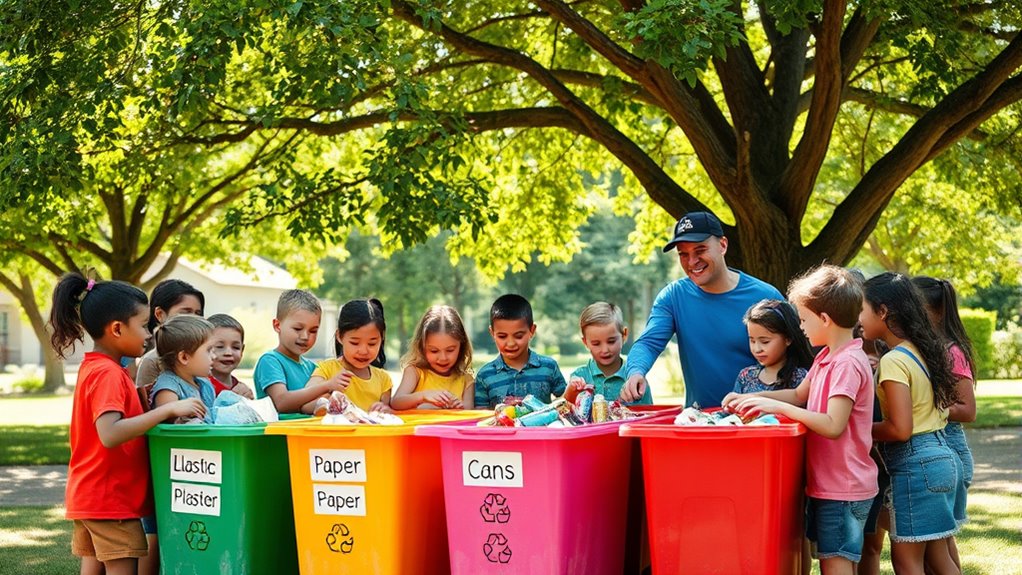

Teaching kids about environmental conservation through recycling helps them develop responsible habits early, making sustainability part of their daily lives. You can involve them in fun activities like sorting waste, creating art from recycled materials, or gardening with compost. Explaining how recycling reduces pollution and conserves resources shows the bigger picture. Encouraging their efforts and celebrating their successes motivates ongoing eco-friendly habits. Keep exploring these ideas, and you’ll discover even more simple ways to make a positive impact together.

Turn the school run and nap time into listening time
- Thousands of audiobooks, podcasts and originals
- Listen on your phone, tablet or Echo — also offline
- Cancel anytime
Key Takeaways
- Incorporate fun sorting games to teach kids how to separate recyclables effectively.
- Use creative projects, like recycling crafts, to demonstrate waste transformation and sustainability.
- Explain how recycling reduces pollution and conserves natural resources to build environmental awareness.
- Engage children in outdoor activities such as cleanup days to connect recycling with broader conservation efforts.
- Praise and motivate kids to develop lasting eco-friendly habits through positive reinforcement and interactive learning.
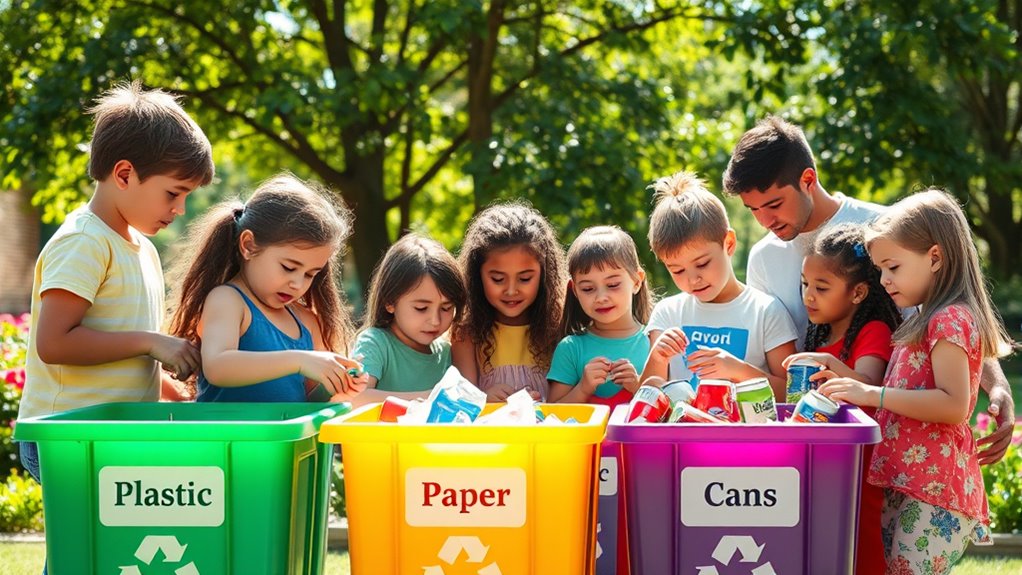
Teaching kids about environmental conservation through recycling is an essential step in fostering responsible habits early on. When you introduce recycling as part of their daily routine, you help instill sustainable habits that can last a lifetime. Children are naturally curious, and by engaging them in eco-friendly activities, you make learning about the environment both fun and meaningful. These activities serve as practical lessons, showing them how their actions directly impact the planet, which encourages a sense of ownership and responsibility.
Teaching kids recycling fosters responsible habits and environmental awareness from an early age.
To start, involve your kids in sorting waste at home. Show them how to separate recyclables like plastics, paper, and glass from trash. Make it a game—perhaps a race to see who can sort the most items correctly or a challenge to create the most organized recycling bin. This not only teaches them about proper waste management but also reinforces the importance of reducing landfill waste. As they practice, they begin to see recycling as an everyday activity, turning it into a natural part of their routine.
Alongside sorting, you can introduce eco friendly activities that highlight the benefits of recycling. For example, you might craft with recycled materials like cardboard boxes or plastic bottles to create art projects or useful household items. These activities demonstrate that waste can be transformed into something valuable, promoting creativity while emphasizing sustainability. You can also plant a garden using compost made from kitchen scraps, showing how organic waste can be reused to nourish plants. These hands-on experiences make the concept of sustainability tangible and relatable for children.
Teaching kids about the positive impact of recycling also involves discussing broader environmental issues in a way they understand. Explain how recycling reduces pollution, conserves natural resources, and saves energy. When you connect their actions to larger environmental benefits, they develop a sense of purpose and motivation to continue eco friendly activities. Reinforcing this message during outdoor activities, such as cleanup days or nature walks, helps them see firsthand how their efforts contribute to a healthier environment. Additionally, introducing them to the importance of natural resource conservation helps deepen their understanding of sustainability.
Finally, praise their efforts and celebrate their achievements in becoming eco-conscious. Recognizing their commitment encourages them to keep practicing sustainable habits. When children see that their actions matter, they’re more likely to develop a lifelong respect for the environment. By making recycling and related activities enjoyable and educational, you set the foundation for responsible environmental stewardship that can benefit both your family and the planet for years to come.
Frequently Asked Questions
How Can I Motivate Reluctant Children to Recycle?
You can motivate reluctant children to recycle by making it fun with creative storytelling and hands-on activities. Share stories that highlight the importance of recycling, making it relatable and exciting. Engage them in activities like crafting with recycled materials or setting up a mini recycling station at home. When they see recycling as a fun, creative process, they’ll be more enthusiastic to participate and develop good habits naturally.
What Are Age-Appropriate Ways to Teach Recycling Concepts?
You can teach recycling concepts through age-appropriate methods like recycling games and eco-friendly crafts. For younger kids, simple matching games or sorting activities make learning fun. Older children enjoy hands-on eco crafts using recyclable materials, which reinforce the importance of recycling. Keep explanations clear and engaging, and encourage questions. By making learning interactive and enjoyable, you help kids understand and remember recycling habits effectively.
How Do I Handle Mixed Waste During Recycling Activities?
When handling mixed waste during recycling activities, you should teach kids simple segregation tips, like sorting recyclables from trash and separating paper, plastic, and metal. Show them proper disposal methods, emphasizing cleanliness and safety. Encourage them to always check for recycling symbols and labels to confirm correct sorting. By actively involving kids in these steps, you help them understand the importance of responsible waste disposal and proper segregation for effective recycling.
Are There Eco-Friendly Rewards for Kids Practicing Recycling?
Yes, you can use eco-friendly rewards to motivate kids practicing recycling. Consider recycling incentives like plant-based stickers, reusable water bottles, or eco-friendly art supplies. These rewards reinforce positive habits while promoting sustainability. By offering eco-friendly rewards, you encourage kids to stay committed to recycling, making the activity fun and meaningful. This approach helps instill lifelong environmental values and demonstrates that caring for the planet can be rewarding.
How Can Schools Effectively Incorporate Recycling Lessons?
Imagine planting seeds of change in a vibrant garden; schools can do this by weaving recycling lessons into daily activities. You can foster community involvement through hands-on projects and organize recycling drives. Integrate eco-friendly topics into the curriculum, making conservation a natural part of learning. This approach not only educates kids but also nurtures their responsibility, helping them become active stewards of the environment.
Conclusion
By teaching kids about recycling, you’re planting the seeds for a greener future. Remember, “A little goes a long way,” and your efforts today shape tomorrow’s world. When children learn to conserve and recycle, they develop habits that last a lifetime. So, keep encouraging their curiosity and responsibility. Together, you’re making a difference—because small actions, when multiplied, create big change. Keep inspiring them, and watch the next generation thrive in a healthier environment.
Fall Picks
fall essentials
As an affiliate, we earn on qualifying purchases.