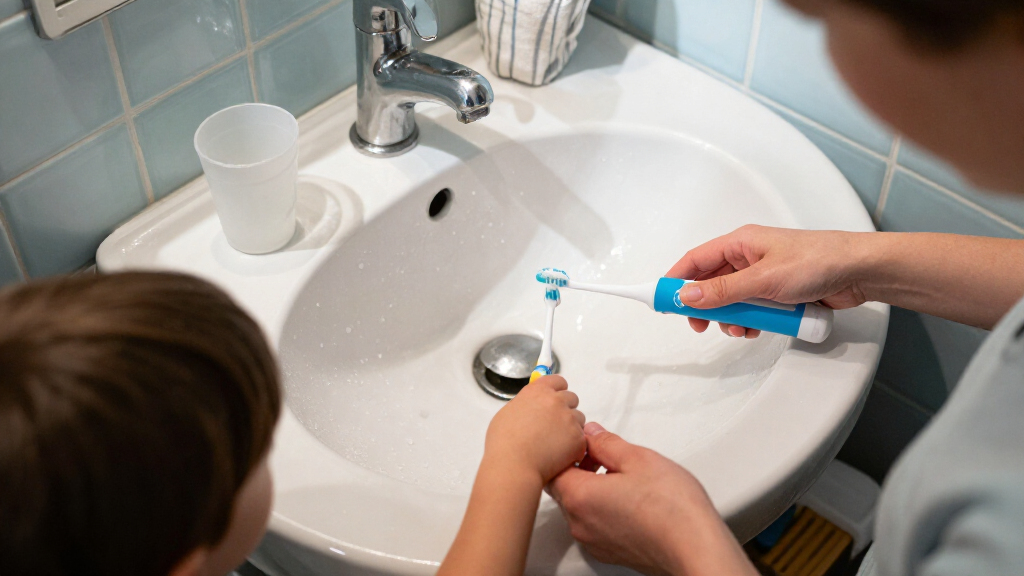
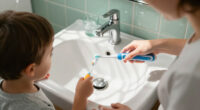
Use this guide to choose a suitable electric toothbrush and help a child brush their teeth safely for two minutes, twice a day. It is for parents and caregivers of children who are learning to brush or need help with brushing. No special dental experience is needed. Plan 5-10 minutes to set up the brush, then about two minutes for each brushing.

Turn the school run and nap time into listening time
- Thousands of audiobooks, podcasts and originals
- Listen on your phone, tablet or Echo — also offline
- Cancel anytime

Philips Sonicare for Kids Electric Toothbrush – Design a Pet Edition
- ✔ Technology: Sonic cleaning
- ✔ Timer: Two minutes
- ✔ Pacing: KidPacer cues

Amazon Basics Kids Battery Powered Toothbrush (2 Count)
- ✔ Age range: 4+
- ✔ Pack count: Two toothbrushes
- ✔ Power source: Battery powered

Colgate Kids Battery Powered Minecraft Toothbrush – Extra Soft
- ✔ Age range: 3+ years
- ✔ Power source: One AA battery
- ✔ Battery: Included
Difficulty: Beginner | Time: 5-10 minutes to set up; 2 minutes per brushing
What You’ll Need
Tools & Materials:
- A child-sized electric toothbrush with a soft-bristle head
- The charger or batteries specified by the manufacturer
- Fluoride toothpaste recommended for the child’s age and local dental guidance
- A sink, cup of water, and towel
Knowledge:
- How to supervise the child while brushing
- The child’s age and any dental advice they have received
Check the brush packaging for its age range and instructions. Ask a dentist or dental hygienist about toothpaste amount, fluoride needs, or brushing adjustments if the child is very young, has braces, has sensitive teeth, or has a health condition that affects brushing.
Philips Sonicare for Kids Electric Toothbrush – Design a Pet Edition
The Philips Sonicare earns our top spot because it addresses a common routine problem directly: children may not brush for long enough or cover their mouth evenly. Its two-minute SmarTimer and KidPacer offer structure during brushing, while two intensity settings let families start with the gentler option. Compared with the Amazon Basics and Colgate brushes, which focus on basic powered brushing, Philips provides more guidance for children who are learning to build a complete routine.That extra support comes with a few practical considerations. The kit uses a USB charger without a wall adapter, so we need a suitable USB power source already available. It also includes one set of brush heads, and the product details do not describe multiple head styles. Reusable pet stickers add personalization, though they may matter less to children who prefer a character theme like Colgate’s Minecraft design. For a family prioritizing brushing cues and rechargeable use, these are manageable tradeoffs; for a child who mainly needs a simple on/off brush, the added features may be unnecessary.
Pros:
- Two-minute timer supports a consistent brushing duration.
- Pacing cues help children move through the routine.
- Gentle and extra-gentle settings offer a choice of intensity.
- USB charging avoids routine disposable battery replacement.
Cons:
- Wall power adapter is not included.
- Only one brush head type is supplied, with additional heads needed separately.
- More features may be unnecessary for children who only need a simple powered brush.
Best for: Families whose child benefits from timing and pacing cues, adjustable gentleness, and rechargeable operation.
Not ideal for: Caregivers who want a complete wall-charging setup in the box, or children who prefer a familiar character theme and minimal features.
Bottom line: We recommend Philips Sonicare for Kids when a timer and pacing support matter more than a character theme or the simplest setup.
“We recommend Philips Sonicare for Kids when a timer and pacing support matter more than a character theme or the simplest setup.”
Amazon Basics Kids Battery Powered Toothbrush (2 Count)
For families who want powered brushing without a more involved routine, the Amazon Basics set is our practical pick. It includes two toothbrushes and AAA batteries, and the one-button operation keeps the controls easy to understand. That makes it a useful alternative to the Philips Sonicare if a child does not need timer cues or intensity choices, or if having a second brush available matters more than personalized settings.The tradeoff is that simplicity also means fewer supports. No timer or pacing feature is listed, so an adult may need to help a child keep brushing long enough. The manufacturer describes oscillating brush-head technology and claims improved plaque removal versus manual brushing; we treat that as a product claim, not an independently verified comparison. Compared with Colgate, this set offers two brushes rather than one and begins at age 4+ rather than 3+. It uses replaceable AAA batteries, which are convenient at first but need replenishing later.
Pros:
- Two toothbrushes are included in the set.
- AAA batteries are included for initial use.
- One-button control is straightforward for children.
- Soft bristles are described as gentle on gums.
Cons:
- Replacement AAA batteries are needed after the included set.
- No timer or pacing cues are listed.
- The stated age range begins at 4+.
Best for: Families looking for two uncomplicated battery-powered brushes for children aged 4 and up.
Not ideal for: Children who need built-in timing prompts, adjustable intensity, or a brush designed for the youngest age guidance in this lineup.
Bottom line: We’d choose Amazon Basics when two simple brushes and easy operation matter more than built-in coaching features.
“We’d choose Amazon Basics when two simple brushes and easy operation matter more than built-in coaching features.”
Colgate Kids Battery Powered Minecraft Toothbrush – Extra Soft
Colgate is the most beginner-friendly match for a younger child in this comparison: its listed age guidance starts at 3 years and up, and the small vibrating head pairs with extra-soft bristles. The Minecraft design may also give a fan an appealing reason to reach for the brush. Its flat-laying handle is a small but useful detail for caregivers: the brush can stay put while toothpaste is applied, rather than rolling off the counter.Compared with Philips, Colgate has no listed timer, pacing cues, or intensity settings, so it offers less help with the brushing routine itself. Compared with Amazon Basics, its age range begins earlier and it specifies extra-soft bristles, but the package includes one brush rather than two. The included AA battery makes it ready for initial use, though continued use means replacing it. This is a focused choice for a young Minecraft fan who wants a simple powered brush; families seeking rechargeable power or brushing prompts should look to Philips instead.
Pros:
- Age guidance starts at 3+ years.
- Extra-soft bristles are designed for gentle brushing.
- Minecraft styling may appeal to children who enjoy the theme.
- Flat-laying handle helps keep the brush steady during toothpaste application.
Cons:
- Replacement AA batteries are needed after the included battery.
- No timer or pacing feature is listed.
- The pack contains one brush.
Best for: Children aged 3 and up who like Minecraft and may respond to a compact brush with extra-soft bristles.
Not ideal for: Families wanting timer guidance, rechargeable power, adjustable intensity, or a two-brush pack.
Bottom line: We’d pick Colgate for a younger Minecraft fan who needs an approachable, extra-soft powered brush more than built-in brushing coaching.
“We’d pick Colgate for a younger Minecraft fan who needs an approachable, extra-soft powered brush more than built-in brushing coaching.”
As an Amazon Associate we earn from qualifying purchases.
Before You Start
Keep brushing gentle. An electric brush does the cleaning motion; the child or caregiver should guide it slowly from tooth to tooth without scrubbing or pressing hard. Young children need hands-on help. Supervise until the child can brush thoroughly and spit out toothpaste reliably; your dental professional can advise when to reduce help.
Do not share toothbrush heads. Replace a head when the bristles look frayed or as the manufacturer recommends. Follow the product instructions for charging, cleaning, and water exposure.
Step-by-Step Instructions
Step 1: Choose a child-sized brush
Select a toothbrush labeled for the child’s age, with a small head and soft bristles. Check that the handle is comfortable for the child to hold and that replacement heads are available. If the child dislikes vibration or sound, choose a model with a gentler setting or let them try the brush while it is switched off first.
Tip:A child may use a manual brush if an electric one feels uncomfortable. Ask a dental professional for help choosing if the child has specific dental needs.
Check: The brush fits the child’s mouth comfortably, and the child can tolerate holding it near their teeth.
Step 2: Prepare the brush
Charge the handle or insert the batteries as directed. Rinse the brush head, then attach it securely. Put a small amount of age-appropriate fluoride toothpaste on the bristles, following the toothpaste label and the child’s dental advice. For young children, have an adult dispense the toothpaste.
Tip:Do not let a young child eat toothpaste from the tube or brush. Keep toothpaste out of reach between uses.
Check: The head is firmly attached, the brush is powered, and the toothpaste amount follows the child’s age guidance.
Step 3: Position the child and brush
Position the child standing or sitting where you can see their teeth, using a mirror if helpful. Ask them to close their lips around the brush head lightly. Place the bristles against the outer surfaces of the teeth near the gumline, without pushing into the gums.
Tip:For a younger child, stand behind them and gently support their hand or guide the handle yourself. Keep the brush head inside the mouth before switching it on to reduce splatter.
Check: The child is steady, you can see the teeth being brushed, and the bristles touch the teeth gently.
Step 4: Brush the outer surfaces
Switch on the brush and guide it slowly from one tooth to the next along the outside of the upper teeth, then the lower teeth. Pause briefly at each tooth and follow the brush maker’s instructions for its angle and movement. Let the brush do the work; do not scrub back and forth.
Tip:If the brush has a two-minute timer or interval signal, use it to pace the brushing. Keep the child’s lips relaxed so you can reach the back teeth.
Check: The brush has visited every outer tooth surface, including the teeth at the back, without forceful pressure.
Step 5: Brush the inner and chewing surfaces
Move the brush to the inner surfaces of the upper and lower teeth, guiding it along each tooth. Then brush the chewing surfaces of the back teeth. Ask the child to open wider or tilt their head as needed so you can reach the molars. Keep the movement slow and controlled.
Tip:The inside of the front teeth can be easy to miss. Turn the brush vertically if the manufacturer’s instructions allow and guide it gently along those surfaces.
Check: You have brushed the inner surfaces and the chewing grooves of the back teeth, as well as the outer surfaces.
Step 6: Brush for the full two minutes
Continue brushing until the timer reaches two minutes, or use a timer if the brush does not have one. Divide the time between the upper and lower teeth and all three surfaces: outer, inner, and chewing. Brush the tongue gently if the child is comfortable doing so.
Tip:Stay with the child throughout the routine. Praise steady effort and a complete routine rather than brushing speed or pressure.
Check: The brushing session lasts two minutes and covers all tooth surfaces on both sides of the mouth.
Step 7: Finish and care for the brush
Have the child spit out the toothpaste. Follow local dental guidance about rinsing; many dental professionals advise spitting without rinsing so fluoride remains on the teeth. Rinse the brush head under clean running water, switch off the handle, and store the brush upright where it can air-dry without touching other brush heads.
Tip:Do not store a wet brush in a closed container for everyday use. Follow the manufacturer’s instructions if the handle or charger needs special care.
Check: The child has spat out the toothpaste, and the clean brush is upright and drying in a suitable place.
Common Mistakes to Avoid
- Pressing hard or scrubbing with the electric brush. — Guide the bristles gently over each tooth and let the powered brush do the cleaning. Use a pressure indicator if the model has one.
- Brushing only the front teeth or stopping before two minutes. — Follow a consistent route through outer, inner, and chewing surfaces. Use the timer or a separate two-minute timer.
- Using too much toothpaste or allowing a young child to swallow it. — An adult should dispense the age-appropriate amount and supervise brushing and spitting.
- Sharing a brush head or keeping a frayed head in use. — Give each person their own head and replace it when worn or at the interval stated by the manufacturer.
Troubleshooting
Problem: The child is upset by the vibration or sound.
Solution: Let the child handle the brush while it is off, then try a brief turn-on outside the mouth. Consider a gentler mode or a manual brush, and ask a dental professional for suggestions if the discomfort continues.
Problem: The brush splatters toothpaste.
Solution: Use a smaller age-appropriate amount, keep the head inside the mouth before switching it on, and have the child lean slightly over the sink.
Problem: The child misses back teeth or the inside surfaces.
Solution: Use a mirror, slow the route, and guide the handle so the head reaches each area. Continue hands-on supervision until the child can cover all surfaces.
Problem: The brush stops working or will not charge.
Solution: Check the battery or charging instructions, confirm the handle is seated correctly on the charger, and inspect the head connection. Use a manual brush until the electric brush works; contact the manufacturer if the issue persists.
What Success Looks Like
The child’s teeth have been brushed gently for two minutes, covering the outer, inner, and chewing surfaces of the upper and lower teeth. The child has spat out the toothpaste, and the rinsed brush is stored upright to air-dry. Repeat the routine morning and evening, or follow the schedule given by the child’s dental professional.
Next Steps
Keep the brush and toothpaste accessible to the supervising adult, and make brushing part of the child’s morning and bedtime routine. Check the bristles regularly and replace the head according to the manufacturer’s guidance or sooner if it becomes frayed. Bring questions about toothpaste, brushing technique, or persistent sensitivity to the child’s next dental appointment.
Frequently Asked Questions
At what age can a child use an electric toothbrush?
Use a brush labeled for the child’s age and follow its instructions. Children can use an electric brush when they can tolerate it, but young children still need an adult to guide and supervise brushing.
How much toothpaste should I use?
Use the amount recommended for the child’s age by local dental guidance and the toothpaste label. Ask the child’s dentist if you are unsure, especially for a very young child or one with particular fluoride needs.
Should a child rinse after brushing?
Follow your dentist’s advice and local guidance. Many dental professionals recommend spitting out toothpaste without rinsing, so fluoride stays on the teeth longer.
How often should I replace the toothbrush head?
Follow the manufacturer’s replacement schedule and change the head sooner if its bristles become frayed or damaged.
Can my child brush without help?
Stay close and check the child’s technique until they can reliably reach every surface and spit out toothpaste. Ask the child’s dentist when the child is ready for less supervision.