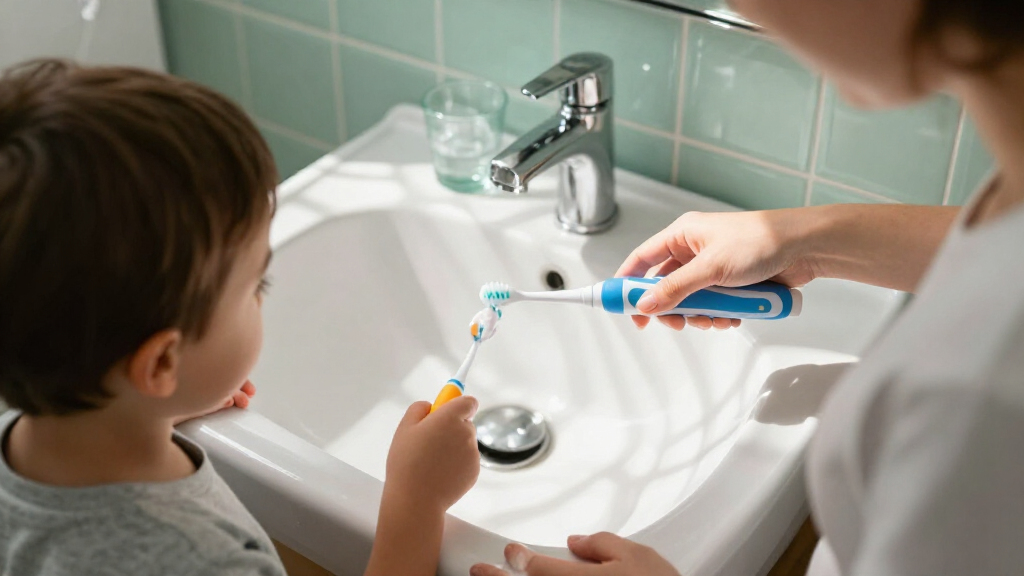
Choosing a kids’ electric toothbrush usually comes down to a practical tension: should brushing feel gentle and familiar, or should the brush guide a child to clean one tooth at a time? Sonic kids’ brushes vibrate a longer head across several teeth, while rotating-oscillating models use a compact round head designed to work tooth by tooth. Either type can support a good routine when the child uses it properly with an age-appropriate brush head and adult guidance. Sonic models may suit children who dislike a round head or strong brushing sensation; rotating models may help children who need a clear, structured brushing motion. The right choice depends less on a sweeping claim that one technology cleans better and more on comfort, technique, replacement costs, and whether the child will use it consistently.

Turn the school run and nap time into listening time
- Thousands of audiobooks, podcasts and originals
- Listen on your phone, tablet or Echo — also offline
- Cancel anytime

Philips Sonicare for Kids Electric Toothbrush – Design a Pet Edition
- ✔ Technology: Sonic cleaning
- ✔ Timer: Two-minute SmarTimer
- ✔ Brushing cues: KidPacer

Colgate Kids Battery Powered Minecraft Toothbrush – Extra Soft
- ✔ Age range: 3+ years
- ✔ Brush-head action: Vibrating/oscillating
- ✔ Bristles: Extra soft

Amazon Basics Kids Battery Powered Toothbrush (2 Count)
- ✔ Age range: 4+
- ✔ Power source: Battery powered
- ✔ Battery type: AAA
At a Glance
| Criteria | Sonic kids’ electric toothbrushes | Rotating-oscillating kids’ electric toothbrushes | Winner |
|---|---|---|---|
| Brushing motion and technique | Fast vibration across a longer brush head; brush slowly over tooth surfaces. | Small round head rotates and oscillates; guide it tooth by tooth rather than scrubbing. | Depends |
| Comfort and sensory feel | Often feels like a light buzz; sensation varies by model and child. | Distinct movement around each tooth can feel more noticeable to some children. | Depends |
| Ease of use for children | Familiar sweeping motion, though the child still needs to cover all surfaces methodically. | The small head provides a clear target, but the child must move it across every tooth. | Depends |
| Replacement heads and ongoing cost | Heads and prices vary by brand; check availability and recurring cost before buying. | Replacement heads are often brand-specific; ongoing cost and local availability vary. | Depends |
| Timers and coaching features | Some models include a two-minute timer, pacing prompts, or app features; others are simple. | Some models offer timers, pressure alerts, or app features; these are not universal. | Depends |
| Best fit by age and brushing needs | Can suit children who prefer a broader head or find round heads uncomfortable. | Can suit children who benefit from a defined tooth-by-tooth routine. | Depends |
Philips Sonicare for Kids Electric Toothbrush – Design a Pet Edition
When a child needs help sticking with the routine, built-in timing and pacing make this Philips model our most complete option. Its SmarTimer encourages a full two-minute session, while KidPacer provides cues during brushing; together, these features offer more structure than the simple on/off operation described for Amazon Basics or Colgate Minecraft. That difference matters for families whose main challenge is getting through the whole routine rather than simply getting a child interested in starting.The gentle and extra-gentle settings also give caregivers a choice in how the brush feels, and the compact rubberized head is described as designed for children. Reusable pet stickers offer a personalization angle, though Colgate’s Minecraft theme may appeal more to a child already attached to that game. Philips uses a USB charger instead of disposable batteries, but the wall adapter is not included, so families need a suitable USB power source. The kit includes one set of heads, and the listed details do not establish how readily compatible replacements can be found. Compared with the two battery-powered picks, this is the most guided routine, with a little more charging setup to manage.
Pros:
- SmarTimer supports a full two-minute brushing session.
- KidPacer provides cues during brushing.
- Two intensity settings offer gentle and extra-gentle options.
- USB charging avoids ongoing disposable-battery replacement.
Cons:
- Wall power adapter is not included.
- The kit provides one set of brush heads, and replacement details are not specified.
Best for: Children who benefit from reminders to brush for two minutes and pacing cues, with an adult available to arrange USB charging.
Not ideal for: Families who want a complete wall-charging setup in the box, or shoppers who prioritize multiple included brush heads.
Bottom line: Pick Philips Sonicare when built-in timing and pacing matter more to your child’s routine than the simpler setup of a battery-powered brush.
“Pick Philips Sonicare when built-in timing and pacing matter more to your child’s routine than the simpler setup of a battery-powered brush.”
Colgate Kids Battery Powered Minecraft Toothbrush – Extra Soft
For a child who is just moving into an electric brush, the stated age range of 3+ gives this Colgate a clear point of difference: the other two descriptions start at age 4 or provide no age range. Its small vibrating head and extra-soft bristles are positioned for gentle cleaning, while the flat-laying handle is a practical touch when toothpaste is being applied. It is a more beginner-oriented package than Philips Sonicare, which offers more brushing prompts but also asks families to manage USB charging.The Minecraft theme can make the brush feel more inviting to a child who likes the game, though a character design alone cannot guarantee consistent brushing. Compared with Amazon Basics, Colgate adds a specified extra-soft bristle feel and a handle that will not roll away as easily. Both are battery-powered and use a straightforward switch, so neither has the timer and pacing support listed for Philips. An AA battery is included for getting started, but continued use means keeping replacements on hand. Choose it for its younger-age fit and approachable design; skip it if your child needs more help with brushing duration or you want a rechargeable model.
Pros:
- Specified for children ages 3 and up.
- Extra-soft bristles and a small vibrating head are designed for gentle use.
- Flat-laying handle helps keep the brush from rolling while applying toothpaste.
- Includes one AA battery for initial use.
Cons:
- Requires replacement AA batteries after the included battery is used.
- No timer or pacing feature is listed.
Best for: Children ages 3 and up who may respond to a familiar Minecraft design and need a simple, extra-soft electric brush.
Not ideal for: Families seeking a timer, pacing prompts, rechargeable power, or features beyond a basic on/off routine.
Bottom line: Choose Colgate Minecraft for its younger stated age fit and easygoing design, while recognizing that it offers less routine guidance than Philips Sonicare.
“Choose Colgate Minecraft for its younger stated age fit and easygoing design, while recognizing that it offers less routine guidance than Philips Sonicare.”
Amazon Basics Kids Battery Powered Toothbrush (2 Count)
Amazon Basics takes the simple, shared-household approach: the pack contains two battery-powered brushes, so siblings can each have one or a family can keep a spare. AAA batteries are included, and a one-button control keeps the basic operation easy to understand. That straightforward setup is its main appeal next to Philips Sonicare, whose timer, pacing cues, and intensity options serve families looking for more coaching.The brush uses an oscillating head and soft bristles, with the supplied description claiming up to 70% better plaque removal than a manual brush. We treat that as the product’s stated comparison rather than independent evidence. Its listed age range begins at 4+, so Colgate is the more clearly specified choice for a younger child. Amazon Basics gives families two brushes in one pack, but its details do not mention a timer, multiple intensity settings, or a themed design to motivate a reluctant brusher. Once the included AAA batteries run out, replacements are needed. This is the most sensible fit when uncomplicated use and having two brushes matter more than personalization or built-in brushing guidance.
Pros:
- Two toothbrushes are included in the pack.
- AAA batteries are included for initial use.
- One-button operation keeps controls uncomplicated.
- Soft bristles and an oscillating head are described for children’s brushing.
Cons:
- Replacement AAA batteries are needed after the included set.
- The listing does not specify a timer or pacing cues.
- Packaging may differ from the product image.
Best for: Families with children ages 4+ who want two basic electric brushes in one pack, such as for siblings or a spare.
Not ideal for: Younger children, or families looking for a timer, pacing cues, rechargeable charging, or an engaging character design.
Bottom line: Choose Amazon Basics when two uncomplicated brushes are the priority and your child is within its stated 4+ age range.
“Choose Amazon Basics when two uncomplicated brushes are the priority and your child is within its stated 4+ age range.”
As an Amazon Associate we earn from qualifying purchases.
Key Differences
The clearest difference is the brushing motion. A sonic brush has a longer head that vibrates rapidly, so children guide it along the teeth and gumline in small, deliberate movements. A rotating-oscillating brush has a compact round head that is placed against one tooth at a time. This makes the technique more explicit, but it also means the child needs to remember to move across every tooth and surface. Neither mechanism removes the need for supervision or careful coverage.
Comfort and consistency can outweigh the mechanism. Some children prefer the familiar shape and broad contact of a sonic head; others like the small target and steady rhythm of a rotating model. Noise, vibration strength, handle size, and bristle softness differ between products, so technology labels alone cannot predict what a particular child will tolerate. Features such as timers can help keep brushing long enough, but they do not correct missed areas by themselves.
Value depends on ownership over time, not just the checkout price. Compare replacement-head cost and availability, since a low-priced handle can become less appealing if compatible heads are costly or hard to find. A premium brush may be worthwhile when a child benefits from coaching or a routine cue and actually uses it. If extra features go unused, a simpler model with a comfortable head and affordable refills is usually the more sensible purchase.
Detailed Comparison
Brushing motion and technique (moderate difference)
Sonic brushes move a longer head across several teeth with slow, guided passes; rotating-oscillating brushes invite a tooth-by-tooth approach. The rotating style has a moderate practical advantage for children who need a concrete target for each movement, while sonic may feel more natural to children already comfortable with a sweeping technique. Neither is a substitute for covering the outer, inner, and chewing surfaces.
Comfort and sensory feel (moderate difference)
There is no reliable universal comfort winner. A sonic brush’s buzzing sensation may feel gentle to one child and irritating to another; a round head can feel precise to some and unfamiliar to others. The difference is moderate when sensory preferences affect whether brushing happens at all. If possible, prioritize a child’s tolerance, soft bristles, and a suitable head size over the technology label.
Ease of use for children (minor difference)
The round head on a rotating model can make placement intuitive, but children must move it methodically from tooth to tooth. A sonic brush covers a wider area per pass, though it still requires deliberate movement and attention to all surfaces. This is a minor, child-dependent difference: dexterity, patience, and adult help matter more than the mechanism alone.
Replacement heads and ongoing cost (moderate difference)
Neither type has a built-in value advantage: refill prices, compatible options, and stock vary by brand and location. Both may rely on model-specific heads, so confirm the exact replacement head and its price before purchase. The difference is moderate over years of use, especially if the brush is shared across siblings or the preferred head is not easy to find.
Timers and coaching features (minor difference)
Both categories include basic and feature-rich models. A two-minute timer or quadrant pacing cue can help build a routine; app tracking, lights, or character themes can motivate some children but may distract others. There is no category-wide winner, and the difference is minor unless a particular prompt solves a real brushing problem. Check the features of the specific model rather than assuming they come with its brush type.
Fit for a child’s brushing needs (moderate difference)
Sonic is a reasonable first pick if a child prefers a longer head or dislikes the distinct contact of a round one. Rotating-oscillating is a reasonable first pick if the child benefits from focusing on one tooth at a time. The gap is moderate when one format clearly improves comfort or coverage, but otherwise a trial based on the child’s preference is more useful than a general ranking.
Sonic kids’ electric toothbrushes: Pros and Cons
Pros:
- Longer head may feel familiar to children used to a manual brush.
- Broad, guided passes can suit children who dislike a tooth-by-tooth routine.
- Some models offer timers and age-focused designs.
Cons:
- Children still need to move the brush carefully and cover every surface.
- Buzzing can bother children who are sensitive to vibration or sound.
- Head size and replacement costs vary; the brush type alone does not guarantee affordable refills.
Rotating-oscillating kids’ electric toothbrushes: Pros and Cons
Pros:
- Small round head gives a clear target for tooth-by-tooth brushing.
- A defined placement routine may help some children build consistency.
- Many models offer timers or other coaching features.
Cons:
- The distinct movement and round head may feel uncomfortable to some children.
- Children must remember to move across each tooth and surface.
- Replacement heads may be brand-specific, so ongoing cost and availability need checking.
Who Should Choose What
Choose Sonic kids’ electric toothbrushes if:
- Your child prefers a longer brush head or is more comfortable with a familiar sweeping motion.
- A round head or tooth-by-tooth approach frustrates your child.
- You find a sonic model with soft, age-appropriate heads that are easy to replace.
Choose Rotating-oscillating kids’ electric toothbrushes if:
- Your child responds well to a clear one-tooth-at-a-time routine.
- A small brush head is easier for your child or caregiver to position.
- You have checked that the model’s replacement heads are affordable and readily available.
Skip both if: Skip both electric types if your child will not tolerate their vibration or movement; a comfortable age-appropriate manual brush and guided brushing can be a better fit. Ask a dental professional for advice if brushing is painful or there are specific dental needs.
Value for Money
Pay more only when the additional feature addresses a real need. A timer or pacing cue can be worth paying for if it helps your child keep brushing and move through the mouth; a connected app or themed handle is poor value if it adds cost without improving the routine. Compare the handle price with replacement-head cost and availability over time. The better value is the model your child accepts, with refills you can keep buying—not automatically the cheaper technology or the feature-heavy one.
Final Verdict
There is no sound basis for declaring sonic or rotating-oscillating brushes the best choice for every child. Choose sonic when your child prefers a longer head and broader guided passes; choose rotating-oscillating when a tooth-by-tooth target makes brushing easier to organize. The biggest deciding factor is whether the child can tolerate and consistently use the brush while covering every surface. Before buying, check age guidance, head size, refill cost, and availability. If neither electric style feels comfortable, a manual brush with adult support is a sensible choice.
Frequently Asked Questions
Do sonic or rotating kids’ toothbrushes clean better?
The brush type alone does not establish which will clean better for a particular child. Technique, coverage, comfort, and regular use all matter. Pick the style the child can use consistently and follow the product’s age guidance.
Is a rotating-oscillating brush easier for a child to use?
It can be easier for a child who benefits from placing a small head on one tooth at a time. It still takes patience to move around every tooth and clean all surfaces. Another child may find the longer sonic head simpler to guide.
Are electric toothbrushes suitable for young children?
Suitability depends on the specific product’s age guidance and the child’s comfort and coordination. Use an age-appropriate head, supervise brushing, and ask a dentist or hygienist for advice if you are unsure.
Is a premium kids’ electric toothbrush worth the extra cost?
It can be worth paying more for a timer or pacing cue that helps your child maintain a routine. Extra apps and themed features are worth the cost only if your child uses them. Include replacement heads in the comparison, since they are a recurring expense.
Cold & flu season Picks

Blueair 2-in-1 Air Purifier and Humidifier for Rooms up to 1,726 sq. ft.
As an affiliate, we earn on qualifying purchases.