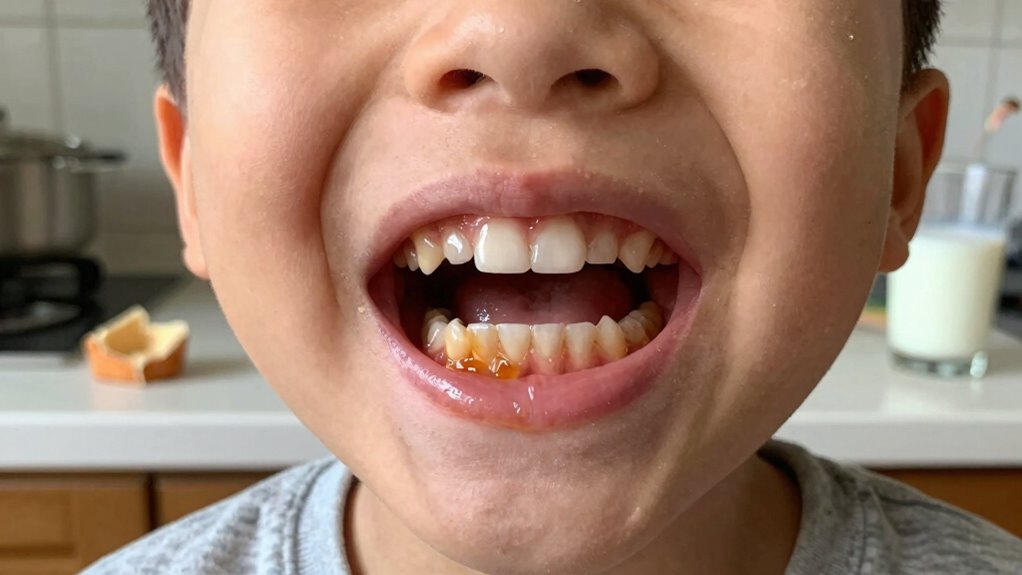

Grazing all day keeps your mouth in a constant state of acidity, which promotes cavity formation. Every snack feeds bacteria that produce acids, weakening your tooth enamel faster than you think. The minimal break time before your saliva can neutralize and repair damage is often not enough. This persistent acid attack accelerates decay and makes cavities more likely, catching many families off guard. Continue exploring this topic to understand how to better protect your child’s oral health.

Turn the school run and nap time into listening time
- Thousands of audiobooks, podcasts and originals
- Listen on your phone, tablet or Echo — also offline
- Cancel anytime
Key Takeaways
- Continuous grazing keeps acid levels high, weakening enamel and speeding up cavity formation.
- Frequent snacks prevent saliva from neutralizing acids and repairing tooth damage effectively.
- Constant acid attacks from grazing increase the risk of rapid tooth decay in children.
- Overexposure to sugars and starches during all-day snacking promotes plaque buildup and bacteria.
- Limited saliva recovery time diminishes natural defenses, making cavities develop faster than parents expect.

Grazing habits considerably influence your risk of developing cavities. When you snack continuously throughout the day, you create an environment where dental plaque buildup can thrive. Every time you eat or drink, especially sugary or starchy foods, you give bacteria in your mouth more fuel to produce acids. These acids attack your tooth enamel, leading to decay. The more often you snack, the less time your saliva has to neutralize these acids and wash away food particles. As a result, your teeth are exposed to damaging acids for longer periods, increasing the chance of cavities forming faster than you’d expect.
Frequent snacking increases cavity risk by prolonging acid exposure and reducing saliva’s protective effects.
Saliva plays a essential role in protecting your teeth, but frequent grazing can hinder its effectiveness. Saliva production naturally increases when you eat, helping to dilute acids and wash away food debris. However, if you’re constantly snacking, your saliva isn’t given enough time to do its job properly. Instead of providing a restorative effect, it becomes overwhelmed, allowing acids to linger on your teeth longer. This creates a cycle where the constant presence of food particles and acids accelerates the erosion of enamel, making cavities more likely to develop in a shorter span of time. Additionally, frequent snacking can disrupt the natural remineralization process that helps repair early enamel damage. Recognizing the role of saliva in maintaining oral health underscores the importance of limiting continuous snacking to give your mouth time to recover.
Many parents are surprised to learn how quickly cavities can form in children who snack frequently. It’s tempting to think that brushing can undo the damage, but the reality is that constant grazing keeps the mouth in a constant state of acidity. This ongoing acid attack weakens the enamel, and over time, small cavities can develop even without noticeable signs. The longer the cycle continues, the more difficult it becomes to prevent decay, especially if good oral hygiene routines aren’t maintained. Moreover, childhood dental health can be particularly vulnerable to these habits, emphasizing the importance of monitoring snack frequency from a young age. Being aware of the impact of eating habits on children’s teeth can encourage better dietary choices and habits early on.
Furthermore, the frequency of snacking can influence your overall oral health beyond just cavities. It can lead to increased plaque buildup, which harbors bacteria that produce acids and perpetuate decay. If you don’t pay attention to how often you snack, you might underestimate the damage that’s happening underneath the surface. Recognizing the impact of eating habits on your teeth can help you make more mindful choices to protect your oral health. The key is to understand that each snack adds to the cumulative effect, speeding up the process of cavity formation.
In essence, your daily habits around eating and snacking directly impact your teeth’s health. If you’re grazing all day, you’re likely increasing your cavity risk more than you realize, often faster than your dentist might expect. Managing snack frequency, maintaining good oral hygiene, and giving your saliva time to recover are crucial steps toward protecting your teeth from unnecessary decay.
As an affiliate, we earn on qualifying purchases.
Frequently Asked Questions
How Does Saliva Affect Cavity Formation During Frequent Grazing?
Saliva plays a vital role in cavity formation during frequent grazing by neutralizing acids and maintaining pH regulation. Its composition includes minerals that help repair tooth enamel and enzymes that fight bacteria. When you snack often, saliva struggles to keep up with acid production, leading to lower pH levels. This creates an environment where cavity-causing bacteria thrive, increasing your risk of cavities faster than you might expect.
Are There Specific Foods That Increase Cavity Risk When Grazed on Often?
Certain foods, like sugary snacks, sticky candies, and carbohydrate-rich chips, increase cavity risk when grazed on frequently. These foods stick to teeth, providing bacteria with fuel to produce acids that erode enamel. The more you snack often, the more your enamel suffers. Opt for healthier food choices like fresh fruits, vegetables, or cheese, and limit snack frequency to protect your teeth from cavities.
Can Grazing Habits Impact Adult Teeth as Well as Children’s?
Grazing habits can impact your adult teeth just as much as children’s, increasing risks like dental erosion and tooth sensitivity. When you snack frequently, your teeth are constantly exposed to acids and sugars, which wear down enamel and cause sensitivity. This continuous exposure accelerates damage, leading to issues like cavities and erosion. To protect your teeth, try to limit snacks between meals and practice good oral hygiene regularly.
How Does the Timing of Grazing Influence Cavity Development?
The timing of grazing considerably influences cavity development because frequent snacking exposes your teeth to constant sugar and acid attacks, especially if you neglect proper oral hygiene afterward. Your dietary habits matter; grazing throughout the day can prevent saliva from neutralizing acids. To reduce cavity risk, maintain good oral hygiene, brush regularly, and limit continuous snacking, especially sugary treats, ensuring your teeth stay healthier longer.
Are There Effective Dental Products to Counteract Frequent Grazing?
Think of your child’s teeth as a garden that needs regular care. To counteract frequent grazing, use dental products with fluoride, like toothpaste, to strengthen enamel. Consider mouth rinses designed to reduce sugar intake and promote oral hygiene. These products act like protective shields, fighting off cavities caused by constant sugar exposure. Consistent brushing and rinsing help keep their teeth healthier, even with a busy snacking schedule.
Conclusion
So, if you keep grazing all day, you’re risking more cavities, more decay, and more dental troubles than you might think. Every snack, every sip, every little bit of sugar adds up, feeding bacteria that attack your teeth. Stay mindful, choose healthier options, and limit constant snacking. Protect your smile by breaking the cycle, reducing the risk, and taking charge of your dental health. Because a healthier mouth starts with smarter choices—every time you eat or drink.
Halloween Picks
halloween
As an affiliate, we earn on qualifying purchases.