
Skipping proper cleaning or using shortcuts can quickly damage your aligners and harm your oral health. Harsh chemicals, over-cleaning, or skipping routine care can weaken the material, cause discoloration, and create bacteria buildup leading to bad odors and stains. These mistakes reduce treatment effectiveness and may even cause repairs or replacements. To avoid costly problems, stick to gentle, approved cleaning methods and maintain a consistent routine. Keep going to discover simple tips that protect your smile and aligner investment.

Get baby and family essentials delivered free — and shop member deals
- Fast, free delivery on millions of items
- Access to Prime Big Deal Days deals on October 6–7
- Prime Video, Amazon Music and more included
Key Takeaways
- Using harsh chemicals or abrasive tools for quick cleaning can weaken or damage aligner material.
- Over-cleaning or excessive force may cause cracks, warping, or discoloration, reducing aligner effectiveness.
- Skipping proper rinsing after shortcuts can leave residues that irritate gums or promote bacterial growth.
- Relying on quick fixes instead of regular, thorough cleaning increases stain buildup and odor issues.
- Improper cleaning shortcuts can compromise aligner clarity and longevity, leading to more costly repairs or replacements.
As an affiliate, we earn on qualifying purchases.
Why Proper Aligner Cleaning Is Essential
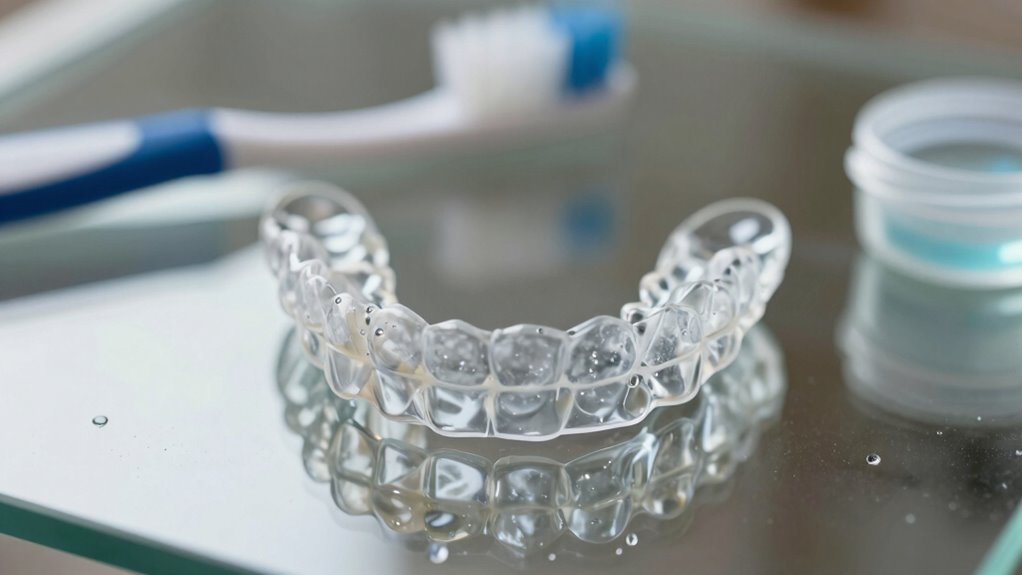
Proper aligner cleaning is vital because neglecting it can lead to the buildup of bacteria, plaque, and odors that compromise both your oral health and the effectiveness of your treatment. Different aligner materials, such as plastic or acrylic, can harbor germs if not cleaned properly. Using the right cleaning chemicals is essential; some solutions may damage your aligners or fail to eliminate harmful bacteria. Weak or inappropriate cleaning agents won’t keep your aligners clear and safe, risking infections or discoloration. You need to choose gentle, effective cleaning chemicals compatible with your aligner material. Regular cleaning not only prevents bad odors but also guarantees your treatment stays on track, helping you achieve a healthy, confident smile faster. Color accuracy in your cleaning process can also affect how well your aligners stay transparent and free of stains. Neglecting proper cleaning can cause unnecessary complications, including material degradation that might shorten the lifespan of your aligners.
How Often Should You Clean Your Aligners?
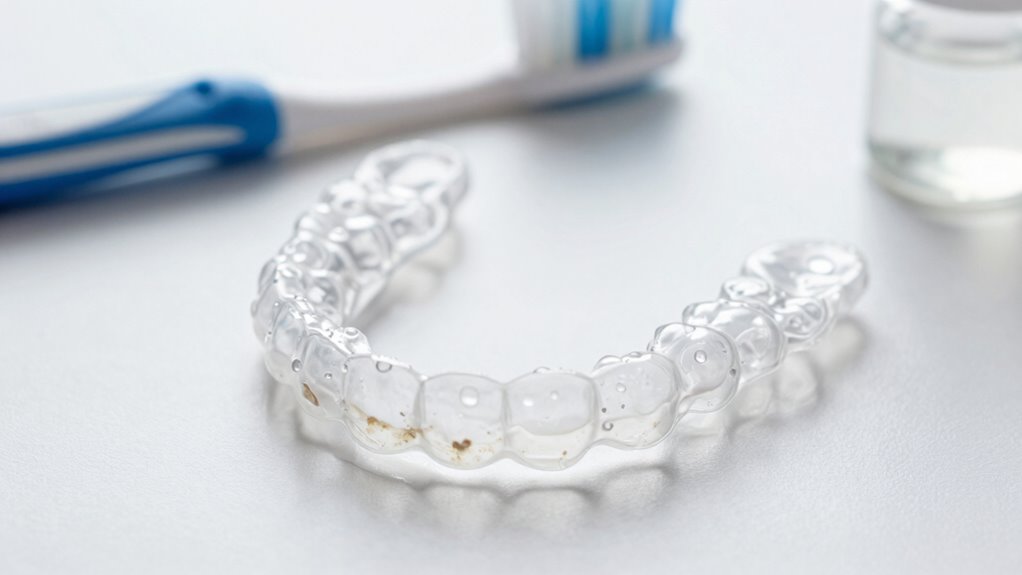
You should clean your aligners daily to keep them fresh and prevent buildup, but over-cleaning can damage the material. Pay attention to signs like bad odor or visible residue that indicate it’s time for a cleaning. Finding the right frequency helps protect your aligners and maintain oral health. Being aware of decoding slang can also help you understand the importance of clear communication about proper care routines. Additionally, understanding the electric power involved in devices like bike generators can highlight the importance of gentle maintenance to avoid damaging delicate materials.
Ideal Cleaning Frequency
Cleaning your aligners regularly is essential to maintain oral health and guarantee the effectiveness of your treatment. The ideal cleaning frequency depends on your aligner material and your daily routine. Most experts recommend cleaning your aligners at least once a day, ideally after each meal or snack, to prevent bacteria buildup and staining. Consistent cleaning schedules help keep your aligners clear and free from plaque, which can cause bad breath or dental issues. If you wear your aligners for many hours each day, more frequent cleaning may be necessary. Be cautious not to over-clean, as some cleaning agents can damage certain materials. Striking a balance ensures your aligners stay hygienic without risking material degradation, supporting both oral health and treatment progress. Additionally, understanding the importance of dental health can motivate you to stick to a proper cleaning routine. Proper cleaning techniques are vital, especially since contaminants can quickly accumulate and compromise your treatment. Regular cleaning is also important to prevent the buildup of bacteria, which can lead to oral infections and other health issues. Using the right cleaning tools and techniques can further enhance the effectiveness of your routine and help avoid damage to aligners. Incorporating a thorough cleaning routine can also support your overall self-awareness about oral hygiene practices.
Risks of Over-Cleaning
While regular cleaning helps keep aligners clear and hygienic, overdoing it can lead to unintended consequences. Using harsh cleaning chemicals or cleaning too frequently can degrade the aligner material, causing it to become brittle or discolored. Over-cleaning may also weaken the plastic, increasing the risk of cracks or warping. Some cleaning chemicals aren’t designed for aligners and can leave residues that irritate your gums or mouth. It’s important to follow your orthodontist’s recommendations for cleaning frequency and choose gentle, aligner-safe products. Excessive cleaning can do more harm than good, ultimately compromising the fit and effectiveness of your aligners. Regularly monitoring cleaning routines and sticking to a balanced routine can help maintain both hygiene and the integrity of your aligners. Being aware of common mistakes in aligner cleaning can help prevent damage and ensure optimal results. Additionally, understanding how microplastics in dust can affect overall health emphasizes the importance of proper hygiene practices.
Signs You Need Cleaning
Knowing when your aligners need a refresh is key to maintaining oral hygiene and ensuring their effectiveness. You should clean your aligners whenever you notice signs like cloudiness, bad odor, or visible plaque buildup. The type of aligner material can influence how quickly bacteria develop, so regular cleaning is essential. Using appropriate cleaning tools—like soft-bristled brushes and non-abrasive solutions—helps prevent damage. Here’s a quick guide:
| Sign | When to Clean | Recommended Tools |
|---|---|---|
| Cloudiness or stains | After every meal or snack | Soft brush, cleaning tablets |
| Bad odor | Daily, if needed | Gentle brush, mild soap |
| Plaque buildup | Weekly | Specialized aligner cleaner |
| Discoloration | As soon as noticed | Non-abrasive cleaning tools |
Stay vigilant to keep your aligners clear and effective.
Best Daily Methods to Keep Your Aligners Clean and Clear
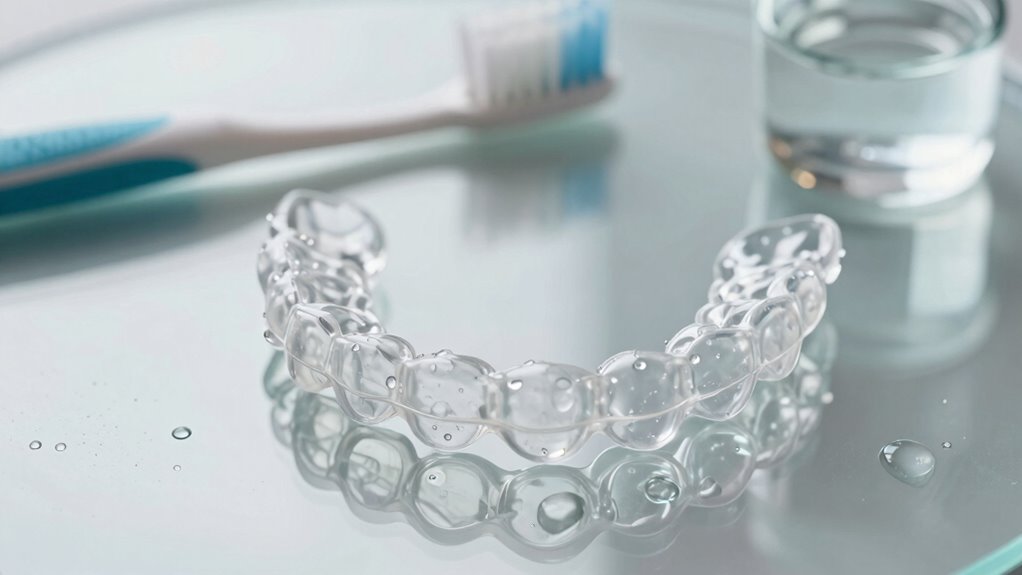
To keep your aligners looking their best, establishing a simple daily routine is essential. Proper care depends on understanding your aligner material and practicing consistent habits. Clean your aligners every morning and night with a soft brush and mild soap or a designated aligner cleaner. Rinse thoroughly to remove residue and prevent staining. For travel cleaning, carry a small, travel-sized brush and cleaning solution to maintain freshness on the go. Avoid using hot water, which can warp the material. Regular cleaning prevents plaque buildup and odors, keeping your aligners clear and comfortable. Incorporating aligner maintenance and mythology-inspired names into your routine can serve as a reminder of strength and wisdom in maintaining your smile. Developing a consistent cleaning routine can help prevent the buildup of bacteria and prolong the lifespan of your aligners. Using gentle, evidence-based methods ensures your aligners stay effective and safe for your oral health. Incorporating proper cleaning techniques into your daily habits is essential for maintaining optimal oral hygiene. Incorporate these habits into your daily routine to preserve the aligner’s integrity and appearance. Staying consistent is key to long-term success and a confident smile.
Top Mistakes to Avoid When Cleaning Your Aligners
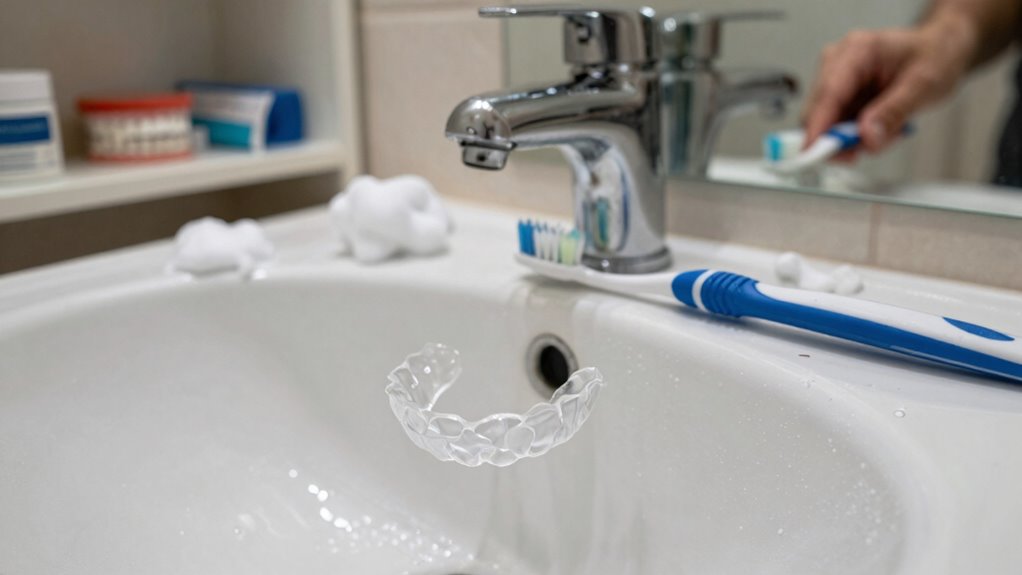
Even with a consistent cleaning routine, certain mistakes can undermine your efforts and damage your aligners. One common mistake is using inappropriate cleaning products, which can harm the aligner material. Avoid harsh chemicals or abrasive scrubbers that can scratch or weaken the plastic. Instead, use gentle cleaning solutions specifically designed for aligners. Another mistake is over-cleaning or using hot water, which can warp the aligner material. Always stick to lukewarm water and approved cleaning agents. Additionally, neglecting to remove aligners properly or rushing the cleaning process can leave residue or cause cracks. Be gentle and thorough, ensuring all surfaces are cleaned without applying excessive force. Proper material care is essential to maintain the integrity of your aligners and prevent unnecessary damage. Using proper maintenance practices can extend the lifespan of your aligners and ensure they function effectively. It’s also crucial to understand the safety of cleaning methods, as some approaches may pose risks to the aligner material. Regularly reviewing your SEO strategy can help you stay informed about the latest best practices, reducing the risk of overlooking crucial details. These small errors can compromise the integrity of your aligners and reduce their effectiveness. Always remember that understanding piercing care and hygiene can prevent issues related to bacterial buildup that could affect your oral health and aligner condition.
What Are the Risks of Skipping Proper Hygiene?
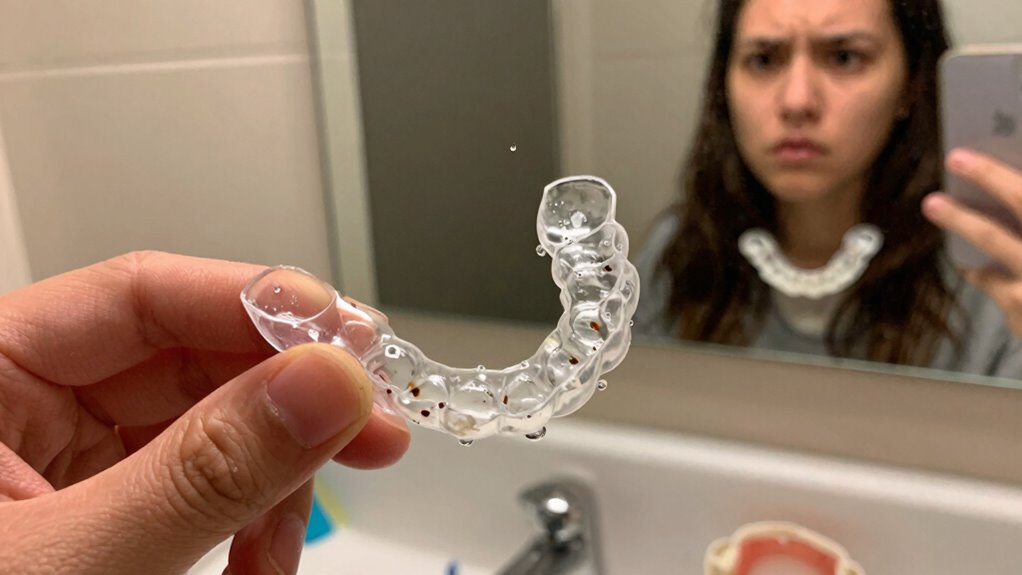
Skipping proper hygiene when cleaning your aligners can lead to serious dental issues. Poor maintenance allows bacteria and plaque to build up, damaging the aligner material and increasing the risk of cavities, gum disease, and bad odors. Using improper cleaning chemicals can weaken the aligner material or cause discoloration, compromising both appearance and function. Neglecting thorough cleaning also promotes mold growth and bad breath. Additionally, embracing diversity in fashion and beauty trends highlights the importance of inclusive practices, reminding us that proper hygiene is crucial for everyone regardless of appearance. Be aware of these risks:
- Bacterial buildup causing oral infections
- Damage to aligner material from harsh chemicals
- Increased plaque and tartar formation
- Unpleasant odors and stains
- Reduced effectiveness of your orthodontic treatment
Proper hygiene is essential to keep your aligners safe, clean, and effective. Regular cleaning routines help prevent bacterial buildup, which can cause oral infections and compromise your dental health. Maintaining a consistent cleaning routine also supports overall dental health and ensures your aligners function as intended.
How Bad Can Odors and Stains Get, and How to Fix Them
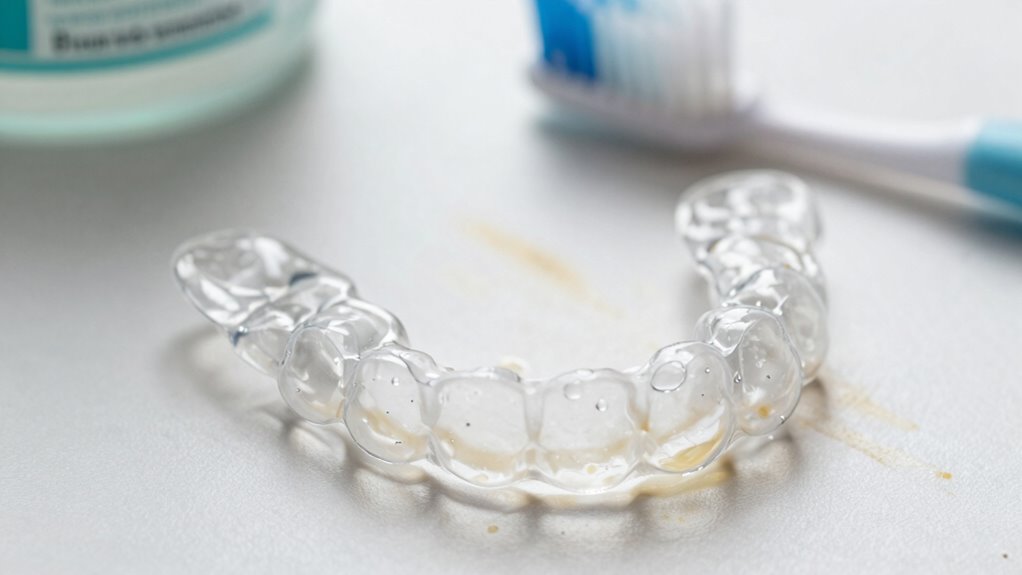
Odor build-up can become strong and unpleasant if you neglect proper cleaning, making your aligners smell worse over time. Stains from food and drinks can set in, creating visible discoloration that’s hard to remove later. Using effective cleaning methods like brushing, soaking, or special cleaning tablets can help keep your aligners fresh and clear.
Odor Build-Up Risks
If you neglect your aligner cleaning routine, unpleasant odors and stubborn stains can quickly develop, making your aligners uncomfortable and noticeable. Odor build-up happens when bacteria and food particles cling to the aligner material, especially if cleaning is rushed or skipped. The manufacturing process of aligners influences how prone they are to harboring odors — some materials trap odors more than others. Over time, these odors can intensify, creating a foul smell that’s hard to ignore. Poor cleaning allows bacteria to thrive, increasing the risk of bad smells. To avoid this, regularly clean your aligners thoroughly and avoid shortcuts that leave residue behind. Proper maintenance helps preserve the aligner’s integrity and keeps odors at bay, ensuring your smile stays fresh and clean.
- Bacteria thrive on residual food particles
- Certain aligner materials trap odors more easily
- Skipping cleaning accelerates odor build-up
- Persistent odors indicate bacteria growth
- Manufacturing quality affects odor resistance
Stain Accumulation Effects
Over time, stains can deeply embed into your aligners, leading to a dull, discolored appearance that’s difficult to reverse. This makes stain prevention essential; ignoring it allows stubborn discoloration to set in. The longer stains sit, the harder they become to remove, risking permanent discoloration that dulls your smile. To control this, avoid habits that cause stains, like consuming coffee, tea, or dark-colored foods without cleaning afterward. Regular brushing and rinsing help maintain discoloration control, preventing buildup before it starts. Skipping proper cleaning routines accelerates stain accumulation, making your aligners look less transparent and more noticeable. Staying vigilant about stain prevention is the best way to keep your aligners clear and your smile bright.
Effective Cleaning Methods
When odors and stains aren’t properly addressed, they can become stubborn and difficult to eliminate, making your aligners less discreet and less pleasant to wear. To keep them fresh, use effective cleaning methods suited for your aligner material. Avoid harsh cleaning agents that can damage the plastic. Instead, opt for gentle options like lukewarm water, mild soap, or specially designed aligner cleaners. Regular brushing with a soft toothbrush can also help remove buildup. For tougher stains or odors, soak your aligners in a solution like hydrogen peroxide or vinegar diluted with water. Remember, overusing strong cleaning agents can weaken or discolor the material, so always follow manufacturer recommendations. Consistent cleaning prevents stubborn stains and keeps your aligners smelling fresh and looking clear.
Tips for Maintaining Good Oral Hygiene While Using Aligners
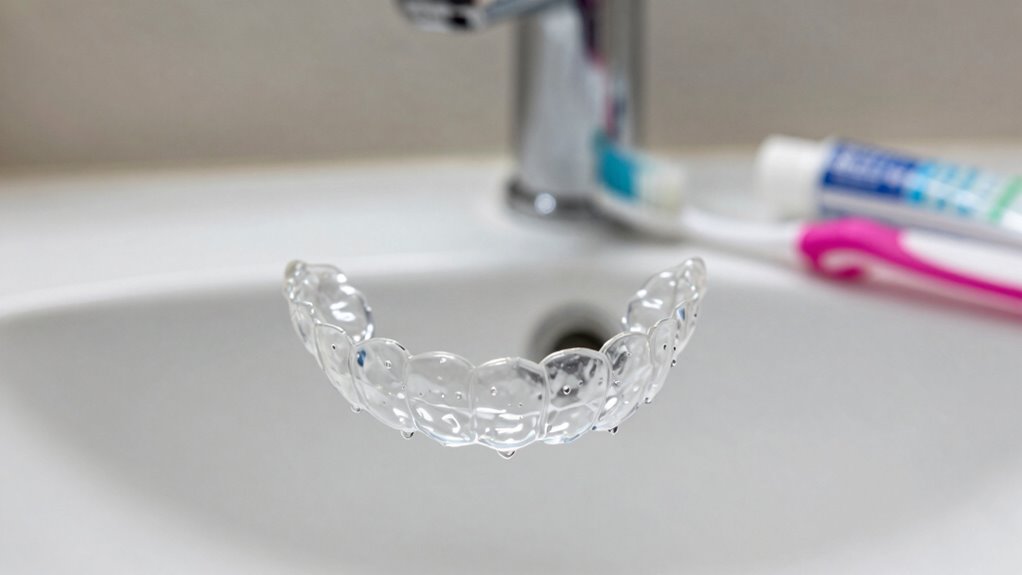
Maintaining good oral hygiene while using aligners is essential to prevent cavities, bad breath, and staining. You should pay attention to your diet habits—avoid sugary or acidic foods that increase plaque buildup and wear down aligner materials. Rinse your mouth thoroughly after eating before reinserting your aligners to remove food particles and bacteria. Clean your aligners daily with gentle brushing, using a soft toothbrush and non-abrasive cleaner to prevent scratching or damaging the material. Avoid using hot water, as it can warp the aligner materials. Regularly visit your dentist for checkups to monitor oral health and aligner condition. Consistent care helps keep your teeth and aligners clean, ensuring effective treatment and a healthy smile.
Troubleshooting: What to Do If Your Aligners Smell or Stain?
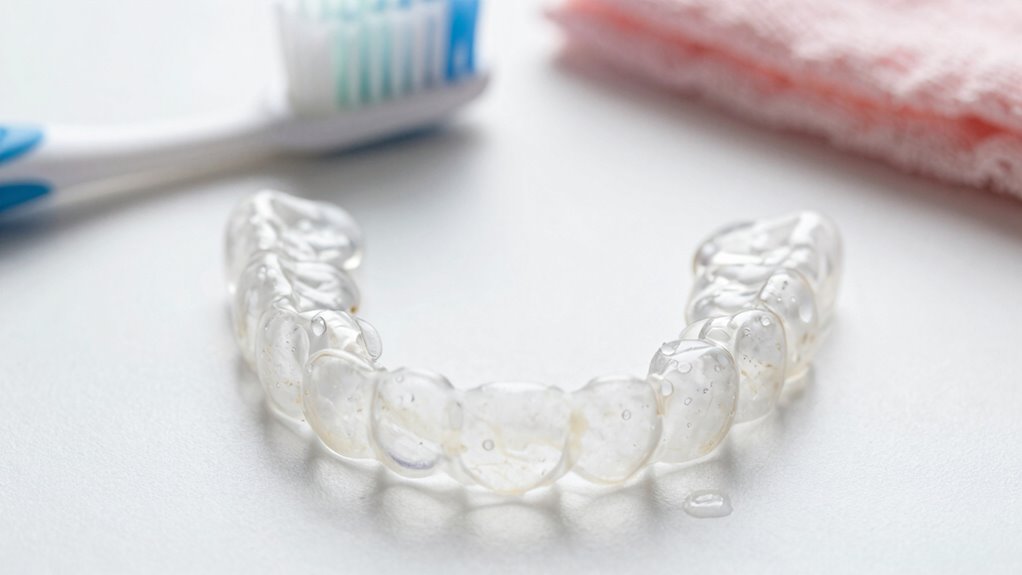
If your aligners start to smell or develop stains, it’s a sign that they need a thorough cleaning. Over time, residue from food, drinks, or saliva can build up, affecting the aligner material and causing odors or discoloration. To troubleshoot, avoid harsh cleaning agents that can damage the aligner material. Instead, opt for gentle, approved cleaning solutions designed for aligners.
- Use a soft-bristled toothbrush with lukewarm water for light cleaning
- Soak your aligners in a denture or Invisalign cleaning tablet
- Avoid using bleach or alcohol-based cleaners
- Rinse thoroughly to remove any residue from cleaning agents
- Regularly clean your aligners to prevent stubborn stains and odors
Proper cleaning maintains the integrity of the aligner material and keeps your smile fresh.
Quick Tips to Remember Your Daily Cleaning Routine
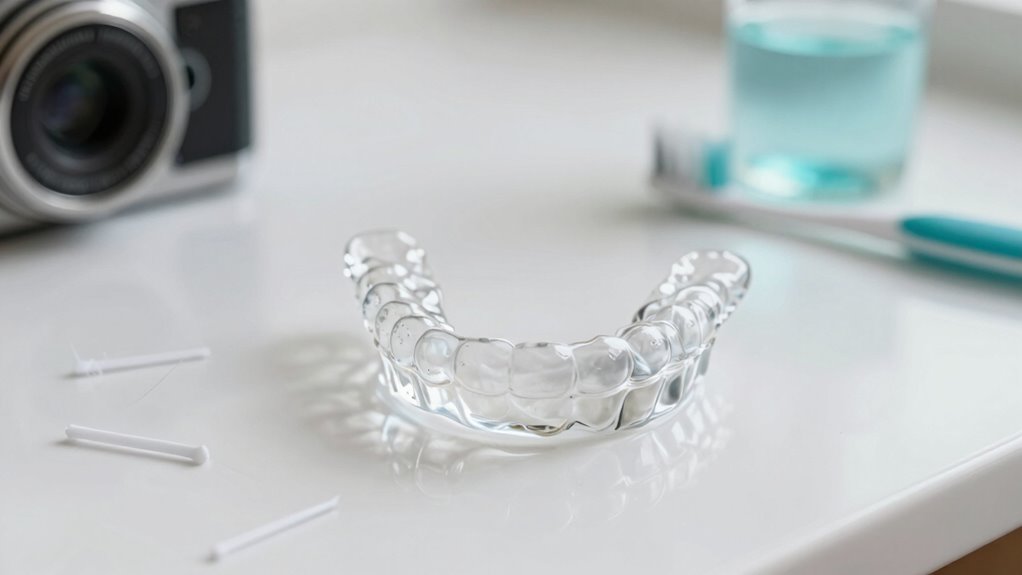
To keep your aligners fresh and effective, establishing a simple daily cleaning routine is essential. First, know your aligner material—most are made of durable plastic, but some may require gentle cleaning to prevent damage. Use the right cleaning tools, like a soft toothbrush and mild soap or specialized aligner cleaner, to remove plaque and prevent staining. Set a specific time each day—morning or night—to clean your aligners, creating a habit you won’t forget. Avoid harsh chemicals or abrasive tools that could harm the aligner material. Regular cleaning keeps your aligners clear and odor-free, reducing the risk of buildup. Staying consistent with your routine guarantees your aligners stay in top shape and your smile stays bright.
Frequently Asked Questions
Can Using Harsh Chemicals Damage My Aligners?
Yes, using harsh chemicals can damage your aligners by weakening their material, which affects their durability. These chemicals may cause unwanted chemical reactions, leading to cracks, discoloration, or warping. To protect your aligners, stick to recommended cleaning methods like gentle brushing and special cleaning solutions. Avoid using bleach, alcohol-based cleaners, or harsh abrasives, as they can compromise the integrity of your aligners and reduce their effectiveness.
How Do I Remove Stubborn Stains From Aligners Safely?
To remove stubborn stains from your aligners safely, try using a gentle brushing technique with a soft toothbrush and mild, non-abrasive toothpaste or a specialized aligner cleaner. Incorporate Aligner Whitening solutions occasionally for extra stain removal. To prevent future stains, practice Stain Prevention by avoiding foods and drinks that cause discoloration. Regular cleaning and avoiding harsh chemicals will keep your aligners clear and your smile bright.
Are There Natural Cleaning Alternatives for Aligners?
Did you know that over 60% of people prefer natural methods for cleaning their aligners? You can try herbal remedies or DIY solutions, like a mixture of baking soda and water or a gentle vinegar rinse, to clean your aligners safely. These natural alternatives can help remove stains and bacteria without harsh chemicals, but be sure to rinse thoroughly and avoid overusing acidic solutions to prevent damage.
What Should I Do if My Aligners Cause Mouth Irritation?
If your aligners cause mouth irritation, start by removing them and rinsing your mouth with warm salt water to soothe discomfort. You can try over-the-counter irritation remedies like oral gels or numbing agents to reduce pain. Make certain your aligners fit properly—ill-fitting aligners can cause discomfort, so consult your orthodontist if irritation persists. Regular cleaning and checking for rough edges can also help prevent further aligner discomfort.
Can Improper Cleaning Lead to Long-Term Dental Issues?
Could neglecting proper cleaning harm your long-term dental health? Absolutely. Improper cleaning of your aligners can lead to plaque buildup, bacteria growth, and even tooth decay or gum disease. Maintaining good oral hygiene isn’t just about fresh breath; it’s essential for preventing serious dental issues down the line. Be diligent with your aligner care to protect your smile’s health, ensuring your dental health remains strong and problem-free.
Conclusion
Skipping proper aligner cleaning can lead to stains, odors, and even oral health issues. Did you know that 60% of aligner wearers neglect regular cleaning? By sticking to daily routines and avoiding common mistakes, you’ll keep your aligners clear and your mouth healthy. Remember, a quick, consistent cleaning habit saves you from costly repairs or replacements down the line. Stay diligent, and your smile will stay bright and fresh!
Cold & flu season Picks
humidifiers
As an affiliate, we earn on qualifying purchases.