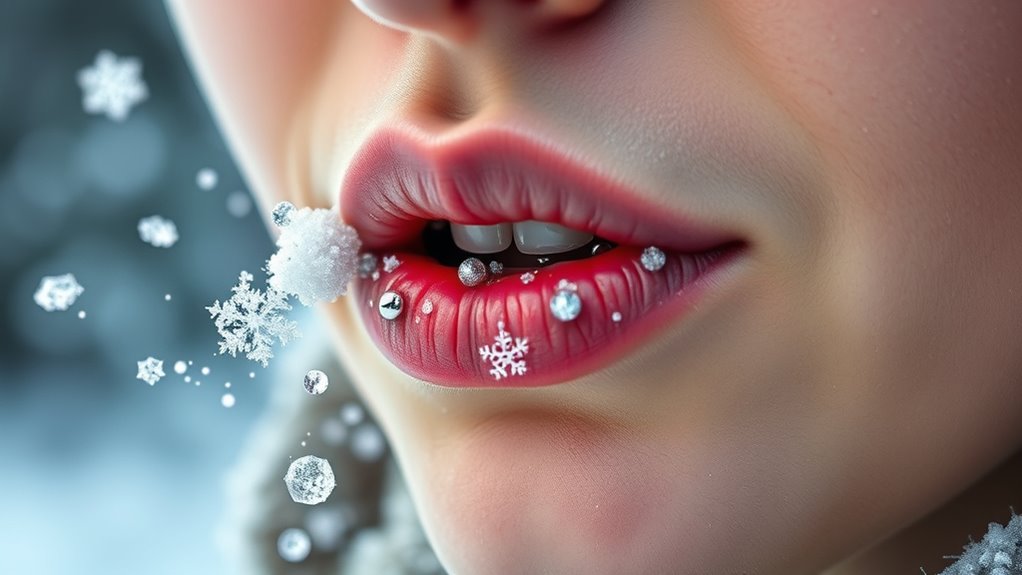

Cold weather can increase discomfort and slow healing for your oral piercing, as dry air and cold temperatures dry out your lips and mouth, causing cracking and irritation. Cold-induced blood vessel constriction may make sensitivity worse, while dryness can lead to infections or complications if not managed properly. To protect your piercing, stay hydrated, use gentle, hypoallergenic lip balms, and avoid harsh environments. Keep your oral hygiene routine gentle and watch for signs of issues—if you’re curious, you’ll find more helpful tips ahead.
Key Takeaways
- Cold weather increases dryness and sensitivity, potentially irritating oral piercings and slowing healing.
- Stay well-hydrated and avoid dry, harsh environments to promote healing and reduce discomfort.
- Use natural, hypoallergenic lip balms to protect lips from cracking and irritation without harmful ingredients.
- Maintain gentle oral hygiene and monitor for signs of infection or irritation, especially in winter conditions.
- Address any swelling, redness, or pain promptly by consulting professionals to prevent complications.
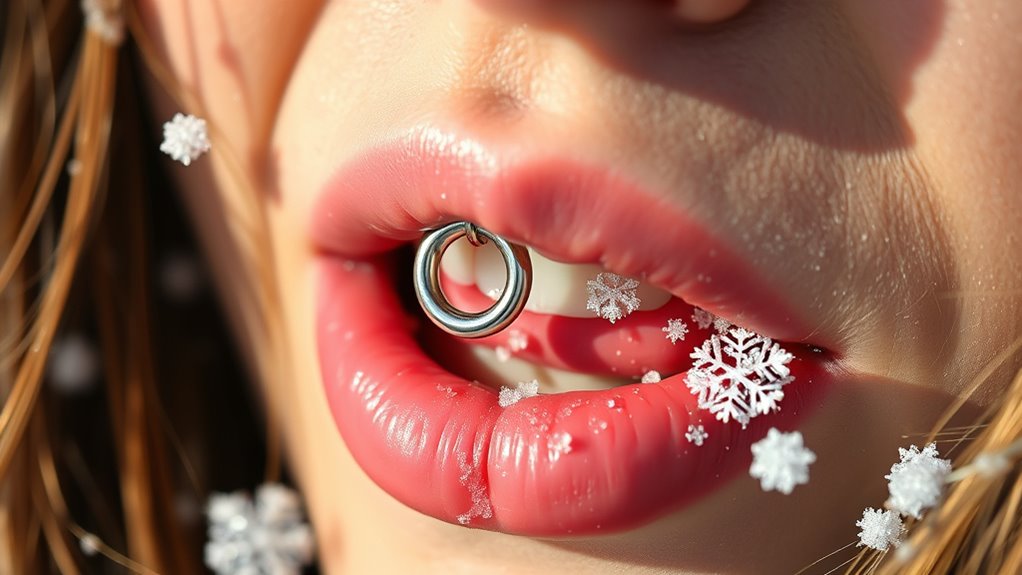
Cold weather can pose unique challenges for those with oral piercings, as chilly temperatures and dry air may increase discomfort and the risk of complications. When the air turns cold, your mouth and lips tend to become dry and cracked, which can irritate your piercing and slow down healing. Staying well-hydrated is essential during winter months, so make sure you’re drinking plenty of water throughout the day. Proper winter hydration helps keep your mouth moist, reducing dryness around your piercing and preventing cracking or bleeding that can lead to infections. It also supports your body’s natural healing process, making it easier for your piercing to recover and stay healthy despite the cold. Regularly monitoring your environment for air quality can help you avoid additional irritation from airborne pollutants that may exacerbate discomfort or delay healing. Lip balm safety is another important aspect to keep in mind in winter. Many lip balms contain ingredients that might be harmful if ingested, which is especially concerning with oral piercings, as the lip and tongue are constantly in contact with these products. Look for lip balms that are free of potentially irritating chemicals like menthol, camphor, or artificial fragrances. Opt for natural, hypoallergenic options to protect your skin and avoid any allergic reactions that could complicate healing. Applying a safe lip balm regularly helps create a barrier against the harsh winter air, preventing lips from cracking and reducing the risk of irritation around your piercing site. Just be cautious to reapply as needed, especially after eating or drinking, to maintain the protective layer. In colder weather, you might also notice that your piercing feels more sensitive or tender. This heightened sensitivity can be due to dry air and the natural shrinkage of blood vessels in response to cold temperatures. To minimize discomfort, keep your mouth and lips moisturized with safe products, and avoid harsh, drying environments. Be mindful of your oral hygiene routines too; using gentle, alcohol-free mouthwashes prevents further irritation or dryness that could worsen in winter conditions. Lastly, pay attention to signs of irritation or infection, such as swelling, redness, or persistent pain. Cold weather can mask symptoms or make them seem less noticeable, but it’s essential to address any issues promptly. If you notice any abnormal signs, consult your piercer or a healthcare professional to prevent complications. Staying vigilant and following simple winter care routines will help you enjoy your piercing without discomfort or setbacks, even during the coldest months.

Sumbababy Princess Castle Tent for Girls Fairy Play Tents for Kids Hexagon Playhouse with Fairy Star Lights Toys for Children or Toddlers Indoor or Outdoor Games (Pink)
Bright Stars Included: This Girls tent comes with bright fairy star lights included. The princess castle play tent...
As an affiliate, we earn on qualifying purchases.
Frequently Asked Questions
Can Cold Weather Cause Oral Piercing Jewelry to Crack or Break?
Cold weather can cause your oral piercing jewelry to crack or break, especially if the material isn’t durable. If you have jewelry made from less sturdy materials, temperature fluctuations may weaken it over time. To prevent damage, choose high-quality, durable jewelry designed for cold conditions. Always monitor your piercing, and avoid exposing it to extreme cold for extended periods to maintain jewelry integrity and reduce the risk of breakage.
Does Dry Winter Air Affect Healing of Oral Piercings?
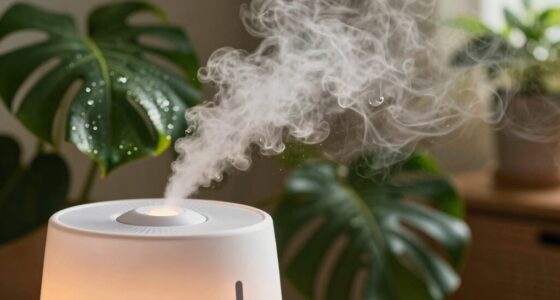
Have you wondered if winter dryness impacts your healing process? It definitely can. Dry winter air causes your mouth to become less moist, leading to healing challenges for your oral piercing. The lack of moisture slows down tissue regeneration and increases discomfort. To combat this, stay hydrated, use a saline rinse, and consider a humidifier. These steps help maintain moisture and promote smoother healing despite the winter dryness.
Are There Specific Foods or Drinks to Avoid During Cold Months?
During cold months, you should avoid hot beverages and acidic foods to protect your oral piercing. Hot drinks can cause irritation and slow healing, while acidic foods may increase sensitivity and damage tissues. Instead, opt for lukewarm drinks and gentle, non-acidic foods to keep your mouth comfortable. Staying mindful of what you consume helps prevent complications and supports your healing process in chilly weather.
How Can I Prevent Chapped Lips From Affecting My Oral Piercing?
Think of your lips as a delicate garden that needs nurturing. To prevent chapped lips from affecting your oral piercing, keep them well-hydrated with a good lip balm, especially in cold weather. Stay hydrated by drinking plenty of water to support your skin’s natural defenses. Avoid licking your lips, as it can worsen dryness. Regularly applying balm and maintaining hydration helps protect both your lips and piercing, keeping them healthy and comfortable.
Is There a Higher Risk of Infection in Winter for Oral Piercings?
Yes, there’s a higher risk of infection in winter because lower humidity impacts your skin’s barrier, making it easier for bacteria to enter your oral piercing. Cold weather can also weaken your immune response, reducing your body’s ability to fight off infections. To protect your piercing, keep the area clean, stay hydrated, and avoid exposing it to extreme cold. Proper care helps minimize infection risks during winter months.

Senodeer Princess Tent for Girls Indoor: with Rug, Star Lights - Pink Play Tent for Kids, Girls Toys for Indoor and Outdoor Games, Princess Castle Playhouse
Princess Tent: This is a fairy princess toys for girls! We have 1 princess castle play tent for...
As an affiliate, we earn on qualifying purchases.
Conclusion
As winter’s icy grip tightens, your oral piercing becomes a delicate flower in a frosty garden. Keep it warm with proper care, like a cozy blanket for your new jewelry. Remember, cold weather can turn your piercing into a fragile glass ornament—beautiful but easily shattered. Stay vigilant, nurture it gently, and let your piercing shine brightly through the winter chill, a sparkling reminder that even in coldest times, beauty and care go hand in hand.

wilwolfer Princess Castle Play Tent for Girls Large Kids Play Tents Hexagon Playhouse with Star Lights Toys for Children Indoor Games (Pink)
Special Gift: Girl Play House is the cutest fairy house tent where kids can have their own private...
As an affiliate, we earn on qualifying purchases.

Kids Play Tent with Padded Mat, Kids Tents Indoor Playhouse for Toddler, Large Princess Castle Pompoms Play House Tent for Girl Bed Tents Toys for Boys Girl Birthday House Gift
Play Tent come with padded Mat , It is sure to make it a fun daytime or children's...
As an affiliate, we earn on qualifying purchases.