A dedicated art space helps you foster your child’s independence by giving them a focused environment to explore and create freely. It encourages responsibility for supplies, organization, and cleanup, which boosts their confidence and ownership over their work. With fewer distractions, your child can focus and develop persistence, patience, and problem-solving skills. Creating this space nurtures their autonomy and strengthens their ability to manage their play and projects independently. Keep exploring to discover more benefits of a special art area.

Get baby and family essentials delivered free — and shop member deals
- Fast, free delivery on millions of items
- Access to Prime Big Deal Days deals on October 6–7
- Prime Video, Amazon Music and more included
Key Takeaways
- A dedicated art space fosters autonomy by allowing children to initiate and control their creative activities independently.
- It encourages responsibility through managing supplies and maintaining organization within their personal creative area.
- A consistent art environment enhances focus and concentration, supporting sustained independent engagement.
- Having a designated area cultivates ownership and pride in their work, boosting confidence to explore creatively.
- It promotes routine development, helping children build self-discipline and independence in their artistic play.
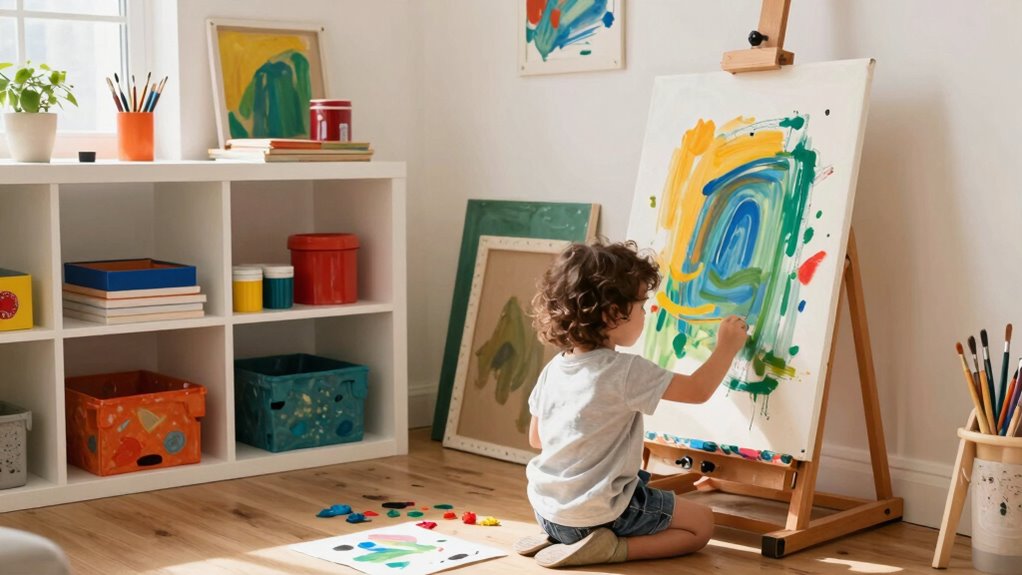
Have you ever wondered how a dedicated art space can boost your child’s creativity and independence? Creating a specific area for art encourages your child to explore their imagination freely. When they have a designated spot filled with supplies like paints, markers, paper, and clay, it becomes a haven for creative expression. They can experiment with different mediums and ideas without needing your constant supervision or approval. This freedom not only sparks their creativity but also helps them develop their unique artistic voice. As they spend time in this space, they learn to trust their instincts and make decisions about their projects, fostering a sense of autonomy.
A dedicated art space nurtures creativity and independence by encouraging kids to trust their instincts and explore freely.
A dedicated art space also plays a vital role in skill development. When children repeatedly engage in art activities, they improve fine motor skills, hand-eye coordination, and attention to detail. These skills are essential for many areas of learning and daily life. For example, choosing colors, cutting with scissors, or using brushes helps strengthen their muscles and coordination. Over time, they become more confident in their abilities, which encourages them to take on new challenges independently. The consistency of having a specific spot for art means they know where to go when inspiration strikes, reducing frustration and promoting a self-directed approach to their creative process. Additionally, a structured environment supports their ability to develop routines that foster independence and responsibility in other aspects of their lives. A well-organized space also helps children learn responsibility for their supplies, which is fundamental for cultivating independence. Moreover, establishing routines in their art activities can serve as a foundation for developing self-discipline in other areas. Creating boundaries around their artistic space can further teach them about limits and boundaries, which is crucial for understanding responsibility and appropriate behavior.
Furthermore, a dedicated art space provides structure that nurtures independence. Instead of relying on you to set up art materials each time, your child can learn to manage their supplies, clean up after themselves, and organize their work area. These routines teach responsibility and self-sufficiency. When children take ownership of their creative space, they also develop a sense of pride and ownership over their work, which motivates them to maintain their environment responsibly. They start to see art as an activity they can initiate and complete on their own, which translates into other areas of life. The routine of accessing their art space, choosing projects, and tidying up fosters a sense of ownership and control over their play and learning. A well-maintained space also encourages children to value and take care of their environment, reinforcing the importance of respect and stewardship. Having a dedicated art space also minimizes distractions, allowing your child to focus deeply on their projects. This undisturbed concentration helps them develop patience and persistence—key qualities for independent play. As they spend more time immersed in their art, they learn to enjoy working through challenges and completing their creations without immediate input from adults. This process builds resilience and confidence, essential for their overall growth.
As an affiliate, we earn on qualifying purchases.
Frequently Asked Questions
How Do I Introduce a Dedicated Art Space to My Child?
You can introduce a dedicated art space by first setting up a specific area with creative organization in mind, like shelves and storage bins for supplies. Encourage your child’s artistic exploration by involving them in arranging the space and selecting their favorite materials. Make it inviting and accessible, so they feel excited to create independently. Regularly update the space with new supplies to keep their creativity flowing and foster a sense of ownership.
What Safety Considerations Are Important in an Art Space?
You should childproof your art space by securing outlets, covering sharp edges, and keeping heavy furniture stable. Use childproofing tips like safety locks and gates to prevent accidents. Prioritize art supply safety by choosing non-toxic, washable materials and storing supplies out of reach. Regularly check for broken or unsafe tools, and supervise your child during art activities. These precautions create a safe environment where your child can explore creatively without unnecessary risks.
How Can I Encourage Independent Play in the Art Area?
You can encourage independent play in the art area by offering engaging creative prompts and sensory exploration activities. Set up open-ended projects that inspire curiosity and allow your child to experiment freely. Provide a variety of textures, colors, and materials to stimulate their senses. Keep the space organized and accessible, so they feel confident to explore on their own. Celebrate their efforts to boost their independence and creativity.
What Age Is Appropriate for a Child to Start Using Their Art Space?
Like a tiny Leonardo da Vinci in the making, your child can start using their art space around age two, fostering creative independence early on. At this age, they’re curious and enthusiastic to explore, making it ideal for age suitability in independent art activities. You’ll notice their confidence grow as they experiment, creating a sense of ownership and joy that encourages further artistic exploration and development.
How Do I Manage Mess and Clutter in the Art Area?
To manage mess and clutter in your child’s art area, establish clear boundaries and routines. Use storage bins and shelves to keep supplies organized and easy to access. Encourage your child to clean up after each session, turning it into a fun activity. Regularly declutter, discarding dried-out supplies or broken items. Consistent mess management and clutter control teach responsibility and keep the space inviting for creative play.
Conclusion
Creating a dedicated art space is like planting a seed in fertile soil—your child’s imagination can grow freely and flourish. When they have a special area just for art, independent play blossoms naturally, nurturing their creativity and confidence. This space becomes their personal garden, where ideas take root and creativity blooms without interference. With your support, that dedicated corner transforms into a vibrant, ever-expanding universe of their own making, fueling endless possibilities.
Cold & flu season Picks
humidifiers
As an affiliate, we earn on qualifying purchases.