To encourage kids to explore festivals of light like Hanukkah and Diwali, engage their curiosity with stories that highlight themes of perseverance and hope. Incorporate fun craft activities like making menorahs or diyas to make symbols come alive. Use music, videos, and hands-on experiences to stimulate their senses and deepen understanding. This approach sparks excitement and helps children connect emotionally with these rich cultural traditions—keep exploring to discover even more ways to celebrate these vibrant festivals.

Turn the school run and nap time into listening time
- Thousands of audiobooks, podcasts and originals
- Listen on your phone, tablet or Echo — also offline
- Cancel anytime
Key Takeaways
- Share engaging storytelling about the history and significance of Hanukkah and Diwali to spark curiosity.
- Incorporate hands-on crafts like creating menorahs and diyas to deepen cultural understanding.
- Use sensory activities such as cooking traditional foods and listening to festival music to enhance engagement.
- Encourage questions and discussions about symbols, rituals, and meanings behind the festivals.
- Organize interactive experiences like videos and cultural games to make exploring festivals fun and memorable.
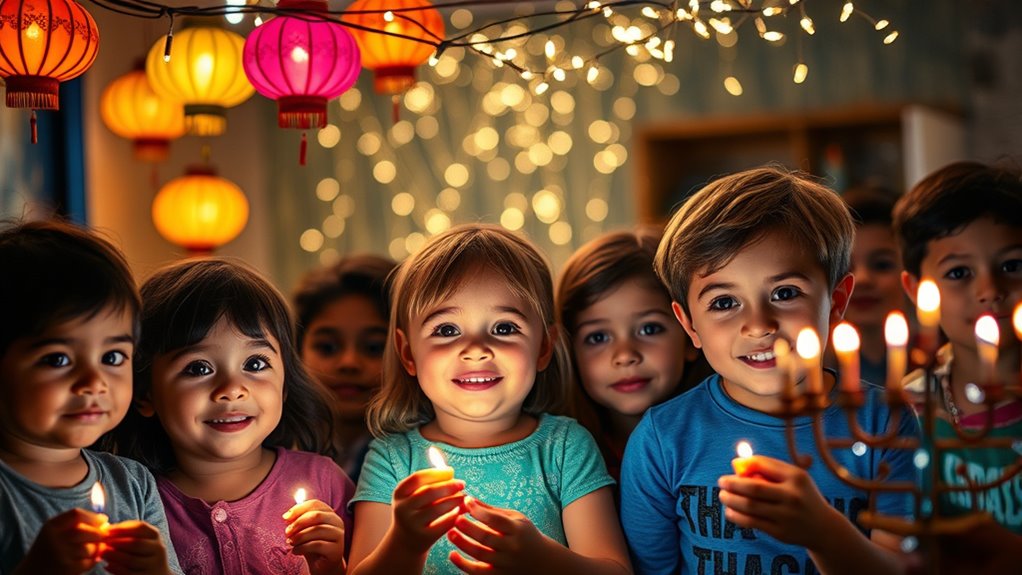
Festivals of light offer a vibrant way to introduce kids to different cultures and traditions, sparking their curiosity and sense of wonder. When you share stories rooted in cultural storytelling, you help children understand the rich histories and significance behind each celebration. For example, during Hanukkah, you can recount the miracle of the oil, emphasizing themes of perseverance and faith. Similarly, with Diwali, you might tell the story of Lord Rama’s return to Ayodhya, highlighting themes of victory of light over darkness. These stories make the festivals more meaningful and memorable, helping kids connect emotionally to the traditions.
Festivals of light teach children the stories and significance behind cultural celebrations, inspiring curiosity and emotional connections.
To make these stories even more engaging, incorporate craft activities that bring the cultural elements to life. You could have children create their own menorahs using clay or paper, or craft colorful Diwali lanterns called diyas from paper and glitter. These hands-on projects deepen their understanding and give them a tangible connection to the festival. As they work on their crafts, discuss the symbols and their meanings, reinforcing the cultural storytelling. This approach transforms learning into an interactive experience where kids not only hear about the traditions but also participate in creating them.
Engaging children with cultural symbols enhances their appreciation and understanding of the festivals’ significance. Encouraging kids to explore festivals of light through storytelling and craft activities also fosters their creativity and critical thinking. They learn to ask questions about why certain rituals are performed and what they symbolize. For example, you might ask, “Why do we light candles during Hanukkah?” or “What do the lights symbolize in Diwali?” This sparks conversations that help children develop a deeper appreciation for the diversity of cultural practices. Plus, making crafts together promotes teamwork and patience, teaching valuable social skills while enriching their cultural knowledge.
You can enhance these experiences by involving children in preparing traditional foods or decorations, further immersing them in the festival’s ambiance. Play music associated with each celebration to set the mood and stimulate their senses. Watching videos or reading books about the festivals can also complement your storytelling and craft activities, providing a well-rounded cultural experience. The goal is to make learning about these festivals fun, meaningful, and interactive.
Products Worth Considering

BowFlex Results Series SelectTech Dumbbells

Philips Sonicare DiamondClean 9000 Electric Toothbrush Bundle, HX9912/72
Withings Sleep Under-Mattress Sleep Tracking Pad
As an affiliate, we earn on qualifying purchases.
Frequently Asked Questions
How Can I Incorporate Festival Stories Into Everyday Activities?
You can incorporate festival stories into everyday activities by using storytelling techniques that make the tales engaging and memorable. Share stories during mealtime, bedtime, or while doing crafts, using expressive voices and gestures to bring them alive. This approach fosters cultural appreciation and helps kids connect emotionally with the traditions. By weaving these stories into daily routines, you create meaningful moments that celebrate diversity and deepen their understanding of different festivals.
What Are Creative Ways to Make Festival Crafts With Kids?
You can make festival crafts by creating DIY decorations like paper lanterns or candle holders, which make the celebrations more special. Use themed crafts such as decorating dreidels or Diwali lamps with bright colors and glitter to engage your kids’ creativity. Incorporate storytelling into craft time by sharing festival traditions while they craft, making it a fun and meaningful experience that helps kids connect with the cultural significance behind each craft.
How Do I Explain the Significance of Light in These Festivals?
You wonder how to explain the symbolism of light and its spiritual significance? Start by revealing that light represents hope, victory, and renewal during these festivals. As you share stories, children discover that light’s glow symbolizes overcoming darkness, both physically and spiritually. This understanding helps them see why lighting candles or lamps is more than tradition — it’s a powerful reminder of inner strength and divine presence guiding us through life’s challenges.
What Safety Tips Should I Follow During Festival Celebrations?
During festival celebrations, you should prioritize fire safety by keeping candles away from children and flammable objects. Always supervise kids around open flames and use sturdy candle holders. Teach them not to touch hot wax or lit candles. Keep a fire extinguisher nearby and ensure smoke detectors work. These candle precautions help prevent accidents and make sure everyone enjoys the festivities safely.
How Can I Include Kids in Traditional Festival Rituals?
You can include kids in traditional festival rituals by involving them in activities like lighting candles or lamps, which helps them connect with the celebration’s significance. Encourage them to wear traditional dress to make the experience more authentic, and play festival music to set the mood. Explain the stories behind these rituals in simple terms, making the experience educational and fun, while fostering their appreciation for cultural traditions.
Conclusion
By exploring festivals of light like Hanukkah and Diwali, you open your child’s eyes to a world of wonder and tradition. Imagine them holding a lit candle during Diwali, feeling the warmth and glow, just as a lantern brightens a dark night. These experiences become guiding lights, teaching them about culture, history, and community. When you encourage curiosity, you’re igniting a lifelong love of discovery—one spark that can light up their entire world.