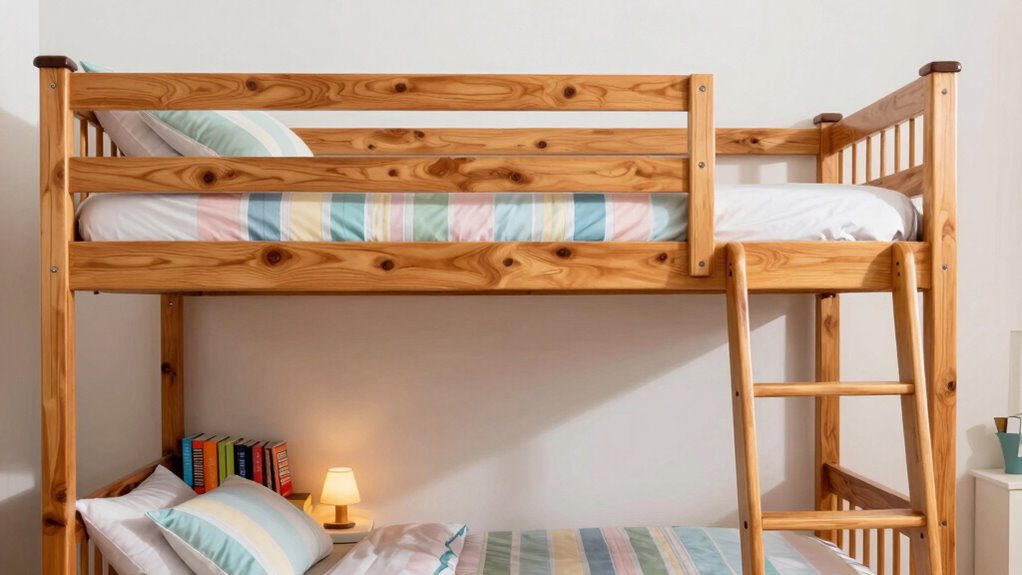

Before moving siblings into a bunk setup, make certain the bed has sturdy guardrails and a secure ladder for safety. Make sure the mattress fits snugly, and check the frame regularly for stability. Plan the room layout to maximize space and keep pathways clear. Talk to your kids about safety rules, like avoiding jumping, and keep the area tidy. For more tips on creating a safe, functional bunk environment, keep exploring what to contemplate.

Turn the school run and nap time into listening time
- Thousands of audiobooks, podcasts and originals
- Listen on your phone, tablet or Echo — also offline
- Cancel anytime
Key Takeaways
- Ensure the bunk bed has sturdy guardrails and a secure ladder for safe access and prevents falls.
- Choose an appropriately sized mattress that fits snugly to avoid gaps and entrapment hazards.
- Plan the room layout to maximize space, ensuring easy access and clear pathways around the bunk bed.
- Set safety rules with children, emphasizing safe climbing, no jumping, and maintaining a tidy area.
- Regularly inspect the bed’s structure for stability, loose screws, and wear to ensure ongoing safety.
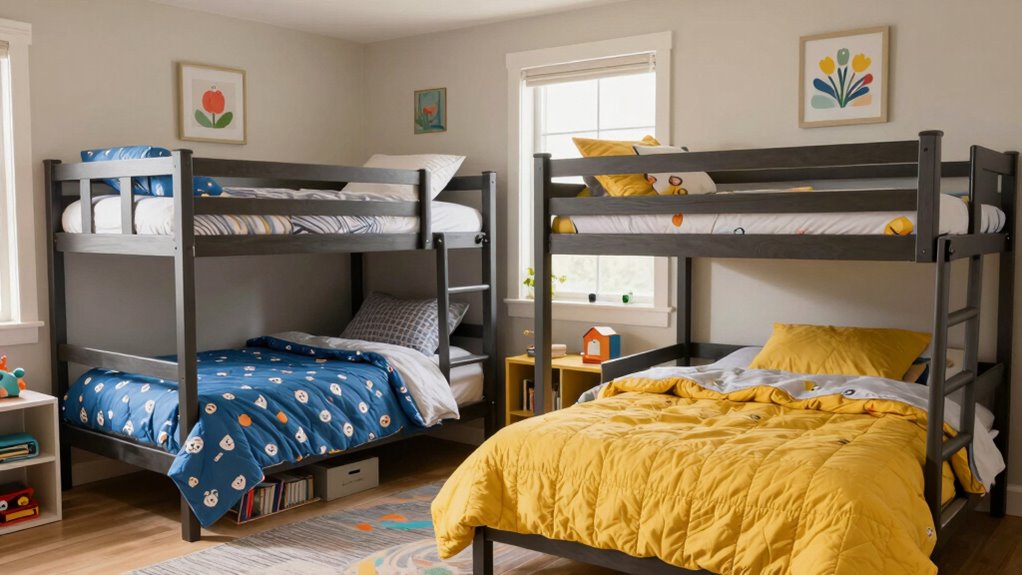
Moving siblings into a bunk bed setup can be an excellent way to save space and foster close relationships, but it’s important to plan carefully beforehand. One of the most critical aspects to consider is sleep safety. Bunk beds are convenient, but they can pose risks if not properly chosen or used. Make sure the bed you select has sturdy guardrails on all sides of the top bunk to prevent falls during sleep. The height of the upper bed should be appropriate—high enough to maximize space but not so tall that it becomes unsafe or difficult for your kids to get in and out. Check that the ladder is secure and easy for your children to climb, and confirm that the mattress fits snugly within the frame to prevent gaps that could trap limbs or cause falls. Positioning the bunk bed away from ceiling fans, windows, or hanging cords is also essential to prevent accidents. Additionally, ensuring the proper mattress fit can significantly reduce safety hazards. This is especially important because poorly fitting mattresses can increase the risk of falls or injuries. Regularly inspecting the bed frame stability helps identify potential hazards before they become serious issues. Incorporating safe sleep practices can further promote a secure sleeping environment for your children.
When it comes to space optimization, you want to make the most of the room without sacrificing comfort. Bunk beds are great for freeing up floor space, but you should also think about how to organize the surrounding area. Keep clutter minimal, and opt for under-bed storage if possible, so you can store clothes, toys, or bedding without crowding the room. Consider the size of your room and the bed itself to avoid making the space feel cramped or overwhelming. It’s helpful to measure the room beforehand and choose a bunk bed that fits comfortably without blocking access to windows or doors. You’ll also want to position the bed so each child has enough room to move freely and access their personal belongings. Proper room layout can make a significant difference in creating a comfortable and functional environment.
Communication is key when shifting your children into a bunk bed setup. Talk to your kids about safety rules, like not jumping on the bed or playing roughly around it. Encourage them to keep the area tidy and make sure they understand how to climb up and down safely. Installing a nightlight can help them feel secure at night, especially if they’re adjusting to a new sleeping environment. Finally, regularly check the bunk bed for stability, loose screws, or wear and tear to prevent accidents. With thoughtful planning around sleep safety and space optimization, your kids can enjoy the benefits of bunk beds while staying safe and comfortable.
As an affiliate, we earn on qualifying purchases.
Frequently Asked Questions
How Do I Choose the Best Bunk Bed for My Children?
To choose the best bunk bed, consider safety features like sturdy rails and a solid frame. Think about designing themed bedrooms that match your kids’ interests to make the space fun. Opt for selecting bedding materials that are breathable and easy to clean for comfort and practicality. Measure your room to ensure enough space, and involve your children in the decision so they feel excited about their new setup.
What Safety Features Should I Look for in a Bunk Bed?
Are safety features enough to keep your kids secure? Look for sturdy safety rails that prevent falls and guarantee they’re properly attached. Check the weight capacity to make sure the bed can handle your children’s combined weight safely. Solid, slat-style guards and smooth edges also help prevent injuries. Don’t forget to verify that the ladder is secure and easy to climb. These features give you peace of mind and keep your kids safe.
How Can I Minimize Sibling Conflicts in a Shared Bunk Space?
To minimize sibling conflicts in a shared bunk space, you should encourage open communication and establish clear boundaries to respect personal space. Create designated areas for each sibling, and set rules about noise levels and sharing. Encourage them to express their feelings and resolve disagreements calmly. By fostering mutual respect and understanding, you help reduce sibling rivalry and create a more harmonious bunk bed environment.
What Is the Ideal Age Range for Children to Share a Bunk Bed?
The ideal age range for children sharing a bunk bed is typically around 6 to 12 years old. You should consider the bed height to make certain of safety, especially for the top bunk, and opt for a mattress size that provides enough space for comfort. Younger children may struggle with the bunk setup, so waiting until they’re more coordinated and responsible helps prevent falls and injuries.
How Do I Organize Storage in a Small Bunk Bedroom?
Think outside the box to make every inch count. Use vertical space for decor organization, like wall-mounted shelves or hooks, to free up floor space. Opt for multi-functional furniture, such as beds with built-in drawers, and choose storage bins that slide under the bunk. Space saving tips include hanging organizers on the sides of the beds and utilizing over-the-door racks, turning clutter into a well-organized haven.
Conclusion
Moving siblings into a bunk setup can be a game-changer, but it’s essential to contemplate safety, space, and their personalities. Think of it as planting seeds in a garden—you’ll want to nurture harmony and guarantee each plant has room to grow. By staying attentive and flexible, you’ll create a cozy, shared space where your kids can thrive together, like stars shining brightly in the same sky—connected yet independent.
Halloween Picks
halloween
As an affiliate, we earn on qualifying purchases.