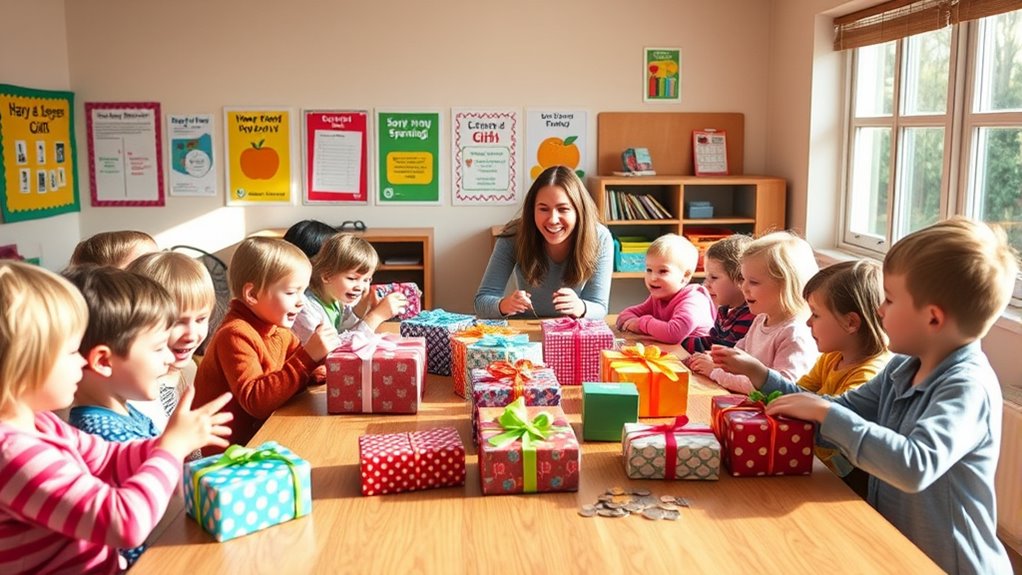

Planning a gift exchange is a great way to teach kids about money. You can set a budget and encourage them to save towards it, helping them understand the importance of planning and responsible spending. Involving kids in selecting meaningful gifts within the budget teaches value and comparison shopping. This activity also promotes saving habits and thoughtful decision-making. Keep exploring how these real-world lessons can build strong financial skills that last a lifetime.

Get baby and family essentials delivered free — and shop member deals
- Fast, free delivery on millions of items
- Access to Prime Big Deal Days deals on October 6–7
- Prime Video, Amazon Music and more included
Key Takeaways
- Organize a gift exchange within a set budget to teach kids about value, budgeting, and responsible spending.
- Involve children in selecting gifts, emphasizing comparison shopping and thoughtful choices.
- Use the event to reinforce saving habits and goal-setting through allowances and savings jars.
- Discuss the importance of making meaningful gifts and stretching money through planning.
- Reflect on financial lessons learned, celebrating progress in responsible money management and planning skills.

Teaching kids about money is an essential skill that sets them up for financial independence and responsibility later in life. One effective way to do this is by planning a gift exchange that emphasizes saving habits and allowance strategies. When you involve your children in organizing a gift exchange, you’re creating a real-world opportunity for them to understand the value of money, budgeting, and thoughtful spending. It’s not just about exchanging presents; it’s about teaching them to plan, prioritize, and make smart financial decisions.
Start by discussing the importance of setting a budget for the gift exchange. Encourage your kids to think about how much they want to spend and how they can save toward that goal. This is where teaching saving habits becomes *vital*. You might help them open a savings jar or account, showing them how small amounts saved regularly can add up over time. Reinforce that saving isn’t just for emergencies but also for special occasions like this. You can tie their allowance strategies into this lesson by suggesting they allocate a portion of their allowance specifically for gift money. This way, they learn to balance immediate spending with future savings.
Discuss setting a budget and saving regularly to teach kids financial responsibility and smart spending habits.
As you plan the exchange, involve your kids in selecting gifts within their budget. This will teach them to compare prices, look for deals, and prioritize what they really want to give or receive. It’s an ideal moment to explain the concept of value and how to make thoughtful choices, rather than impulsively buying whatever catches their eye. You can also discuss ways to stretch their money further, like making homemade gifts or combining resources with siblings or friends. This reinforces the idea that saving and strategic planning lead to better financial outcomes. Additionally, showing them how high-quality projectors can enhance a home cinema experience can inspire smarter spending choices on lasting items.
During the exchange, remind your kids that the goal is to give meaningfully without overspending. Highlight how their saving habits and allowance strategies helped them contribute to the gift exchange comfortably. Celebrate their efforts to stick to a plan, and use this as an opportunity to talk about how good financial habits can grow over time. Encourage them to reflect on what they learned about managing money through this experience.
As an affiliate, we earn on qualifying purchases.
Frequently Asked Questions
How Can I Involve Children of Different Ages in the Gift Exchange?
You can involve children of different ages in the gift exchange by choosing age-appropriate activities that everyone can enjoy. Assign simpler tasks to younger kids, like choosing or wrapping gifts, while older children can help with planning or managing the exchange. Encourage sibling involvement by pairing kids of different ages to work together, fostering teamwork and making the experience more inclusive and fun for everyone.
What Are Some Creative Ways to Set a Budget for Kids?
Did you know that kids as young as five can understand basic money concepts? To set a budget, try creative methods like using a visual jar system or giving kids a fixed amount for each gift. These methods establish clear kids’ spending limits while making budgeting fun. You can also involve them in choosing gifts within their budget, helping develop responsible money habits early on.
How Do I Teach Kids About Saving During Gift Planning?
You can teach kids about saving during gift planning by involving them in savings challenges, like setting a goal for their piggy bank. Encourage them to allocate a portion of their gift money to their piggy bank ideas, emphasizing the importance of saving before spending. Make it fun by tracking progress together, and celebrate milestones, helping them understand that saving is a valuable habit for future financial security.
What Are Age-Appropriate Gift Ideas for Children?
You should choose age-appropriate gift ideas like educational toys and DIY crafts that match their interests and developmental stage. For younger kids, simple puzzles and plush toys work well, while older children might enjoy science kits or art supplies. These gifts promote learning and creativity, making them both fun and meaningful. Always consider safety and durability, ensuring the gifts encourage growth while being suitable for their age.
How Can I Make the Process Fun and Educational for Kids?
Did you know kids learn best when they’re actively involved? To make the process fun and educational, incorporate interactive games and storytelling activities into your gift exchange. You could turn it into a treasure hunt or have kids share stories about the gifts they give. These activities keep children engaged, teach them about sharing and budgeting, and make the experience memorable. Keep it lively, and they’ll learn while having a blast!
Conclusion
By planning a gift exchange, you’re planting seeds of financial wisdom in your kids’ minds. Think of it as guiding a tiny sapling through its early growth—nurturing responsible money habits now will help it flourish later. Remember, every thoughtful lesson today shapes their understanding of value and generosity. With patience and practice, you’ll help them build a sturdy foundation for a lifetime of smart financial decisions.
Halloween Picks
halloween
As an affiliate, we earn on qualifying purchases.