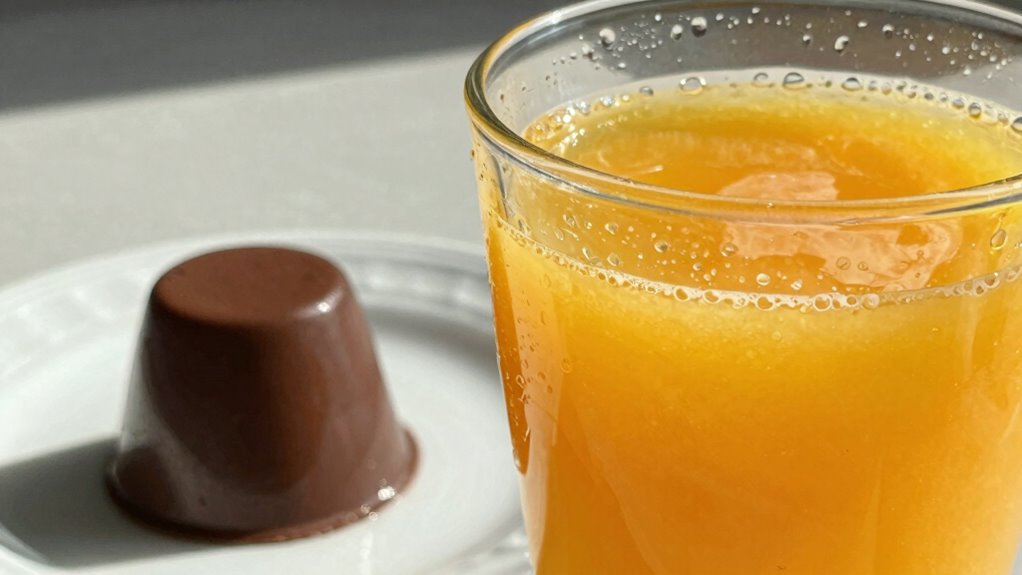

Sipping juice throughout the afternoon causes continuous acid contact with your teeth, which erodes enamel gradually. Unlike a single dessert that leads to a quick, temporary acid attack, prolonged sipping keeps your mouth in a constant state of acidity. Saliva can’t neutralize or repair the damage effectively during extended exposure. If you keep this up, your teeth become more vulnerable over time. Keep exploring to discover how to protect your smile better.
Key Takeaways
- Continuous sipping prolongs acid contact, leading to ongoing enamel erosion, unlike the brief acid attack from a single dessert.
- Frequent sips prevent saliva from neutralizing acids and repairing enamel, increasing tooth vulnerability over time.
- Persistent acid exposure from sipping weakens enamel gradually, making teeth more prone to cavities and sensitivity.
- A single dessert causes a short acid burst, allowing saliva to recover and remineralize, unlike sustained sipping.
- Managing sip frequency and rinsing can reduce damage, highlighting the importance of limiting prolonged acid contact.
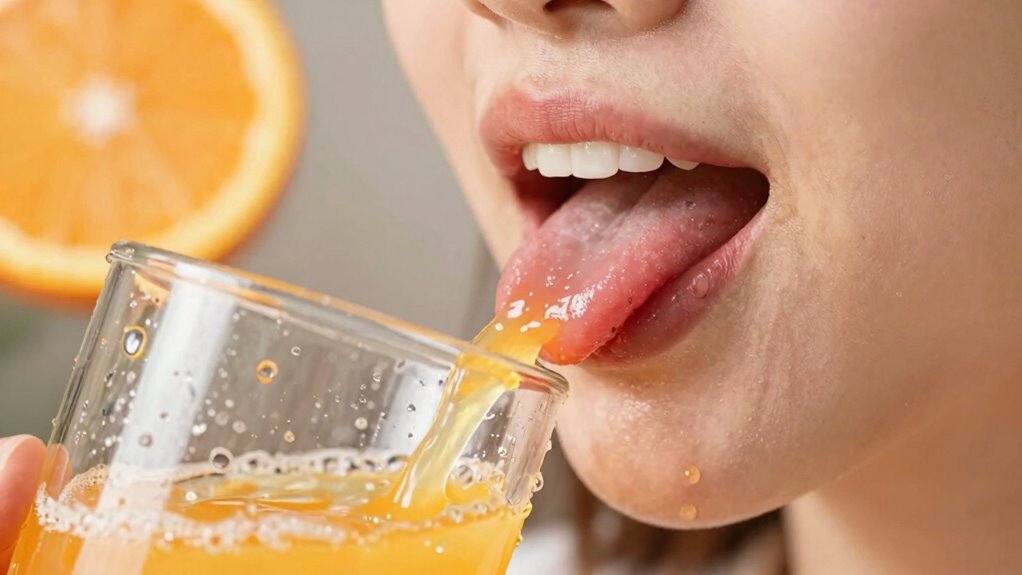
While sipping juice might feel like a revitalizing treat, it can also pose risks to your tooth health. When you indulge in juice throughout the afternoon, you’re exposing your teeth to a continuous stream of acid, which can lead to dental erosion. Unlike eating a single dessert, where the acid attack is brief, sipping keeps your mouth in a state of prolonged acid exposure. This persistent acid contact wears down your enamel, the protective outer layer of your teeth, gradually weakening them over time.
Sipping juice all afternoon prolongs acid exposure, gradually eroding your enamel and weakening your teeth over time.
Dental erosion occurs when the acids in juice dissolve the minerals in your tooth enamel. The more often you sip, the more your teeth are subjected to acid attack. Each sip introduces a new wave of acid, which doesn’t give your saliva enough time to neutralize the pH or repair the damage. As a result, the enamel becomes thinner and more vulnerable to cavities, sensitivity, and discoloration. The damage is cumulative; even if you’re only drinking fruit juice for a few hours, the repeated acid contact can cause lasting harm.
Choosing to sip juice throughout the day is especially problematic because it creates a pattern of repeated acid exposure that’s difficult for your mouth to recover from. The natural buffering process of saliva works best when you give your mouth intervals without acid. But when you’re continually sipping, saliva can’t keep up, leaving your teeth in a constant state of erosion. This ongoing acid assault makes your enamel softer and less able to protect your teeth from decay and physical damage. Prolonged acid exposure can significantly weaken your enamel, increasing the risk of long-term dental issues. Additionally, timing and frequency of acid contact are crucial factors in the extent of damage caused. It’s important to understand that acidic beverages can have a cumulative effect, especially when consumed over extended periods.
Furthermore, enamel erosion is a gradual process that can be difficult to reverse once it has progressed. In contrast, enjoying a dessert or a sugary snack in one sitting results in a quick, intense acid attack, but it’s usually shorter-lived. After that, your saliva begins to neutralize the acids, and your enamel has a chance to remineralize. Sipping juice all afternoon prevents this recovery period, prolonging acid exposure and increasing your risk of dental erosion. Over time, this can lead to noticeable wear, increased tooth sensitivity, and a higher likelihood of cavities.
To protect your teeth, it’s best to limit how often you sip juice and to rinse your mouth with water afterward. Using a straw can help reduce contact between the acidic liquid and your teeth. Remember, it’s not just what you eat or drink once that matters but how often and how long your teeth are exposed to acids. Being aware of the effects of prolonged acid exposure can help you make better choices for your oral health. By being mindful of your sipping habits, you can enjoy your juice without sacrificing your smile.

Sensodyne Pronamel Clinical Enamel Strength Toothpaste, Whitening Action, 2.3 oz
- Product Size: 2.3 oz tube
- Enamel Strength: 3x stronger enamel
- Protection Level: 24/7 enamel protection
As an affiliate, we earn on qualifying purchases.
As an affiliate, we earn on qualifying purchases.
Frequently Asked Questions
How Does Juice Acidity Compare to Other Sugary Foods?
Juice acidity is typically higher than many sugary foods, with lower pH levels indicating more acidity. While sugary foods often have high sugar content, they usually have neutral or slightly acidic pH levels. Sipping juice exposes your teeth to consistent acid attacks, weakening enamel over time. In contrast, eating sugary foods in moderation is less damaging because the acid exposure isn’t prolonged. So, juice’s acidity makes it more harmful to your teeth than many other sweet treats.
Can Rinsing With Water After Juice Reduce Damage?
Like a knight wielding a water lance, rinsing with water after juice can help, but it’s not a magic cure. It temporarily raises your mouth’s pH levels and boosts saliva buffering, which washes away acids. However, if you want to truly protect your teeth, rinse promptly, avoid brushing immediately, and wait about 30 minutes. This helps neutralize acids and minimizes erosion, keeping your teeth healthier over time.
Are Certain Types of Juices More Harmful to Teeth?
Yes, certain juices are more harmful to your teeth, especially those with high sugar content and fruit pulp. Juices like apple and grape contain more sugar and acidity, which can erode enamel faster. The fruit pulp sticks to your teeth longer, increasing exposure to sugars and acids. To protect your teeth, opt for lower-sugar juices, rinse with water afterward, and avoid sipping continuously to reduce damage.
Does the Temperature of the Juice Affect Dental Health?
The temperature effects on your teeth are like a rollercoaster, constantly shifting. Warm or cold juice causes thermal expansion and contraction, stressing enamel and making it more vulnerable to damage. Drinking very hot or cold liquids can increase sensitivity, while moderate temperatures are gentler. So, you should opt for room temperature or slightly cooled juice to protect your dental health, avoiding extreme temperatures that strain your enamel.
How Quickly Can Juice Erode Tooth Enamel?
Juice can erode your enamel quite quickly, often within just a few minutes of sipping, due to its high acid impact. The acids weaken your enamel, leading to erosion over time. If you sip continuously, the prolonged acid exposure accelerates the process, making your teeth more vulnerable to decay and sensitivity. To protect your teeth, try to limit juice intake and rinse your mouth with water afterward.
Conclusion
Think of your teeth as delicate castles, vulnerable when exposed to the constant drizzle of juice. Sipping all afternoon is like letting rain softly seep through cracks, eroding the walls from within. One dessert, however, is a brief storm—intense but fleeting. Protect your fortress by savoring treats mindfully and limiting prolonged contact. Remember, a well-guarded castle stands firm, just like your teeth when you treat them with care and awareness.