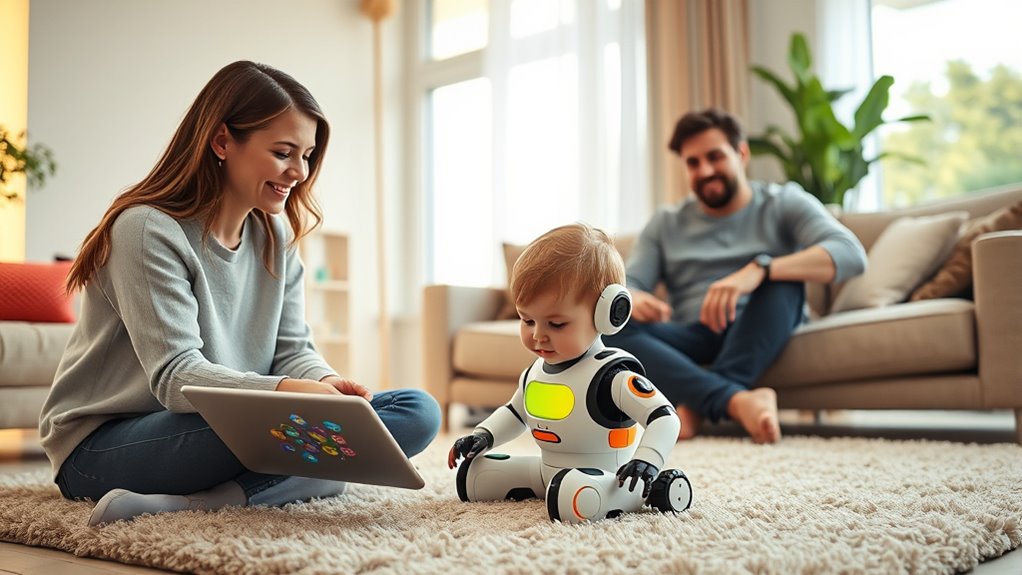

Integrating AI toys and apps into your parenting can enhance your child’s learning and play experiences while offering personalized challenges that adapt to their growth. However, it’s important to establish clear boundaries, choose quality content, and balance screen time with offline activities like outdoor play and social interactions. Your active involvement helps make certain these tools support development responsibly. To explore effective strategies and how to get started, keep exploring these helpful insights.
Key Takeaways
- AI toys and apps create personalized, interactive learning experiences that adapt to children’s developmental needs.
- Parental oversight and setting boundaries are essential to ensure healthy screen time and content quality.
- Combining virtual play with offline activities promotes balanced development and social skills.
- Active parental involvement enhances benefits, guiding children toward age-appropriate and educational content.
- Responsible integration of technology supports skill development while fostering responsible digital habits.

Have you ever wondered how technology is transforming the way parents raise their children? Today, AI toys and apps are reshaping parenting by offering new ways for kids to learn, play, and connect. One significant aspect of this shift is virtual play, which has become a staple in many households. Instead of traditional toys alone, children now engage with interactive devices that respond to their actions, creating immersive experiences that blend education and entertainment. These AI-powered toys adapt to a child’s developmental stage, providing personalized challenges that keep kids engaged while fostering skills like problem-solving, creativity, and language development.
AI toys and apps create immersive, personalized learning and play experiences that adapt to each child’s developmental stage.
However, with the rise of virtual play, managing screen time has become a concern for many parents. It’s easy to fall into the trap of letting screens dominate a child’s day, but smart screen time management is essential for healthy development. You’re encouraged to set clear boundaries around when and how long your children can use digital devices. Using timers or scheduling specific times for virtual play helps maintain a balance between online activities and offline experiences. It’s also helpful to choose quality content—apps and games that promote learning, creativity, and social skills—rather than passive consumption. Many parents find that involving their children in choosing apps or games creates a sense of ownership and encourages responsible use.
It’s important to remember that technology should complement, not replace, physical activity, social interactions, and outdoor play. Incorporating regular breaks and encouraging children to engage in hands-on activities can prevent excessive screen time and support overall development. You might also consider co-playing with your children, which not only helps you monitor their digital activities but also turns screen time into a bonding experience. This approach allows you to guide your child towards age-appropriate content, discuss what they’re learning, and foster critical thinking about technology. Additionally, understanding asset division laws and strategies can help parents plan for future financial stability while navigating the complexities of modern family life.
While AI toys and apps offer exciting opportunities, they also require you to be vigilant about their use. Establishing routines around virtual play and screen time management helps guarantee your child benefits from technology without overdoing it. As a parent, your involvement and oversight are key to steering this digital landscape responsibly. By actively managing screen time and choosing meaningful virtual play experiences, you help your children develop healthy habits and harness the advantages of technology—making their digital journey safe, educational, and enjoyable.
Frequently Asked Questions
How Do AI Toys Impact Children’s Social Skills Development?
AI toys can influence your child’s social skills development by shaping their emotional intelligence and peer interaction. These toys may help children recognize emotions and learn empathy through interactive features, but overuse might limit real peer interactions. To support balanced growth, encourage your child to engage with peers regularly, fostering genuine social skills alongside the benefits of AI-driven play. This way, they develop emotional understanding and healthy social relationships.
Are There Privacy Concerns With Parenting Apps Collecting Child Data?
Think of your child’s data as a precious treasure chest—you wouldn’t leave it unsecured. Yes, privacy concerns exist with parenting apps collecting child data, especially around data security. You need to guarantee apps ask for parental consent and have strong safeguards. Always read privacy policies and choose reputable apps, so you protect your child’s information like a vigilant guardian. Your proactive steps keep their digital world safe.
How Can Parents Ensure Balanced Technology Use for Their Kids?
You can guarantee balanced technology use by setting clear digital boundaries and practicing screen time management. Establish specific times for device use and encourage offline activities like outdoor play or reading. Communicate openly with your kids about why limits matter, and lead by example. Regularly review app and toy choices to ensure they align with healthy habits. This approach helps foster a balanced relationship with technology, promoting overall well-being.
What Age Is Appropriate for Introducing Ai-Based Educational Toys?
You should consider introducing AI-based educational toys around ages 3 to 5, as early exposure can supercharge your child’s developmental milestones. At this age, kids are like sponges, soaking up knowledge and skills rapidly. These toys can enhance learning, but only if you guarantee they’re age-appropriate and used in moderation. Too early, and it might overwhelm; too late, and you might miss vital developmental windows.
How Do AI Apps Support Children With Special Needs?
You can support children with special needs by using AI apps that offer personalized learning tailored to their unique abilities. These apps adapt to their progress, helping them develop skills at their own pace. They also provide emotional support by offering encouragement and comfort, which boosts confidence. This targeted approach helps children feel more engaged and understood, making learning more effective and nurturing their overall development.
Conclusion
As you navigate the nuanced nexus of nurturing and technology, remember that mindful moderation maximizes benefits and minimizes barriers. Embrace innovative AI toys and apps to foster fun, learning, and connection, but stay vigilant about boundaries. By balancing bright, busy devices with quality, quiet time, you can create a harmonious home where technology nurtures growth without negating genuine guidance. Ultimately, your mindful management makes tech truly transformative in your parenting journey.