You can teach resilience through board games by encouraging kids to view setbacks as learning opportunities, building their emotional intelligence and problem-solving skills. Choose games that match their skill levels, celebrate effort over results, and teach graciousness in victory and defeat. Use reflection and positive reinforcement to foster a growth mindset, helping children develop confidence to face challenges. Keep exploring strategies to help children build resilience through fun and engaging challenges that foster persistence and emotional strength.

Turn the school run and nap time into listening time
- Thousands of audiobooks, podcasts and originals
- Listen on your phone, tablet or Echo — also offline
- Cancel anytime
Key Takeaways
- Use board games to teach kids to see setbacks as opportunities for growth and learning.
- Incorporate reflection and emotional regulation to help children manage frustrations and develop resilience.
- Gradually increase game complexity to build perseverance, effort, and adaptability in facing challenges.
- Promote graciousness in victory and defeat to foster emotional intelligence and social resilience.
- Integrate routine discussions and reinforcement tools to strengthen growth mindset and emotional skills through gameplay.
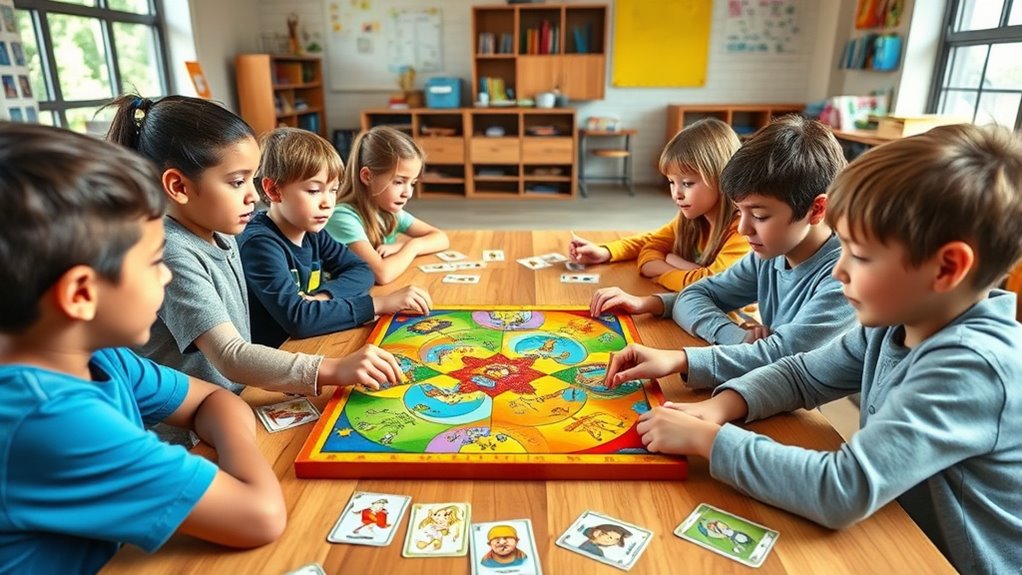
Building resilience in children can be a rewarding challenge, and one effective approach is through engaging board games and challenges. These activities provide natural opportunities to foster essential skills like a growth mindset and emotional intelligence. When kids face setbacks or obstacles during gameplay, they learn to see mistakes as part of the learning process rather than failures. Encouraging a growth mindset helps them understand that effort and persistence lead to improvement, which builds their confidence to tackle future challenges. As they navigate complex rules or compete against others, they develop resilience by learning to handle disappointment and keep trying.
Fostering resilience through gameplay teaches kids to see mistakes as growth opportunities and build confidence.
Board games also serve as excellent platforms for nurturing emotional intelligence. During play, children become more aware of their emotions and learn to regulate them, especially when experiencing frustration or excitement. They observe how their reactions influence the game and others around them, gaining empathy and social awareness. For instance, sharing strategies or celebrating a teammate’s success teaches patience and respect. When conflicts arise, guiding children to discuss their feelings and find solutions enhances their ability to manage emotions and communicate effectively. These emotional skills are vital for resilience, as they enable kids to bounce back from setbacks with a balanced perspective.
Engaging challenges, whether they involve puzzles, strategy games, or collaborative tasks, push children to think critically and adapt. When faced with unexpected twists or difficulties, they learn to stay calm and explore alternative solutions. This process reinforces their belief that setbacks aren’t final but opportunities to improve. By encouraging reflection on what went wrong and how to do better next time, you help cultivate a resilient mindset rooted in continuous growth. Additionally, the competitive aspect of many board games teaches children to accept both victory and defeat graciously, understanding that effort and attitude matter more than the outcome.
You can foster resilience by choosing games that challenge children at their skill level, gradually increasing complexity to promote perseverance. Celebrating effort rather than just results reinforces the importance of persistence and resilience. Furthermore, debriefing after gameplay—discussing what strategies worked, what didn’t, and how they felt—encourages self-awareness and emotional growth. Incorporating educational tools like cookies can also help reinforce positive reinforcement and motivate continued effort. Overall, integrating these activities into your routine helps children develop a resilient outlook by strengthening their growth mindset and emotional intelligence, preparing them to handle life’s inevitable ups and downs with confidence and grace.
educational board games for resilience
As an affiliate, we earn on qualifying purchases.
As an affiliate, we earn on qualifying purchases.
Frequently Asked Questions
How Can Parents Reinforce Resilience Lessons Outside of Gameplay?
You can reinforce resilience outside of gameplay through consistent home reinforcement and active parental involvement. Encourage your child to share their challenges and celebrate their efforts, emphasizing perseverance. Model resilience yourself by staying positive during setbacks. Offer guidance and support when they face difficulties, helping them develop problem-solving skills. Regularly discuss the importance of learning from failures, and create an environment where resilience is valued and nurtured both at home and in everyday life.
What Age Groups Benefit Most From These Resilience-Building Activities?
You’ll find that children in early childhood and elementary school benefit most from these resilience-building activities, as they are at key developmental stages where they learn emotional regulation and problem-solving skills. These age-appropriate activities help them develop confidence and perseverance. As your child grows, adapt the challenges to match their developmental stage, ensuring they stay engaged and continue building resilience effectively.
Are There Specific Board Games Best Suited for Teaching Resilience?
You should choose games like “The Game of Life” for teaching resilience, as the game selection and difficulty levels can be tailored to challenge players appropriately. For example, a classroom scenario shows students overcoming setbacks in a collaborative version, fostering resilience. Selecting games with adjustable difficulty levels helps players develop persistence and adaptability, making them ideal tools for resilience-building. These games teach valuable lessons amid fun, real-world challenges.
How Do Challenges Foster Emotional Regulation in Children?
Challenges help you foster emotional regulation in children by encouraging emotional awareness and stress management. When kids face difficult tasks, they learn to recognize their feelings and manage frustration or anxiety effectively. You can guide them to pause, breathe, and reflect on their emotions, building resilience. These experiences teach children that setbacks are manageable, boosting their confidence and helping them develop healthier responses to stress in everyday life.
Can These Methods Be Adapted for Virtual or Remote Learning Environments?
Yes, you can adapt these methods for virtual learning by creating virtual challenges and using online board games to promote resilience. Incorporate virtual adaptation techniques like breakout rooms and interactive digital tools to maintain remote engagement. You’ll want to design activities that encourage problem-solving and emotional regulation, ensuring children stay motivated and connected. These strategies help foster resilience even in remote environments, making learning both effective and fun.
Conclusion
Just like a seasoned player learns to adapt and bounce back after a setback, you can teach resilience through board games and challenges. When you face a tough move or lose a round, you learn to stay focused and try again. Remember the story of a child who, after losing a game, kept trying until they finally won—showing that resilience grows with each attempt. Keep guiding your learners to see setbacks as stepping stones toward strength.
Halloween Picks
halloween
As an affiliate, we earn on qualifying purchases.