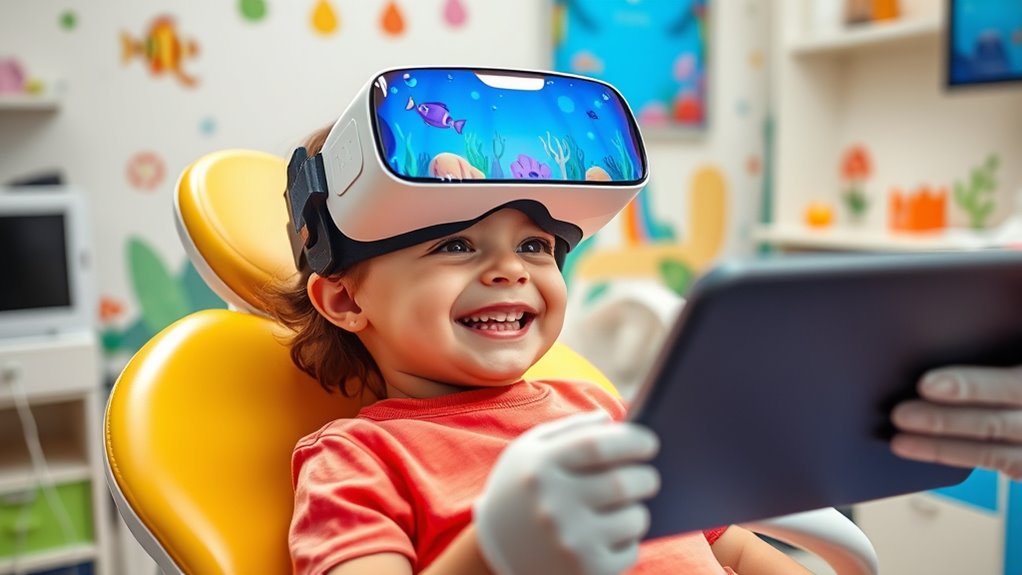

Using virtual reality in pediatric dentistry helps make visits fun by distracting children and reducing their anxiety. VR immerses kids in engaging environments, with effects like parallax adding depth and realism, while haptic feedback provides tactile sensations. These features keep children focused elsewhere, making procedures feel shorter, safer, and less stressful. As a result, children build positive feelings about dental visits. If you’re curious about how VR can transform dental care, you’ll find helpful insights below.
Key Takeaways
- VR distracts children during dental procedures, reducing fear and anxiety by immersing them in engaging virtual worlds.
- Parallax effects enhance realism and immersion, making virtual environments more captivating and effective in diverting attention.
- Haptic feedback adds tactile sensations, increasing virtual experience realism and further soothing children during treatments.
- Combining visual and tactile VR features minimizes discomfort, reduces the need for sedation, and promotes positive dental experiences.
- Integrating VR transforms pediatric visits into enjoyable, less stressful events, fostering long-term positive perceptions of dental care.

Virtual reality (VR) is transforming pediatric dentistry by offering innovative solutions to manage children’s anxiety and improve their treatment experience. When you introduce VR into the dental office, you’re providing a distraction that makes procedures less intimidating. Kids no longer have to focus solely on the dental tools or the unfamiliar environment. Instead, they become immersed in engaging virtual worlds, which can substantially reduce fear and resistance.
One of the most exciting advancements in VR technology is the use of parallax effects. These effects create a sense of depth and realism within the virtual environment, making the experience more immersive and mesmerizing. As children move their heads or shift their gaze, the scene responds dynamically, enhancing their sense of being part of a different world. This heightened immersion helps divert their attention from the dental procedure, making even lengthy treatments feel shorter and less stressful.
Alongside visual enhancements like parallax effects, haptic feedback plays an essential role in elevating the VR experience. Haptic feedback involves providing tactile sensations that mimic real-world touch, allowing children to feel subtle vibrations or pressures corresponding to the virtual environment. For example, if a child is exploring a virtual underwater scene or a space adventure, they might feel gentle pulses or vibrations when they interact with objects within the simulation. This sensory input adds a layer of realism, making the virtual experience more convincing and engaging, which further distracts and soothes the patient.
Incorporating VR with features like parallax effects and haptic feedback isn’t just about entertainment; it’s about creating a tailored experience that minimizes discomfort. When a child is fully engaged in a mesmerizing virtual universe, their focus shifts away from the dental drill or injection. This mental distraction reduces the need for sedation or anesthesia in many cases, making procedures safer and more comfortable. Plus, as they explore these virtual worlds, they can build positive associations with dental visits, helping to reduce dental anxiety over time.
Frequently Asked Questions
Are VR Headsets Safe for Young Children’s Eyes?
Yes, VR headsets are generally safe for young children’s eyes when used properly. You should make certain the headset fits comfortably and isn’t too tight, which helps maintain good eye health. Limit session durations to prevent eye strain and take regular breaks. Always supervise your child during VR use to monitor comfort and eye health, and choose headsets designed with kid-friendly features for maximum safety and comfort.
How Do VR Distractions Affect Dental Procedure Accuracy?
A distraction is a double-edged sword—while VR can make visits enjoyable, it might impact procedure accuracy. You should be mindful of distraction risks, especially if a child’s attention span shifts away from the dentist’s instructions. When VR diverts focus too much, the risk of errors increases. To ensure precision, balance VR use with close monitoring, so children stay engaged without compromising the quality of care.
Can VR Be Used for Children With Special Needs?
Yes, you can definitely use VR for children with special needs. VR helps with sensory integration by providing controlled, calming environments that reduce anxiety. It also enhances communication by engaging children visually and interactively, encouraging cooperation. You, as a dental professional, can tailor VR experiences to meet individual sensory and communication needs, making dental visits smoother and more comfortable for children with special needs.
What Are the Costs Associated With Implementing VR in Clinics?
Implementing VR in your clinic involves a thorough cost analysis, considering both initial equipment investment and ongoing expenses. You’ll need to purchase VR headsets, software, and maintenance, which can vary widely based on quality and features. Additionally, training staff and updating devices periodically add to costs. Planning a detailed budget helps guarantee you balance the benefits of engaging, stress-reducing experiences with the financial investment required for successful integration.
How Do Children Generally Respond to VR During Visits?
You notice that children often respond positively to VR, like entering a different world where their worries fade away. This technology boosts child engagement and reduces anxiety, making dental visits smoother. For example, a young patient once told you VR made her feel like a superhero on a mission, distracting her from the procedure. Overall, VR transforms dental visits into engaging experiences, helping kids stay calm and cooperative throughout their appointment.
Conclusion
As you embrace virtual reality in pediatric dentistry, you’re opening a portal to a world where fear melts away like ice in the sun. This innovative tool transforms each visit into a vibrant adventure, turning anxious moments into stories of courage and curiosity. By weaving technology into your practice, you craft a tapestry of comfort and excitement, making every dental journey feel like a captivating voyage rather than a formidable voyage into the unknown.