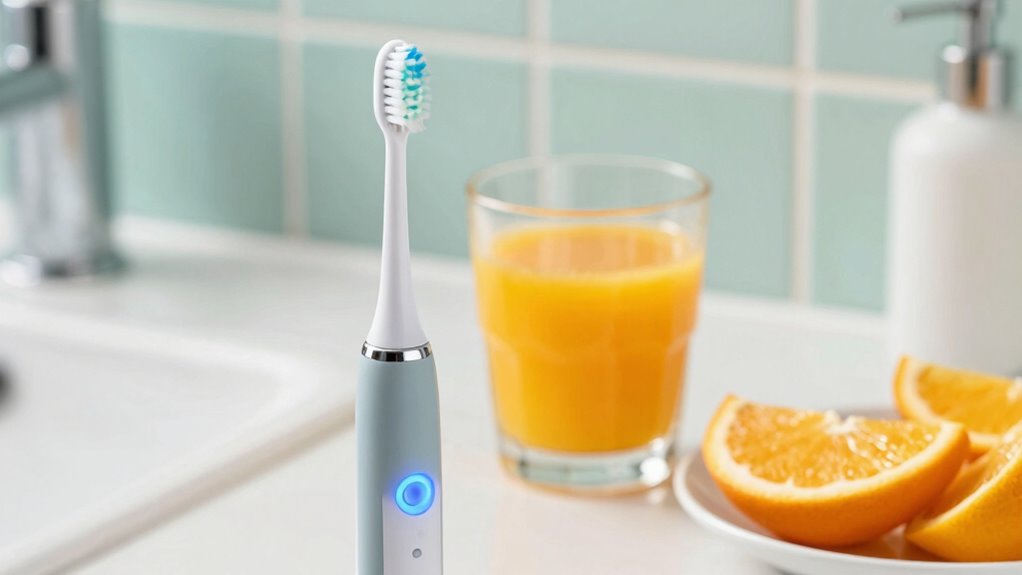
After consuming acidic foods or drinks, avoid brushing your teeth immediately, as this can wear down softened enamel. Instead, rinse your mouth with water or a neutral mouthwash to wash away acids, then wait 30 minutes to an hour before brushing. Saliva helps neutralize acids and begin repair. Using fluoride toothpaste can strengthen enamel over time. To discover more tips on protecting your smile, keep exploring how timing your oral care makes a difference.

Turn the school run and nap time into listening time
- Thousands of audiobooks, podcasts and originals
- Listen on your phone, tablet or Echo — also offline
- Cancel anytime
Key Takeaways
- Wait 30 minutes to an hour after consuming acidic foods or drinks before brushing.
- Rinse your mouth with water or neutralizing mouthwash immediately after acid intake.
- Avoid brushing immediately to prevent brushing softened enamel and causing erosion.
- Use gentle, soft-bristled brushes when you do brush, and avoid vigorous scrubbing.
- Incorporate fluoride toothpaste or rinses to strengthen enamel and promote remineralization.

After enjoying acidic foods and drinks, timing your brushing can make a big difference in protecting your teeth. Acidic items like citrus, soda, or wine temporarily weaken your enamel, making it more vulnerable to damage. If you brush immediately after consuming these, you risk brushing away softened enamel, which can accelerate wear and lead to sensitivity over time. Instead, wait for a little while before brushing to allow your saliva to neutralize acids and initiate the natural repair process. This pause gives your mouth a chance to restore a more neutral pH, reducing the risk of enamel erosion.
Wait before brushing after acidic foods to protect and help repair your enamel.
While waiting, you can promote enamel repair through fluoride application. Fluoride helps remineralize your teeth, strengthening enamel that has been temporarily softened by acid exposure. Using fluoride toothpaste or mouth rinses can enhance this process, creating a protective barrier against future acid attacks. Many dental professionals recommend fluoride treatments or varnishes, especially if you’re prone to acid erosion or have existing enamel issues. Incorporating fluoride into your post-acid routine supports your teeth’s natural defenses and encourages repair, ultimately maintaining your smile’s health.
Timing your brushing also involves understanding the importance of avoiding brushing immediately. Instead, rinse your mouth with water or a neutralizing mouthwash right after consuming acidic foods or drinks. This helps wash away residual acids and prevents them from lingering on your teeth. After about 30 minutes to an hour, when the acidity has subsided and your saliva has done its work, you can confidently brush. This delay minimizes enamel abrasion, allowing your toothbrush to clean effectively without damaging your weakened enamel. Additionally, understanding the role of saliva in neutralizing acids can help you better manage your oral health after consuming acidic foods. Recognizing the importance of enamel resilience can guide you to adopt more protective oral hygiene habits.
Using gentle, soft-bristled brushes and avoiding vigorous scrubbing right after acid exposure is also crucial. Aggressive brushing can mechanically wear down enamel that’s been compromised, even if you wait the appropriate amount of time. Be mindful of your brushing technique and opt for a gentle touch to prevent unnecessary damage. Regular checkups with your dentist can help monitor your enamel health and recommend personalized strategies, such as additional fluoride treatments or enamel repair techniques, tailored to your needs. Maintaining awareness of oral health preservation can further support your efforts in protecting your teeth from erosion. Incorporating proper oral hygiene techniques into your routine ensures you’re protecting your teeth from potential damage effectively. Remember, understanding the effects of acids on teeth can help you make more informed decisions about your oral care routine.
fluoride toothpaste for enamel strengthening
As an affiliate, we earn on qualifying purchases.
As an affiliate, we earn on qualifying purchases.
Frequently Asked Questions
Can Rinsing With Water Replace Brushing After Acidic Foods?
Rinsing with water isn’t a complete substitute for brushing after acidic foods, especially if you’ve had high sugar intake, which can promote plaque and bacteria. Water helps wash away acids and sugars, reducing enamel demineralization, but brushing is necessary to remove plaque effectively. To protect your enamel, wait about 30 minutes after eating or drinking acids, then brush gently to avoid further damage.
How Long Should I Wait Before Brushing After Consuming Acidic Drinks?
You should wait at least 30 minutes before brushing after consuming acidic drinks. Acidic damage weakens your enamel temporarily, and brushing too soon can cause dental sensitivity or erosion. Rinsing with water immediately helps neutralize acids, but delaying brushing gives your enamel time to harden again. This simple step protects your teeth from further damage and reduces sensitivity, keeping your smile healthier in the long run.
Are There Specific Toothbrush Types Better for Acidic Food Consumption?
You should choose a toothbrush with soft bristles to protect your enamel after acidic foods or drinks. Soft bristles are gentle yet effective, reducing enamel erosion risk. Select a toothbrush with good durability, so it maintains its softness and cleaning power over time. Avoid hard-bristled brushes, which can cause damage. Regularly replacing your toothbrush guarantees maximum cleanliness and protection for your teeth after consuming acidic items.
Does Chewing Gum Help Protect Teeth From Acid Erosion?
Chewing gum can help protect your teeth from acid erosion by stimulating saliva production, which neutralizes acids and helps remineralize enamel. When you chew sugar-free gum, it encourages saliva flow, reducing the risk of enamel erosion caused by acidic foods and drinks. This simple habit acts as a buffer, safeguarding your teeth and supporting overall oral health. So, yes, chewing gum is a smart, proactive way to defend against acid damage.
Can Mouthwash Prevent Damage From Acidic Foods and Drinks?
Yes, mouthwash can help prevent damage from acidic foods and drinks by strengthening your enamel and reducing acidity. Its effectiveness depends on the type you choose—look for formulas with fluoride or remineralizing agents. While mouthwash isn’t a magic shield, it’s a smart addition to your acid food protection strategy. Use it after meals to neutralize acids, but don’t forget to wait before brushing to avoid further erosion.
Conclusion
Remember, waiting at least 30 minutes before brushing after consuming acidic foods or drinks can markedly protect your enamel. Did you know that acid exposure can weaken enamel by up to 50%, making it more vulnerable to damage? By timing your brushing wisely, you’re not just maintaining fresh breath—you’re actively preserving your smile’s health. So next time, sip water and wait patiently to brush. Your teeth will thank you for it!
Fall Picks
fall essentials
As an affiliate, we earn on qualifying purchases.