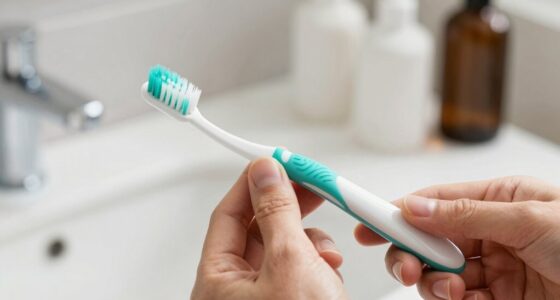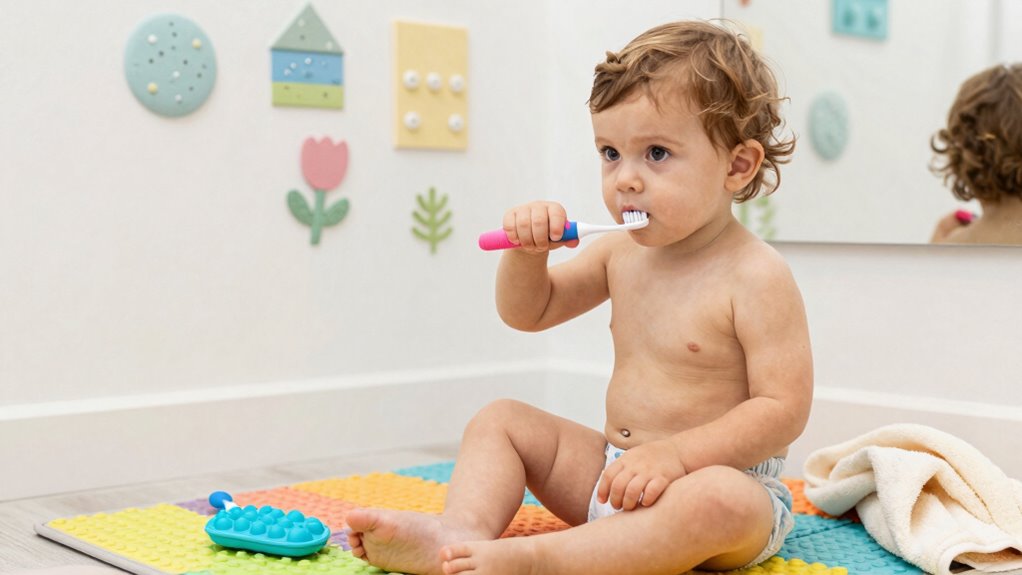

To make oral care easier for kids with sensory sensitivities, create a calm, reassuring environment with a gentle voice and simple explanations. Use sensory-friendly tools like soft-bristled toothbrushes and mild toothpaste, and incorporate relaxing music or textures to ease discomfort. Keep routines short and flexible, praising small successes to build confidence. Patience and consistency are key. If you keep exploring, you’ll discover more effective ways to make the process smoother for your child.

Get baby and family essentials delivered free — and shop member deals
- Fast, free delivery on millions of items
- Access to Prime Big Deal Days deals on October 6–7
- Prime Video, Amazon Music and more included
Key Takeaways
- Use sensory-friendly tools like soft-bristled toothbrushes and milder toothpaste to reduce discomfort.
- Create a calm environment with gentle voices, calming music, and a relaxed routine to ease anxiety.
- Offer choices, such as flavor or tool options, to give children a sense of control during oral care.
- Incorporate sensory integration techniques and gradual exposure to build tolerance and comfort.
- Reinforce positive behavior with praise and patience to foster cooperation and confidence over time.
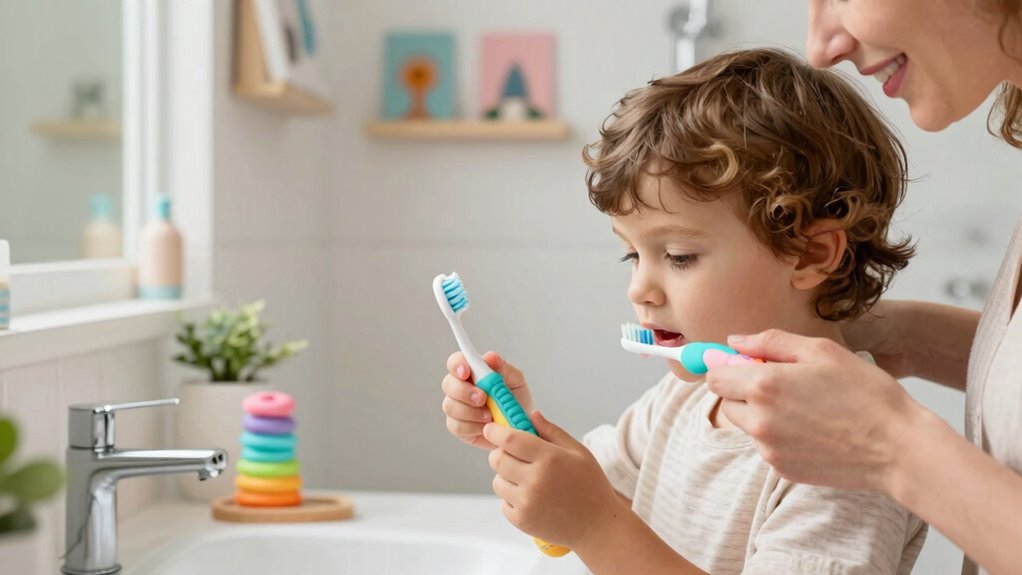
Do you find that brushing your child’s teeth becomes a struggle due to their sensory sensitivities? If so, you’re not alone. Many children with sensory sensitivities experience heightened reactions to typical oral care routines, making it tough to establish a consistent habit. One key factor to consider is dental anxiety, which can develop when children associate brushing with discomfort or fear. To ease this, it’s essential to create a calm, reassuring environment. Use a gentle voice, explain each step simply, and let your child know they’re in control by offering choices, such as selecting their toothbrush or toothpaste flavor. This helps reduce anxiety and builds trust, making the experience less intimidating.
Creating a calm, reassuring environment reduces anxiety and builds trust during your child’s oral care routine.
Another effective strategy is managing brush timing carefully. Instead of rushing through the routine, find a time when your child is most relaxed, perhaps after a warm bath or during a calm part of the day. Keeping the brushing sessions short initially can prevent overwhelming them. Gradually increase the duration as they become more comfortable, always paying attention to their cues. If they start to resist, it’s okay to pause and try again later. Consistency is important, but flexibility helps your child feel safe and in control, reducing the likelihood of resistance or sensory overload. Recognizing that sensory sensitivities are common among children can help you tailor your approach more effectively.
Incorporate sensory-friendly tools into your routine. Use toothbrushes with soft bristles and handle sizes designed for small hands. Some children respond better to electric toothbrushes, which can be less invasive and more engaging. You might also experiment with different flavors of toothpaste, opting for milder options if strong minty smells trigger discomfort. Additionally, consider introducing sensory tools like a textured towel to wipe the mouth gently before brushing or a calming music playlist to create a soothing atmosphere. Understanding sensory sensitivities can guide you in choosing the most suitable tools and techniques for your child’s needs. Incorporating sensory integration techniques can further enhance their comfort during oral care.
Finally, always praise your child’s efforts, no matter how small. Reinforcing positive behavior encourages cooperation and gradually builds their confidence in oral care routines. Remember, patience is key—what works today might need tweaking tomorrow. By understanding their sensory needs, managing brush timing thoughtfully, and creating a supportive environment, you can make oral care a less intimidating experience. Over time, your child will learn to associate brushing with safety and comfort, laying the foundation for a lifetime of good dental habits.
sensory-friendly kids toothbrush
As an affiliate, we earn on qualifying purchases.
As an affiliate, we earn on qualifying purchases.
Frequently Asked Questions
Are There Specific Brands of Toothbrushes Recommended for Sensitive Kids?
Yes, there are specific brands recommended for sensitive kids. Look for electric brushes with soft bristles, as they’re gentler on sensitive gums. Brands like Philips Sonicare for Kids and Oral-B Kids have models designed to be gentle and effective. These brushes often come with smaller heads and softer bristles, making brushing less uncomfortable for kids with sensory sensitivities. Always check for gentle, kid-friendly features to guarantee comfort.
How Can I Tell if My Child Is Overwhelmed by Oral Care Routines?
You can tell if your child is overwhelmed by oral care routines when you notice sensory overload signs, like covering their mouth, pulling away, or fussiness. Behavioral cues such as crying, tantrums, or resisting brushing also indicate they’re overwhelmed. Pay close attention to their reactions during brushing; if these cues persist, it’s a sign you need to adjust the routine to reduce sensory stress and make oral care more comfortable.
What Are Non-Verbal Cues Indicating Discomfort During Brushing?
You’ll notice non-verbal cues like facial expressions showing distress—frowning, grimacing, or tight lips. Your child might also exhibit body language signs such as pulling away, stiffening, or turning their head. Watch for clenched fists or increased blinking, which can signal discomfort. These cues indicate they’re overwhelmed or uncomfortable during brushing, so pausing and adjusting your approach can help make the experience more tolerable for them.
Can Diet Changes Improve My Child’s Oral Sensitivity Issues?
Diet decisions can directly diminish dental discomfort and sensory sensitivities. By prioritizing nutrient-rich, sensory-friendly foods, you can pacify picky palates and promote oral health. Incorporate soft, smooth textures and steer clear of sugary, sticky snacks that trigger sensitivities. The diet impact is significant; nourishing with calming sensory foods may reduce discomfort, making brushing and oral care more manageable. Small, consistent changes can cultivate comfort and confidence in your child’s dental routines.
How Long Does It Typically Take for a Child to Adapt to New Oral Care Tools?
It usually takes a few weeks for a child to adapt to new oral care tools, but this varies depending on their sensory integration needs. You can help by using adaptive techniques, like gradual exposure and positive reinforcement, to ease their discomfort. Consistency and patience are key, as these methods build confidence. Keep encouraging your child, and celebrate small victories to make the process smoother and more manageable for both of you.
Conclusion
So, you’ve got this incredible power—turning oral care into a smooth, stress-free adventure for your sensory-sensitive kid! With patience, creativity, and a sprinkle of love, you can transform teeth brushing from a battle into a bonding moment, a tiny miracle every day. Imagine a world where brushing is as easy as a gentle hug, where giggles replace tears, and your child’s smile shines brighter than ever. You’re not just making oral care easier—you’re changing lives.
Halloween Picks
halloween
As an affiliate, we earn on qualifying purchases.