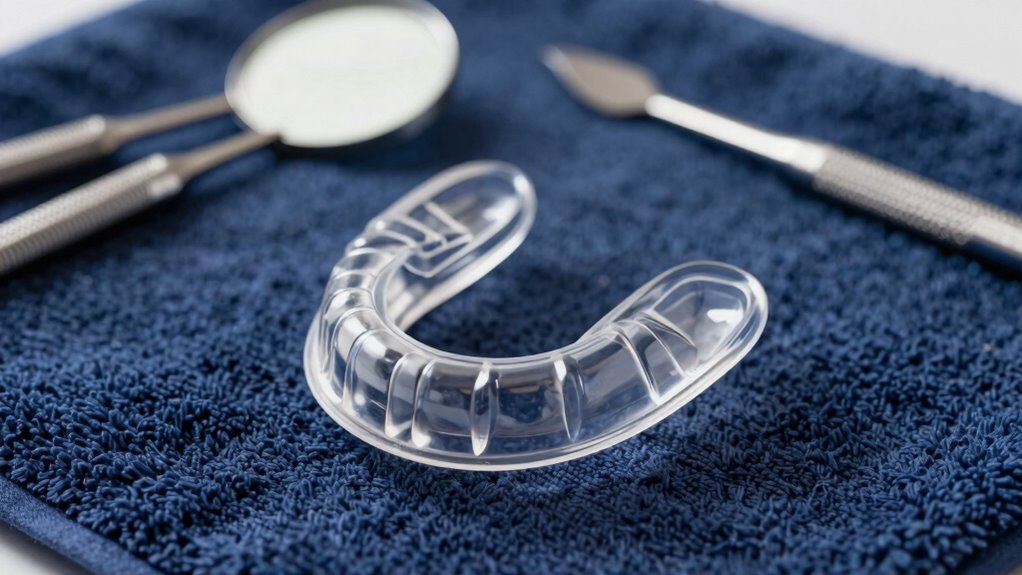

To start the sports mouthguard habit at home, incorporate it into your daily routine, such as brushing your teeth or before stepping onto the field. Keep your mouthguard visible in a designated spot to serve as a reminder to wear it. Consistent placement and pairing with existing habits make it easier to remember. Regular cleaning and proper storage also reinforce its importance. Keep going, and you’ll discover even more simple ways to make wearing your mouthguard automatic.

Turn the school run and nap time into listening time
- Thousands of audiobooks, podcasts and originals
- Listen on your phone, tablet or Echo — also offline
- Cancel anytime
Key Takeaways
- Incorporate wearing the mouthguard into your daily pre-practice or post-brushing routine for consistency.
- Designate a specific, visible spot at home to store the mouthguard as a reminder to wear it.
- Practice placing the mouthguard in your mouth at a set time each day to build automatic habits.
- Use visual cues, like a checklist or alarm, to reinforce the habit of wearing and caring for the mouthguard.
- Keep the mouthguard clean and in good condition to make using it more appealing and easier to maintain regularly.

Wearing a sports mouthguard should be a routine part of your athletic gear, but many athletes overlook its importance. You might think only contact sports require mouth protection, but the truth is, any sport with a risk of falling or impact calls for it. Developing a habit of wearing your mouthguard consistently not only helps protect your teeth and mouth but also reinforces good dental hygiene. When you make it a regular part of your pre-game routine, you’re less likely to forget or neglect it, ensuring you’re always ready to play safely.
Wearing a mouthguard regularly protects your teeth and reinforces good dental hygiene during sports.
Starting this habit at home makes it easier to integrate into your daily routine. Before you go to bed or after brushing your teeth in the morning, take a few minutes to put your mouthguard in its case. This small act keeps it visible and reminds you to wear it during practice or games. Keeping your mouthguard clean and in good condition is essential for maintaining proper dental hygiene. Rinse it thoroughly after each use, and periodically soak it in mouthwash or a denture cleaner. When you treat your mouthguard with care, you prevent bacteria buildup and reduce the risk of oral infections, which can happen if you neglect regular cleaning. Additionally, understanding dental health practices can help you maintain your mouthguard effectively.
By establishing a routine at home, you also reinforce the importance of athletic safety. When you see your mouthguard every day, it becomes a symbol of your commitment to protecting yourself during sports. It’s easy to forget that minor impacts can cause serious dental injuries, but consistent use helps prevent chipped or broken teeth, jaw injuries, and cuts inside your mouth. Think of your mouthguard as an essential safety tool—just like a helmet or pads—that you shouldn’t leave behind. When you wear it regularly, it becomes second nature, and you’ll be less likely to skip it during games or practice sessions. Regular equipment maintenance can extend the life of your mouthguard and ensure it functions properly whenever needed. Incorporating habit formation techniques can also make it easier to turn this safety measure into a lifelong routine. Creating a designated storage spot for your mouthguard at home can also help remind you to wear it consistently. Remember, a well-maintained mouthguard is a vital part of your overall dental health, safeguarding your smile for years to come.
As an affiliate, we earn on qualifying purchases.
Frequently Asked Questions
How Often Should I Replace My Sports Mouthguard?
You should replace your sports mouthguard every season or after any significant impact, as mouthguard durability decreases over time. Regular use and cleaning can cause wear and tear, reducing its protective ability. For maximum safety, check for cracks, tears, or warping, and replace it if you notice any damage. Typically, the replacement frequency is every 3 to 6 months, but always prioritize replacing it sooner if it shows signs of deterioration.
Are There Specific Cleaning Tips for Maintaining a Mouthguard?
Imagine you’re preparing for a big game, and proper mouthguard hygiene is essential. To maintain your mouthguard, follow a simple cleaning routine—rinse it with cold water immediately after use, then brush it gently with a toothbrush and mild soap or non-alcoholic mouthwash. Avoid hot water, which can distort the fit. Regular cleaning routines keep bacteria away, ensuring your mouthguard stays fresh and effective.
Can a Mouthguard Improve Overall Athletic Performance?
Wearing a mouthguard can boost your athletic confidence by providing better protection and stability, helping you focus more on your performance. It may also improve breathing efficiency, allowing you to take in more oxygen during intense activities. This combination can enhance your overall athletic performance, especially in high-impact sports. So, consistently using a mouthguard not only safeguards your teeth but also supports your physical endurance and mental focus.
What Are the Signs My Mouthguard Is Not Fitting Properly?
If your mouthguard feels uncomfortable, it might not fit properly. Signs include looseness, discomfort, or difficulty speaking or breathing. Poor fitting adjustments can cause it to shift during activity, risking injury. Check the mouthguard’s materials—stiff or brittle ones might not mold well. To guarantee proper fit, revisit fitting adjustments, and consider customizing it again. A well-fitted mouthguard stays secure, providing protection and comfort during your game.
Is a Custom-Fitted Mouthguard Necessary for Casual Sports?
For casual sports, a custom-fitted mouthguard isn’t always necessary. You can opt for boil-and-bite or stock mouthguards made from flexible mouthguard materials, which are easier to buy and use. However, if you want a better fit and more protection, a custom fitting process guarantees your mouthguard molds perfectly to your teeth and gums. This personalized approach provides comfort and maximum protection during your activities.
Conclusion
Start small, stay steady, and soon your sports mouthguard habit will feel simple and second nature. By breaking the barrier and brushing it off at home, you’ll build confidence and consistency. Remember, practice makes perfect, and persistence pays off. So, seize the small steps, stay committed, and turn your mouthguard routine into a smooth, satisfying part of your sports schedule. With patience and perseverance, you’ll proudly protect your pearly whites with ease.
Cold & flu season Picks
humidifiers
As an affiliate, we earn on qualifying purchases.