TL;DR

Get baby and family essentials delivered free — and shop member deals
- Fast, free delivery on millions of items
- Access to Prime Big Deal Days deals on October 6–7
- Prime Video, Amazon Music and more included
Child-friendly electric toothbrushes can make brushing feel easier or more fun, but they are not automatically better than a manual brush. Choose a soft-bristled, age-appropriate brush with a small head and manageable ongoing costs, then supervise brushing until your child can reliably clean every surface—often around age 7 or 8. Follow the dentist’s advice, use age-appropriate fluoride toothpaste, and check CPSC recalls before buying.
Your child may love the toothbrush that plays a cheerful tune—and still miss the back teeth. A fun electric toothbrush can help build a routine, but the brush itself cannot check whether every tooth got a turn.
This guide explains what makes a toothbrush child-friendly, how to compare features and ongoing costs, and how to use an electric brush without turning bedtime into a wrestling match. You’ll also get practical safety reminders, including age guidance, adult supervision, and checking CPSC recall notices before you buy.
The short version: an electric toothbrush is one useful option, not a dental requirement. Comfort, good technique, and consistent adult guidance matter more than a cartoon app or a flashing light. Your child’s dentist can help you tailor the choice to your child’s age, comfort, and dental needs.
Choose a brush with manufacturer age guidance, a small head, soft bristles, and a grip your child can manage.
Compare replacement-head availability and cost alongside the purchase price.
Use a timer to support brushing time, but check technique and missed surfaces yourself.
Supervise until your child reliably cleans every tooth surface; many children need help until around age 7 or 8.
Follow your dentist’s toothpaste guidance and check CPSC recalls before buying.
What makes an electric toothbrush child-friendly?
Child-friendly electric toothbrushes have a head small enough to move around a child’s mouth, soft bristles, a grip they can hold, and controls they can use without confusion. Look for the manufacturer’s age guidance first; a brush marketed for older children may feel too bulky or powerful for a younger child. Fit affects more than comfort: if the head is difficult to position or the handle is hard to control, a child is more likely to rush, avoid certain areas, or ask to stop.
Good brushing helps remove plaque from tooth surfaces and along the gumline, but the tool matters less than how your child uses it. An electric brush can add gentle vibration or rotation, and a built-in timer may encourage a full two minutes. Neither feature guarantees good technique. A child still needs to move the brush carefully and reach the back teeth. A timer solves the problem of stopping too soon; it does not solve the separate problem of knowing where to brush. That distinction is why adult checking remains useful even with a feature-rich model.
Imagine a six-year-old with a small mouth and a slippery toothbrush handle. A compact head and a wider, grippy handle may make it easier for them to reach the rear molars without gagging or dropping the brush. If the handle feels awkward in their hand or the vibration makes them pull away, a manual brush may be the better fit for now. The goal is not to get a child to tolerate the most advanced brush, but to find a tool they can use calmly and repeatedly.
Check the bristles, too. Soft bristles and a gentle touch are generally recommended; pressing hard can irritate gums. The brush should feel manageable, not like a buzzing toy to chew on. Read the care instructions, rinse it after use, and store it where the head can dry. A pleasant feel encourages regular use, while good care helps prevent a damp brush from becoming another source of frustration or wear.
child-friendly electric toothbrush small head
As an affiliate, we earn on qualifying purchases.
As an affiliate, we earn on qualifying purchases.
Compare the features that affect daily brushing
Child-friendly electric toothbrushes are easiest to compare when you focus on comfort, supervision, and upkeep instead of flashy extras. A two-minute timer can help your child stay at the sink long enough, while a small head and soft bristles support a comfortable brushing routine. Before buying, look at replacement-head availability and price as well as the sticker price. These details matter because a brush is only a practical choice if your family can keep it working and your child is willing to use it.
| Feature | What it can help with | What to check |
|---|---|---|
| Small brush head | Reaching narrow spaces and back teeth | Age guidance and comfort in your child’s mouth |
| Soft bristles | Gentle brushing | Replace a frayed head rather than using worn bristles |
| Timer or prompts | Keeping a two-minute routine | A timer supports duration, not technique |
| Simple controls | Starting and stopping without frustration | Buttons your child can understand |
| Replacement heads | Keeping the brush usable over time | Price, supply, and maker’s replacement advice |
For example, a brush that costs less upfront can become the more expensive choice if replacement heads are hard to find or cost more than your family expects. That ongoing cost can also affect consistency: if heads are difficult to replace, the brush may be used longer than the maker recommends. Check whether the model uses rechargeable power or replaceable batteries, and read its instructions for charging and water exposure. Rechargeable models can reduce battery changes, while battery-powered models may be simpler for some households; neither is automatically more convenient for every family. Those details vary by product.
Some models offer lights, music, pressure cues, or app games. These can make the bathroom feel less like a chore for a child who enjoys them, but they do not make the brush clinically superior. A pressure cue, for instance, may remind a child to ease up, but it cannot ensure every surface is clean. Buy the useful basics first; treat entertainment features as a bonus your child might actually enjoy. If an extra adds cost or makes the controls confusing, its novelty may not be worth the tradeoff.
Make brushing safer and easier to supervise
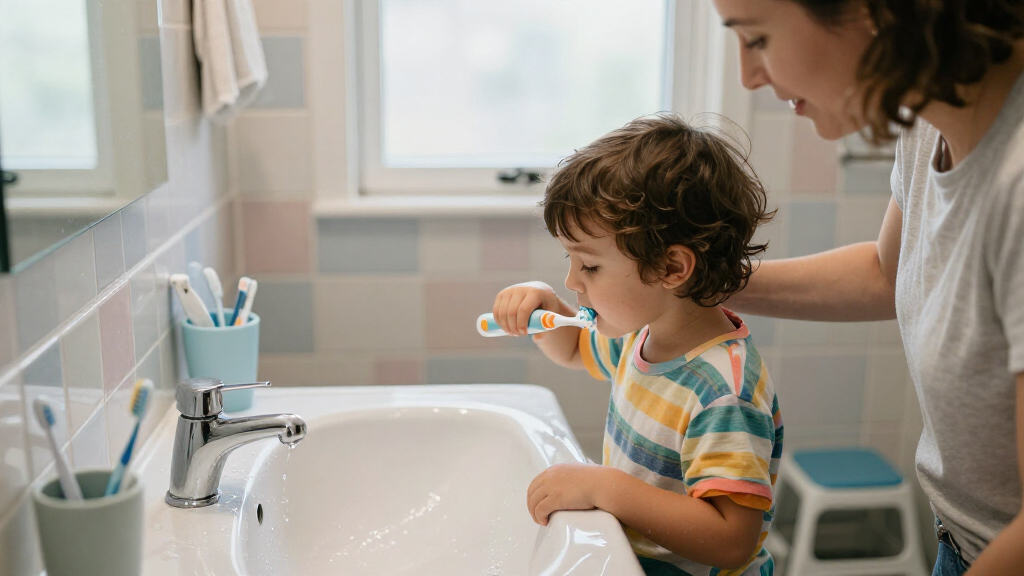
Electric toothbrushes can support a child’s routine, but an adult should still help or supervise until the child brushes every surface thoroughly and reliably—often around age 7 or 8, though ability varies. This milestone matters because children may be able to operate a button or brush the front teeth before they can manage the coordination and attention needed to clean the whole mouth. A timer can count minutes; it cannot spot a missed strip of teeth or remind a distracted child to brush the gumline.
Try this simple routine after breakfast or before bed:
- Check the brush’s age guidance and make sure your child is comfortable with its size and vibration.
- Have an adult dispense an age-appropriate amount of fluoride toothpaste, following local guidance and the child’s dentist.
- Show your child how to move the brush gently along the teeth and gumline, following the maker’s directions.
- Use the timer if it helps, then check the back teeth and other missed surfaces.
- Rinse the brush and store it according to its care instructions; replace the head as directed, or sooner if its bristles are frayed.
In common U.S. public-health guidance, children under 3 use a smear of toothpaste about the size of a grain of rice; children ages 3 through 6 use a pea-sized amount. Guidance can differ by location and by a child’s needs, so follow your dentist’s advice. The small amounts help limit how much toothpaste a young child might swallow while still providing fluoride during brushing. Encourage spitting rather than swallowing, and have an adult dispense toothpaste for young children.
Keep the brush for brushing, not chewing or playing, and don’t share brush heads. Chewing can damage bristles and make the brush less effective, while sharing a head is an avoidable hygiene concern. Before purchase, check current CPSC recall information and product age instructions; a recall check is a sensible step for children’s products. If brushing repeatedly causes discomfort or gum irritation, check your child’s technique and ask a dental professional for guidance. Discomfort can signal that the brush or technique needs adjusting, rather than a reason to press harder or insist on the same product.
Choose electric or manual based on your child, not the ad
Neither an electric nor a manual toothbrush is automatically better for every child. Either can work when your child brushes consistently, uses suitable toothpaste, and cleans thoroughly; an electric model may help if the child likes its feel or benefits from a timer. The best choice is the one that supports effective brushing without creating a new barrier, such as discomfort, complicated controls, or a routine your child resists.
Think about two siblings at bedtime. One child may enjoy a gentle buzz and follow a two-minute prompt, while the other covers their ears and prefers a quiet manual brush. Buying the same brush for both simply because a character appears on the box may make the routine harder, not easier. Let comfort and ability guide the choice. The tradeoff is straightforward: an electric brush may make brushing more engaging or easier to time, but it can cost more and may feel unpleasant; a manual brush is simpler and quieter, but may need more active reminders to keep a child brushing long enough.
Some children like app-based coaching or games. For a child who stalls at the sink, a short animated prompt may help them stay engaged. But a game cannot replace an adult’s check, and product features change over time. Confirm app compatibility and current details with the manufacturer rather than relying on an old review or a marketing claim. Consider whether the app will remain useful once the novelty wears off, and whether your child can use it without turning brushing into extra screen time or negotiation.
If your child dislikes the vibration, introduce the brush without pressure: let them hold it while it is switched off, or let them hear and feel it briefly in your hand first. You can also return to a manual brush and revisit the electric option later. A calm, repeatable routine beats a feature your child resists. Ask the child’s dentist for suggestions if you are unsure which style suits their mouth or dental needs.
Build a brushing habit that lasts beyond the novelty
Good brushing helps most when it becomes a predictable part of the day, not a special performance for a new gadget. Pick a steady time, keep the brush easy to reach, and stay nearby while your child learns. Predictability reduces the number of decisions a tired child has to make at bedtime, making it easier to repeat the routine even when the brush is no longer new. A timer or song can make two minutes feel less like an eternity, but an adult’s calm attention is often the most useful cue.
For example, Maya’s seven-year-old loves pressing the start button but rushes through the front teeth. Maya uses the timer as a signal to slow down, then asks him to show her the back teeth before they leave the bathroom. The small check helps him practice without making the brush feel like a test. Over time, that check can teach him what thorough brushing feels like, rather than making the timer seem like the only measure of success.
Make the routine concrete and encouraging. You might split the mouth into sections—upper right, upper left, lower right, lower left—and give each a turn. Some brushes offer prompts for this, but you can also use a simple count or a familiar two-minute song. Breaking the task into sections gives a child a manageable sequence and makes missed areas easier for an adult to notice. Adult supervision should match the child’s skill: some children can brush independently sooner, while others still need help after age eight. Gradually reduce help as the child demonstrates reliable technique, rather than stopping supervision just because they have reached a particular age.
Replace brush heads according to the manufacturer’s guidance; around every three months is a common rule of thumb, and worn or frayed bristles call for an earlier change. A worn head may not brush as well, so replacement is part of maintaining the tool, not just an optional upgrade. Keep an eye on the ongoing cost so a replacement does not become a surprise. If your child’s gums stay irritated or brushing remains difficult, bring the issue to a dentist rather than changing products again and again. Repeated product changes may add expense without addressing a technique, sensitivity, or dental concern.
Key takeaways for picking a brush you’ll actually use
The best child-friendly electric toothbrush is a comfortable fit your child can use with the right level of adult help. Start with age guidance, a small head, soft bristles, and simple controls. These basics affect whether a child can reach their teeth comfortably and participate without frustration. Then ask whether the timer or other feature solves a real problem in your household, such as a child rushing through the routine.
- Check age guidance and let your child’s comfort help shape the choice.
- Choose a small head, soft bristles, and a handle your child can hold securely.
- Compare replacement-head prices and availability, not just the initial cost.
- Use a timer as a reminder, not proof that every tooth is clean.
- Supervise until your child can reliably reach all tooth surfaces; this is often around age 7 or 8, but varies.
- Follow dental guidance for fluoride toothpaste, and check CPSC recalls before buying.
Take a real shopping example: if two brushes both fit your child’s age, but only one has heads you can easily buy and a handle your child likes, the simpler model may be the smarter purchase. That choice balances comfort today with the likelihood that you can maintain the brush over time. Apps and lights are extras. Consistency and a comfortable routine carry the real weight.
A toothbrush can make the routine easier to start; your child’s technique and your guidance help finish the job.
If your child has specific dental needs, ongoing discomfort, or strong reactions to the brush, ask their dentist for tailored advice. A manual toothbrush remains a perfectly reasonable choice when it helps your child brush gently and consistently.
Frequently Asked Questions
When can a child start using an electric toothbrush?
There is no single starting age for every child. Check the manufacturer’s age guidance, consider whether your child is comfortable with the brush, and ask a dentist if you are unsure. Supervise use when your child’s age or coordination calls for it.
Is an electric toothbrush better than a manual toothbrush for children?
Not automatically. Both can work when a child brushes consistently and thoroughly. An electric brush may help some children stay engaged or brush for longer, while others prefer a quiet manual brush.
How long should children brush their teeth?
A common recommendation is two minutes, twice a day, but follow your child’s dentist’s advice. A timer can help with duration; an adult should still check that the child reaches all tooth surfaces.
Should I supervise my child using an electric toothbrush?
Usually, yes, until your child can brush all surfaces thoroughly and reliably. Many children need help or supervision until around age 7 or 8, though ability varies. Focus on what your child can do rather than relying only on their age.
How much fluoride toothpaste should my child use?
Follow local dental guidance and your child’s dentist. Common U.S. public-health guidance recommends a rice-grain-sized smear for children under 3 and a pea-sized amount for children ages 3 through 6. An adult should dispense toothpaste for young children and encourage them to spit rather than swallow.
How often should I replace an electric toothbrush head?
Follow the manufacturer’s instructions. Around every three months is a common rule of thumb, but replace the head sooner if the bristles become frayed or worn.
What if my child dislikes the toothbrush vibration?
Don’t force a brush that causes distress. You can introduce it gradually, let your child hold it while it is switched off, or use a manual brush instead. Ask a dentist for suggestions if brushing remains difficult.
Can siblings share an electric toothbrush handle?
They should never share a brush head. Separate, clearly identified heads may be used on one handle only if the manufacturer’s instructions allow it, though many families find separate brushes simpler.
Should I check for recalls before buying a child’s toothbrush?
Yes. Check current CPSC recall information and the manufacturer’s age and safety instructions before buying. Also review care and charging directions, since product details vary by model.
Conclusion
Choose the brush your child can comfortably use, not the one with the loudest claims. Age-appropriate fit, soft bristles, a steady routine, and adult guidance matter more than games or lights.
Tonight, check the age label, set out the toothpaste, and stay close enough to see those back teeth get their turn. The best brush is the one that helps make that small, everyday habit stick.
Fall Picks
fall essentials
As an affiliate, we earn on qualifying purchases.