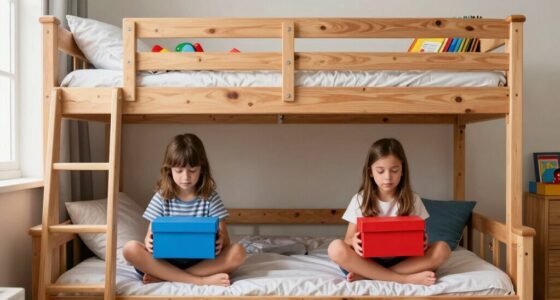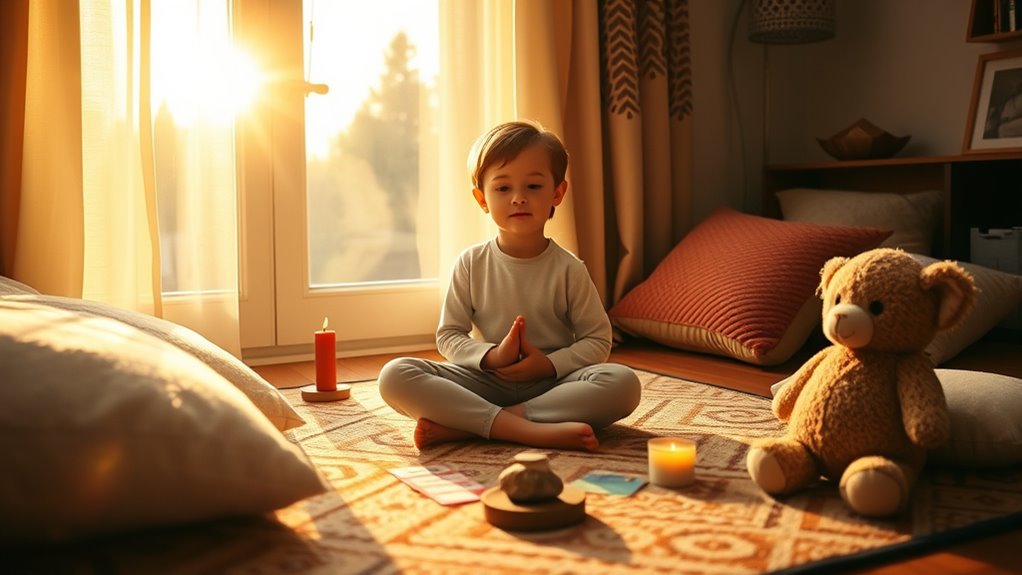

As the days get shorter, building simple mindfulness routines can help your kids stay calm and focused. You can set aside a few minutes daily for guided breathing or visualization exercises, making sure the space is cozy and distraction-free. Incorporate fun activities like blowing bubbles or pretending to blow out candles to engage them. Consistent practice helps children develop resilience and self-awareness, so sticking to these routines will prepare them to handle seasonal changes with more calm and stability.

Turn the school run and nap time into listening time
- Thousands of audiobooks, podcasts and originals
- Listen on your phone, tablet or Echo — also offline
- Cancel anytime
Key Takeaways
- Establish a consistent daily mindfulness schedule after school or before bedtime to help children transition smoothly.
- Use cozy, dedicated spaces for mindfulness practices to create a calming environment during shorter daylight days.
- Incorporate engaging breathing exercises and visualization techniques to combat overstimulation and improve focus.
- Adapt routines seasonally by adjusting session length or incorporating indoor mindfulness activities.
- Teach children self-awareness tools they can use independently to manage emotional regulation during darker, busier months.
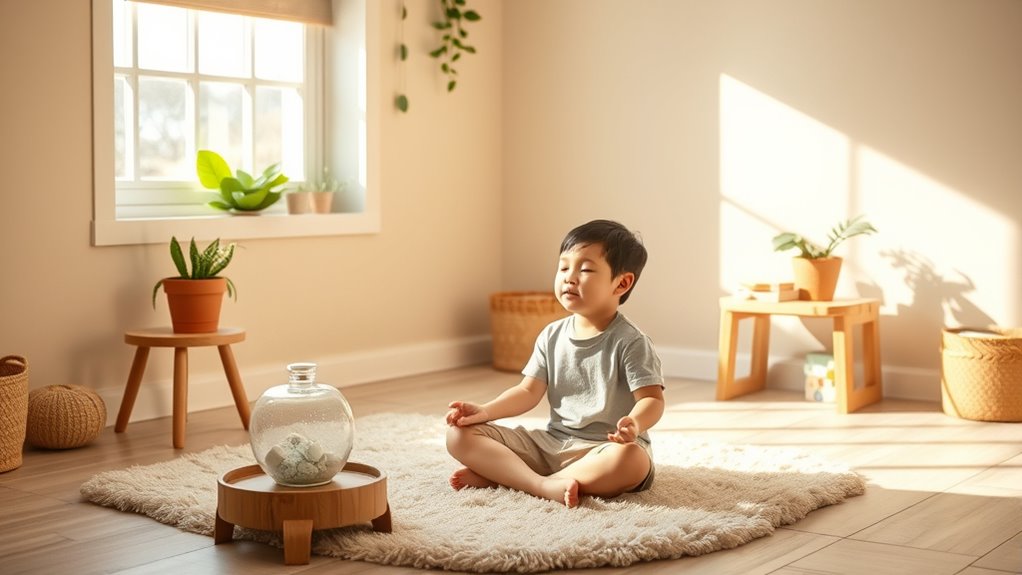
Creating mindfulness routines for kids can considerably improve their emotional regulation and focus. As the days get shorter and routines shift with the seasons, it’s a perfect time to introduce simple practices that help children stay grounded and calm. One effective way to do this is by incorporating guided meditation and breathing exercises into their daily schedule. These techniques are accessible, engaging, and have proven benefits for kids struggling with feelings of stress or overstimulation. Building these habits early can foster lifelong resilience and well-being. Start by setting aside a few minutes each day for a guided meditation. You can find age-appropriate recordings or create your own. Keep the environment calm and free of distractions, and encourage your child to sit comfortably. Guide them through a visualization, such as imagining a peaceful place or a favorite activity, helping them focus on their breath and sensations. This practice not only enhances concentration but also teaches children how to anchor their attention during moments of restlessness or anxiety. Breathing exercises are another powerful tool to help kids regulate their emotions, especially as the days grow darker and routines become more structured. Simple techniques like deep belly breathing can make a noticeable difference. Encourage your child to breathe in slowly through their nose, filling their belly with air, then exhale gently through their mouth or nose. Repeat this process a few times until they begin to feel more centered. You can make it fun by turning it into a game, such as blowing bubbles with their breath or pretending to blow out candles on a birthday cake. These exercises are quick to learn and can be done anytime, whether during homework, before bed, or when they’re feeling overwhelmed. Integrating guided meditation and breathing exercises into your child’s daily routine helps them develop resilience and self-awareness. When practiced regularly, these techniques become familiar tools they can use independently when facing challenges. As the days get shorter, and outdoor activities are limited, creating a cozy, consistent space for mindfulness can be particularly beneficial. You might incorporate a short meditation session after school or before bedtime, helping your child wind down and transition smoothly into rest. Developing mindful routines can also support children in managing seasonal changes and adapting to new routines with greater ease. Over time, these routines foster a sense of calm and stability, making it easier for your child to adapt to seasonal changes and the shifting pace of life.
As an affiliate, we earn on qualifying purchases.
Frequently Asked Questions
How Early Should I Start Mindfulness Routines With My Child?
You should start mindfulness routines with your child as early as age three, using age-appropriate activities. Consistent routines help them feel secure and understand expectations. Begin with brief sessions, like a few minutes a day, and gradually extend the time. By establishing routine consistency early, your child learns valuable skills for managing emotions and staying present, especially as the days get shorter and routines may shift.
Are There Specific Mindfulness Activities Suitable for Very Young Children?
Did you know that 80% of young children benefit from simple mindfulness activities? For very young kids, start with short, engaging activities like guided imagery and breathing exercises. Use colorful visuals or gentle stories to help them focus and relax. Keep sessions brief—just a few minutes—and make it fun. These activities help children develop emotional awareness and calmness, setting a strong foundation for mindfulness later in life.
How Can I Make Mindfulness Routines Engaging During Darker Evenings?
To make mindfulness routines engaging during darker evenings, you can incorporate indoor activities and creative exercises that capture your child’s interest. Try using calming music, soft lighting, or scented candles to create a cozy environment. Introduce imaginative storytelling or art projects that encourage focus and relaxation. These activities make mindfulness fun and accessible, helping your child stay calm and centered even when outdoor activities are limited.
What Signs Indicate My Child Is Benefiting From Mindfulness Practices?
You’ll notice your child showing better emotional regulation, such as calmer reactions and fewer mood swings, indicating they’re benefiting from mindfulness. You might also see improved concentration during homework or play, as mindfulness helps them stay focused. Additionally, they may communicate more openly about their feelings and demonstrate increased patience. These signs show that your mindfulness practices are positively impacting their emotional well-being and focus, fostering a healthier, more balanced mindset.
Can Mindfulness Help Children With Seasonal Affective Disorder?
Yes, mindfulness can help children with seasonal depression by improving emotional regulation and reducing feelings of sadness. While it’s not a cure, practicing mindfulness gives your child tools to manage mood swings and anxiety during darker months. Some might think it’s not enough, but consistent mindfulness routines can foster resilience and emotional balance, making it easier for your child to cope with seasonal affective disorder.
Conclusion
As the days grow shorter, establishing mindfulness routines can help your kids stay grounded and resilient. Did you know that children who practice mindfulness regularly are 30% more likely to manage stress effectively? By incorporating simple practices like breathing exercises or nature walks, you create a calming environment for them to thrive. So, embrace these routines this season—you’ll not only boost their well-being but also strengthen your bond during these cozy, busy months.
Columbus Day / Indigenous Peoples' Day Picks
long weekend sales
As an affiliate, we earn on qualifying purchases.