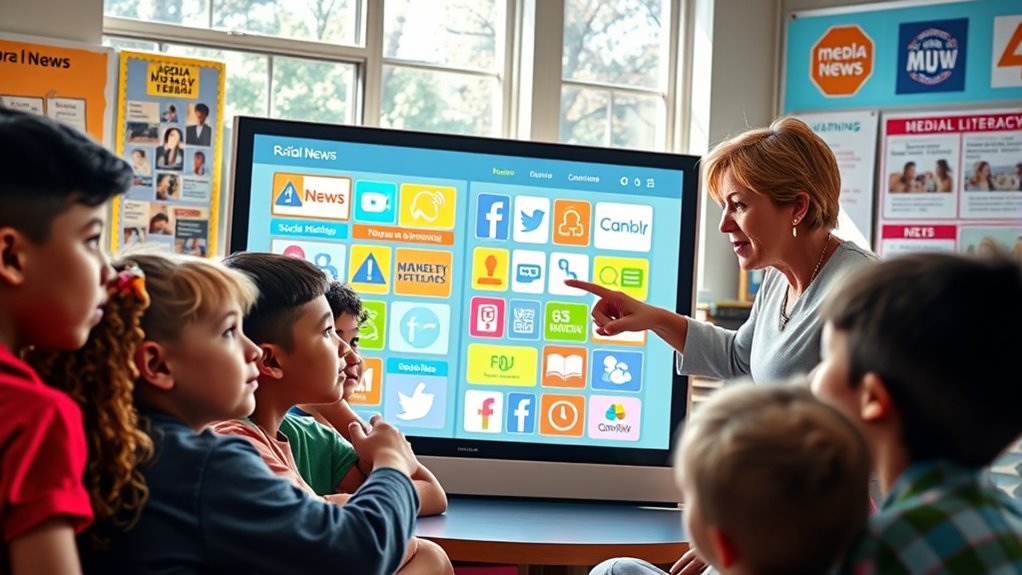

To help kids recognize fake news and build media literacy, encourage them to question online content by analyzing sources and verifying facts through multiple reputable outlets. Model critical thinking by verbalizing your own evaluation process and prompt discussions about media manipulation. Teach them to look for signs like author credentials and suspicious visuals. Developing these habits helps children become confident, critical consumers of digital information and lays a strong foundation for spotting misinformation—keep exploring for more tips.

Turn the school run and nap time into listening time
- Thousands of audiobooks, podcasts and originals
- Listen on your phone, tablet or Echo — also offline
- Cancel anytime
Key Takeaways
- Teach children to critically evaluate sources by checking author credentials and publication reputation.
- Use real examples to practice questioning content’s purpose, accuracy, and potential manipulation.
- Model verification habits by verbalizing your own process of fact-checking and analyzing media.
- Encourage cross-referencing information from multiple reliable sources to confirm accuracy.
- Educate about visual manipulation by discussing image quality, contrast, and the potential for editing.
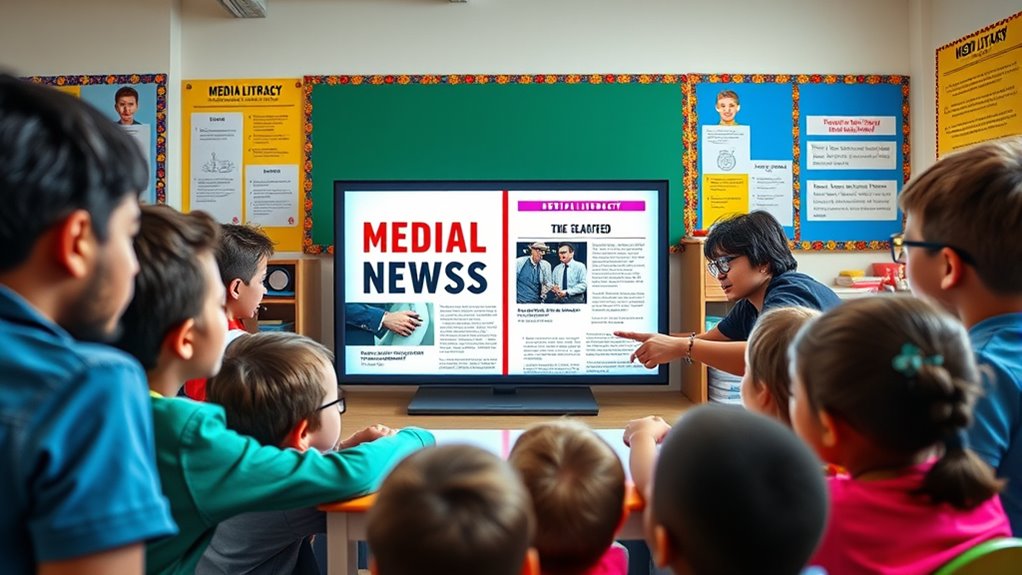
Have you ever wondered how kids can tell if what they see online or on TV is true? It’s a good question because, in today’s digital age, children are bombarded with information from countless sources. Developing their digital literacy skills is essential so they can navigate this landscape confidently. Digital literacy isn’t just about knowing how to use devices; it’s about understanding how information is created, shared, and verified. When kids are equipped with strong digital literacy, they learn to ask questions like, “Who created this? Why was it made? Is there evidence to support this claim?” These habits form the foundation of critical thinking, which is indispensable for recognizing fake news.
Digital literacy helps kids ask questions and think critically about online information.
By fostering critical thinking, you help kids move beyond accepting information at face value. Instead, you encourage them to analyze what they see, consider the source, and evaluate the evidence. For example, if they come across a shocking headline or an unusual photo, they should pause and ask, “Is this credible? Could this be manipulated or taken out of context?” Teaching children to be skeptical of sensationalism isn’t about making them distrust everything; it’s about empowering them to question and verify before believing or sharing.
You can guide your kids to develop these skills by practicing with real examples. Show them a news story or social media post and ask, “What makes you think this is true or false?” Help them look for clues like author credentials, publication reputation, and supporting evidence. Teach them to cross-check information across multiple reliable sources. Reinforcing these habits helps children become more discerning consumers of media, reducing their susceptibility to misinformation.
Encouraging digital literacy and critical thinking also means modeling these behaviors yourself. When you encounter news or stories online, talk through your thought process—how you verify facts and assess credibility. Kids learn best when they see adults questioning and analyzing media critically. Remember, the goal isn’t just to teach them what’s fake but to empower them to become independent thinkers who can confidently navigate the complex media environment. Additionally, understanding the role of contrast ratio in image quality can help children develop a more nuanced view of visual content, especially as many images online are manipulated or enhanced. Over time, these skills will help them develop a healthy skepticism and a more accurate understanding of the world around them, making them less vulnerable to manipulation and false information.
Products Worth Considering

Withings Body Smart Wi-Fi and Bluetooth Smart Scale

BowFlex Results Series SelectTech 552 Adjustable Dumbbell

Philips Sonicare 5950 Rechargeable Electric Toothbrush with 2 Brush Heads, Navy
As an affiliate, we earn on qualifying purchases.
Frequently Asked Questions
How Can Parents Effectively Teach Media Literacy at Home?
You can teach media literacy at home by engaging in open parent-child dialogue about news and media sources. Encourage your child to ask questions and think critically about what they see online. Model media critical thinking yourself, showing how to verify facts and spot fake news. By fostering curiosity and skepticism, you help your child develop essential skills to navigate media responsibly and confidently in today’s digital world.
What Are Signs That News Might Be Fake?
Did you know that over 60% of people struggle to identify fake news? If you want to spot fake stories, look for signs like sensational headlines or clickbait that play on emotions. Check whether the source is reputable, and verify facts with trusted outlets. If a story sounds too shocking or too good to be true, it’s worth digging deeper before believing or sharing it.
How Do Social Media Algorithms Influence Kids’ News Exposure?
Social media algorithms influence your kids’ news exposure by prioritizing personalized content, which means they see more of what aligns with their interests. However, this can create algorithm bias, limiting their perspectives and making false or misleading information more likely to appear. You can help by encouraging critical thinking and discussing how algorithms shape what they see, so they remain aware of potential biases and fake news.
Are There Any Recommended Tools or Apps for Media Literacy Education?
You should explore digital literacy apps like Newsela or Media Literacy now, which help kids develop critical thinking skills. Fact-checking tools such as FactCheck.org or Snopes are excellent for teaching kids to verify information independently. These resources actively engage children in evaluating sources, understanding bias, and spotting fake news, making media literacy education practical and enjoyable. Incorporating these tools into your teaching can markedly improve kids’ ability to navigate digital media confidently.
How Can Schools Incorporate Media Literacy Into Their Curriculum?
You can incorporate media literacy into your curriculum by integrating digital literacy lessons that emphasize critical thinking skills. Encourage students to analyze sources, question information, and identify bias through discussions and activities. Use real-world examples and interactive tools to make lessons engaging. By doing this, you help students develop the ability to evaluate media critically, empowering them to navigate information confidently and responsibly in today’s digital world.
Conclusion
By learning to spot fake news and understanding media messages, you become a smarter, more critical thinker. Don’t just accept everything you see online—question it and look for proof. Did you know some studies show that people who verify information are less likely to share false stories? Keep practicing your media skills, and you’ll help create a world where everyone can trust the news they see. Stay curious and always check before you believe!