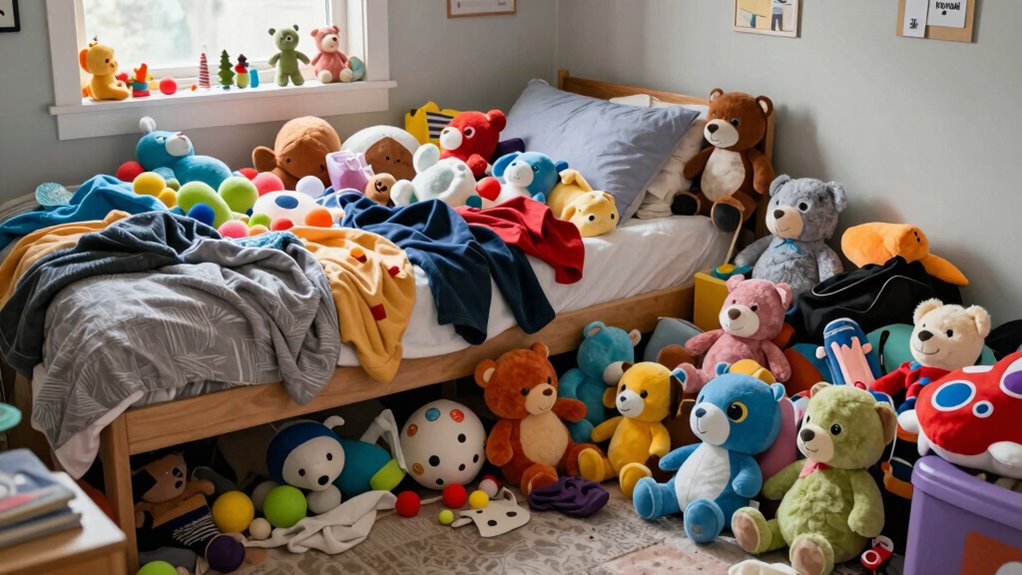

Having too much clutter in your child’s bedroom can overwhelm their senses and make it harder for them to feel calm and focused. Excess toys and mess create visual noise, which overstimulates the brain and disrupts relaxation and sleep. By simplifying the space, you’ll help your child relax, improve their sleep quality, and foster independence in clean-up habits. To learn easy ways to create a peaceful and organized room, keep exploring this helpful guide.

Turn the school run and nap time into listening time
- Thousands of audiobooks, podcasts and originals
- Listen on your phone, tablet or Echo — also offline
- Cancel anytime
Key Takeaways
- Excess clutter overwhelms children’s senses, leading to increased stress and difficulty relaxing.
- Overstuffed rooms hinder sleep quality by creating visual noise and distractions.
- Clutter reduces focus during homework and play, decreasing overall calmness and mental clarity.
- A chaotic environment can promote feelings of anxiety and frustration in children.
- Simplifying the bedroom fosters a peaceful atmosphere, promoting relaxation and emotional well-being.
As an affiliate, we earn on qualifying purchases.
How Cluttered Bedrooms Impact Your Child’s Calm and Focus
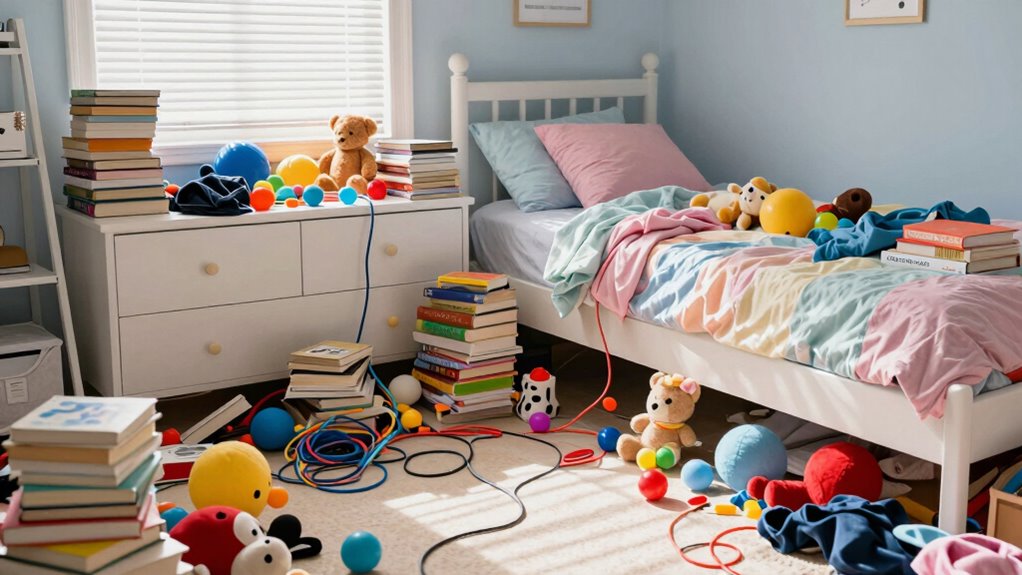
A cluttered bedroom can considerably disrupt your child’s ability to relax and concentrate. When their space is overwhelmed with stuff, it becomes harder for them to regulate emotions, leading to increased frustration or anxiety. This sensory overload can also make it more difficult for your child to develop healthy sleep habits, which are essential for emotional well-being. The chaos can also interfere with sleep quality, making it difficult for your child to unwind and fall asleep peacefully. Poor sleep further impacts emotional regulation, causing mood swings and difficulty managing feelings. The constant visual noise of clutter overstimulates the brain, making it tough to focus during homework or playtime. By maintaining a tidy, organized bedroom, you help create a calming environment that supports better sleep and emotional balance. A neat space encourages relaxation, allowing your child to feel more in control and centered. Just like a well-tuned engine requires the right parts, a peaceful environment relies on proper organization and decluttering to optimize your child’s well-being. Additionally, a clutter-free space can improve mental clarity, making it easier for children to stay attentive and engaged in their daily activities.
How to Tell If Your Kid’s Room Is Too Cluttered
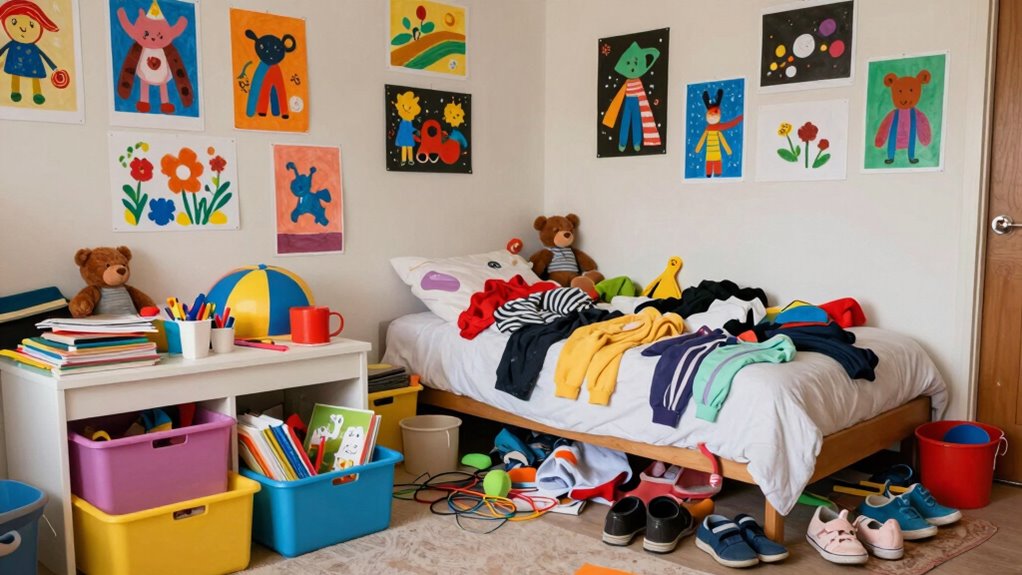
Recognizing when your child’s room is too cluttered can be simpler than you think. Look for signs like toys scattered everywhere, difficulty finding favorite items, or a general sense of chaos. If toy organization isn’t maintained, toys pile up, making it hard for your child to focus or relax. Check if storage solutions are effective—are bins, shelves, or baskets used to contain clutter? When everything is overflowing or hard to access, it’s a clear indication the room needs better organization. A cluttered space can make your child feel overwhelmed or anxious. Regularly evaluating how toys are stored and ensuring there’s a clear system in place helps keep the room manageable. Proper home organization techniques can also contribute to a calmer environment. In addition, understanding the Indian numbering system can help you better assess the amount of clutter or toys accumulated, especially if you’re dealing with large quantities. Being aware of clutter management strategies can further assist in maintaining a peaceful space. For instance, applying behavioral cues can motivate children to keep their space tidy. If you notice these signs, it’s time to revisit toy organization and storage solutions.
Why Simplifying Your Child’s Bedroom Benefits Their Well-Being
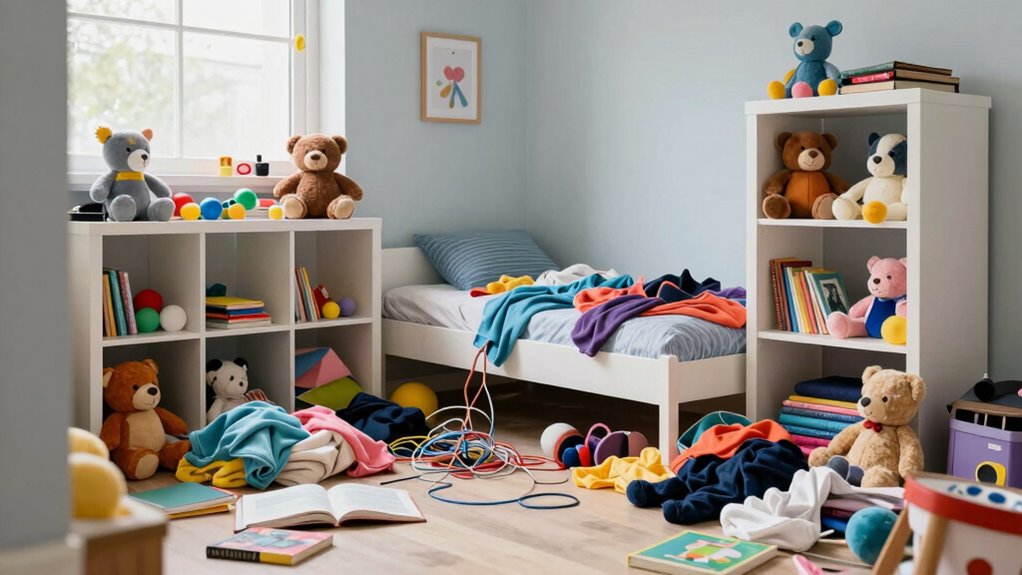
Simplifying your child’s bedroom can considerably boost their sense of calm and overall well-being. When you reduce clutter and create a tidy space, your child feels more in control, fostering greater independence. A simplified room encourages them to take responsibility for organizing their belongings, boosting confidence and decision-making skills. Additionally, a calm, uncluttered environment promotes better sleep quality by minimizing distractions and creating a peaceful atmosphere. When your child’s space is free of excess stuff, they can relax more easily and fall asleep faster. This improved sleep supports their emotional regulation and overall health. Furthermore, selecting luxurious, calming products like soft mattresses or soothing lighting can enhance the tranquil environment. Proper filter sizing/flow in a child’s bedroom can also contribute to cleaner air and a healthier sleep environment. Creating a space with minimalist design principles can further help reduce visual clutter and promote relaxation. Research shows that clutter reduction can significantly decrease stress levels and improve mental clarity. Incorporating organized storage solutions helps maintain the streamlined space and encourages ongoing tidiness. Ultimately, a streamlined bedroom serves as a safe retreat where your child can develop independence while enjoying the benefits of restful, restorative sleep.
Easy Tips for Decluttering and Organizing Your Kid’s Room
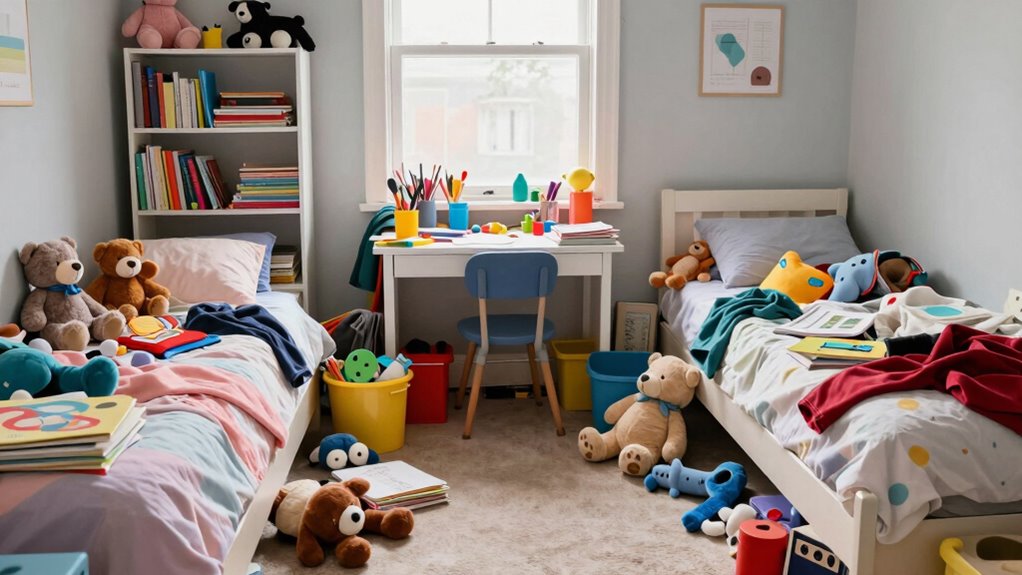
Once you’ve understood the benefits of a tidy, clutter-free space, taking practical steps to declutter and organize your child’s room becomes much easier. Start by rearranging furniture to create open areas for play and quiet zones. Use smart storage solutions like bins, shelves, and under-bed containers to keep toys, books, and clothes organized. Implement a simple system, such as assigning specific bins for different items, to encourage your child to maintain order. Regularly review and donate unused items to keep clutter from accumulating.
| Tip | Benefit |
|---|---|
| Optimize furniture layout | Creates more space and reduces chaos |
| Use clear storage bins | Easier to find and put away items |
| Label storage areas | Promotes independence and organization |
| Schedule decluttering | Maintains a calm, tidy environment |
Design Ideas for a Calm and Peaceful Bedroom
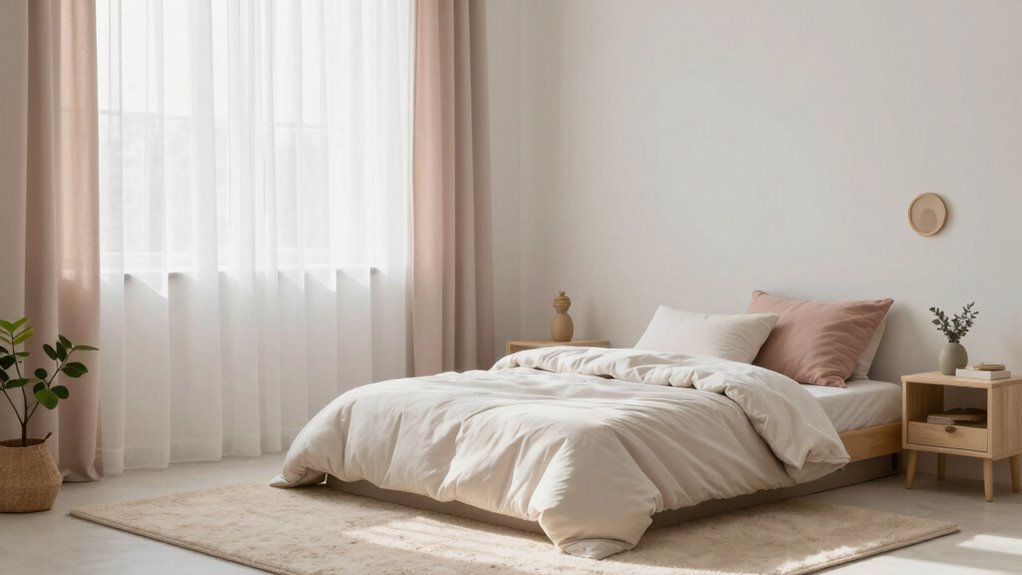
Creating a calm and peaceful bedroom starts with simplifying your decor, so choose a few meaningful elements rather than clutter. Opt for soft color palettes that promote relaxation and include natural materials like wood or linen to add warmth. These choices help establish a serene environment where your child can feel truly at ease. Incorporating appropriate lighting control can further enhance the tranquil atmosphere by reducing glare and harsh shadows. Understanding your battery inverter generator needs, such as capacity and watt-hours, can ensure a reliable power source for any additional electronic comforts in the room. Additionally, selecting security solutions like home security cameras can provide peace of mind without disrupting the room’s calming aesthetic. Being aware of grocery savings strategies can also help you allocate more resources toward creating a peaceful space.
Simplify Decor Elements
When designing a calm and peaceful bedroom for your child, focusing on a few essential decor elements can make a big difference. Too much decor overload creates visual chaos, making it harder for your child to relax. Keep decor simple by choosing a few meaningful pieces instead of filling the space with everything you find. Opt for clean lines and minimal accessories to avoid clutter. Use furniture and decor items that serve a purpose and complement each other, rather than competing for attention. This approach reduces distractions, helping your child feel more at ease. Incorporating minimalist design principles can enhance the overall serenity of the space while still making it functional and inviting. Additionally, utilizing natural materials like wood and stone, which are often found in farmhouse decor, can contribute to a more tranquil environment. Incorporating IRS regulations for gold can also inspire you to create a space that is both structured and harmonious by avoiding excess and focusing on quality over quantity. Landscaping elements like natural materials or calming colors can further promote a tranquil environment. Consider integrating multi-unit setups for efficient use of space, which can also contribute to a more organized and peaceful atmosphere. Remember, less is more when it comes to creating a tranquil environment. By simplifying decor elements, you’ll foster a sense of calm that encourages relaxation and restful sleep.
Use Soft Color Palettes
Choosing soft, muted colors for your child’s bedroom can markedly promote a sense of calm and relaxation. Color psychology shows that gentle hues like pastels and neutrals help reduce overstimulation, creating a peaceful environment. These colors lower sensory stimulation, so your child feels less anxious and more at ease. Bright or bold shades might seem lively, but they can actually increase alertness and disrupt rest. Instead, opt for calming tones that promote tranquility and comfort. Keep the palette simple and cohesive to avoid visual clutter, allowing your child’s mind to unwind. Incorporating minimalist design principles can further enhance the calming effect by reducing visual noise and creating a harmonious environment. Using soft colors also supports emotional growth and social skills through cooperative play, helping your child feel secure and at peace in their space. Additionally, choosing appropriate textiles and decor in these hues can contribute to a more serene atmosphere. Research indicates that Color psychology demonstrates the impact of color choices on children’s mood and behavior, making it a vital consideration for creating a calming space.
Incorporate Natural Materials
Incorporating natural materials into your child’s bedroom can considerably enhance its peaceful atmosphere. Using organic materials and natural textures creates a calming environment that promotes relaxation. Opt for wooden furniture, bamboo blinds, or cotton bedding to add warmth and authenticity. These elements bring a sense of nature indoors, reducing visual clutter and fostering tranquility.
| Material Type | Effect |
|---|---|
| Organic fabrics | Soft, breathable, and soothing |
| Wooden accents | Warmth and grounding |
| Natural textures | Visual interest without overstimulation |
Choosing natural materials helps your child feel more connected to nature, encouraging calmness and better sleep. Keep the decor simple, focusing on these organic elements to create a peaceful, clutter-free space.
How to Involve Your Kids in Decluttering and Keep It Up
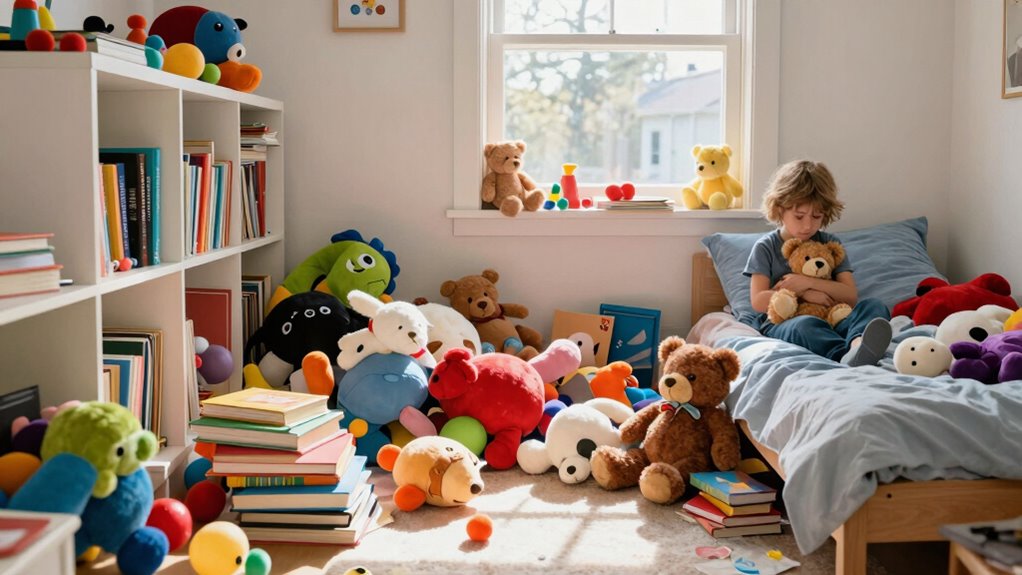
Getting your kids involved in decluttering can be both effective and empowering if you make it a collaborative effort. When you engage them, you help reduce emotional attachment to items and foster responsibility. Encourage your kids to sort their belongings into keep, donate, or discard piles. Make it fun by setting a timer or playing music. Use visual aids like bins or labels to make the process clear. Celebrate small wins to keep motivation high. To keep it up, establish regular decluttering routines and involve them in decision-making. This builds parental involvement and helps your kids understand the value of a tidy space. Remember, patience and encouragement are key to developing long-term habits that keep their room calm and clutter-free.
Tips for Maintaining a Minimalist Bedroom Long-Term
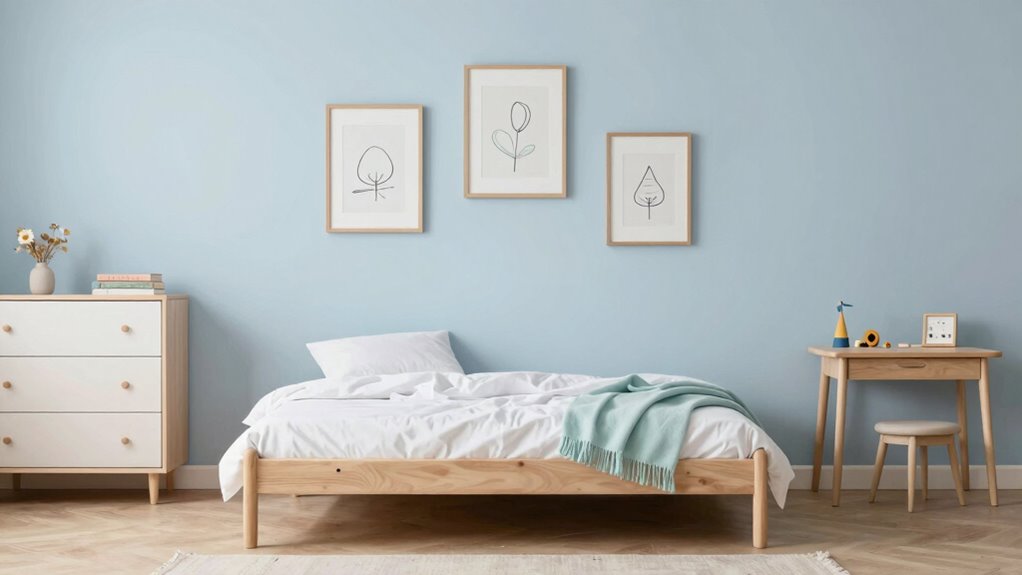
To keep your child’s bedroom minimalist over time, establish regular decluttering routines so clutter doesn’t accumulate. Be intentional when choosing new items, focusing on quality and usefulness rather than quantity. Consistently practicing these habits helps create a calm, organized space that stays that way.
Regular Decluttering Routines
Establishing a regular decluttering routine is key to maintaining a minimalist bedroom that stays calm and organized. Consistency keeps clutter at bay and reinforces your child’s understanding of a peaceful space. Schedule quick weekly check-ins to tidy up creative storage areas and sensory zones, ensuring everything remains purposeful. During these routines, encourage your child to put toys and clothes back in designated spots, fostering ownership and mindfulness. Clear out items that no longer serve them, making space for new interests or routines. Use baskets or boxes to contain small items, maintaining visual simplicity. Regular decluttering keeps the room serene, promotes calmness, and helps your child feel more in control of their environment.
Thoughtful Item Selection
Choosing the right items for your child’s bedroom is essential to maintaining a minimalist space that stays calm over time. Focus on selecting quality, versatile pieces that serve multiple purposes. Limit toy clutter by choosing a few meaningful toys and storing extras out of sight. When arranging furniture, prioritize open space and easy access, avoiding overcrowding. Keep surfaces clear and organized to promote tranquility. Use a simple layout:
| Furniture | Purpose/Placement |
|---|---|
| Bed | Central, with no clutter underneath |
| Storage Bins | Easily accessible, tucked away |
| Desk | Clear workspace, minimal decor |
This thoughtful approach guarantees your child’s room remains calming and functional, preventing the buildup of unnecessary items and promoting long-term serenity.
Frequently Asked Questions
How Does Clutter Affect My Child’s Sleep Quality?
Clutter can considerably disrupt your child’s sleep quality by overstimulating their mind and making it hard to relax. When you choose simple decorating styles and implement effective storage solutions, you create a calmer environment. Reduced clutter helps your child feel more secure and at ease, making it easier for them to fall asleep and stay asleep. A tidy bedroom promotes better sleep hygiene and overall well-being.
What Are Signs My Child Feels Overwhelmed by Their Room?
You notice your child feels overwhelmed when their room’s cluttered, causing signs like irritability, difficulty sleeping, or avoiding bedtime. They might seek privacy zones or become anxious around toy organization. An anachronism like “a modern-day Marie Kondo” reminds you to declutter intentionally, creating calm. When their space feels chaotic, they struggle to relax, indicating the need for clearer boundaries and simplified organization to help them feel secure.
Can Minimalism Improve My Child’s Emotional Health?
Yes, minimalism can boost your child’s emotional health. By focusing on toy organization and reducing sensory clutter, you create a calm environment that helps your child feel more secure and less overwhelmed. When their space is tidy and simple, they can concentrate better and feel more relaxed. Encouraging minimalism promotes mindfulness and emotional stability, making their bedroom a peaceful retreat rather than a source of stress.
How Often Should I Declutter My Child’s Bedroom?
You should declutter your child’s bedroom every few months to maintain a calm, organized space. Use smart storage solutions like bins, shelves, and under-bed storage, and follow simple organization tips to keep toys and clothes tidy. Regular decluttering prevents clutter buildup, making it easier for your child to find what they need and creating a peaceful environment that supports their emotional well-being. Consistency is key to staying on top of it.
Are There Age-Appropriate Decluttering Strategies for Kids?
Yes, there are age-appropriate decluttering strategies for kids. You can encourage toy organization by involving your child in sorting and choosing which toys to keep or donate. Use creative storage solutions like bins, baskets, or shelves to make cleanup fun and accessible. Tailor tasks to their age—smaller kids can focus on putting away toys, while older children can help organize their belongings, fostering independence and a calmer, more organized space.
Conclusion
Remember, a clutter-free bedroom isn’t just about tidiness—it’s about creating a sanctuary where your child can relax and focus. Too much stuff can turn their space into a chaos-filled battlefield, making calm and concentration harder to find. Think of it as giving them a royal chamber, fit for a king or queen, where peace reigns supreme. Keep it simple, stay consistent, and watch your child’s mood and focus blossom like a well-tended garden.
Cold & flu season Picks
humidifiers
As an affiliate, we earn on qualifying purchases.