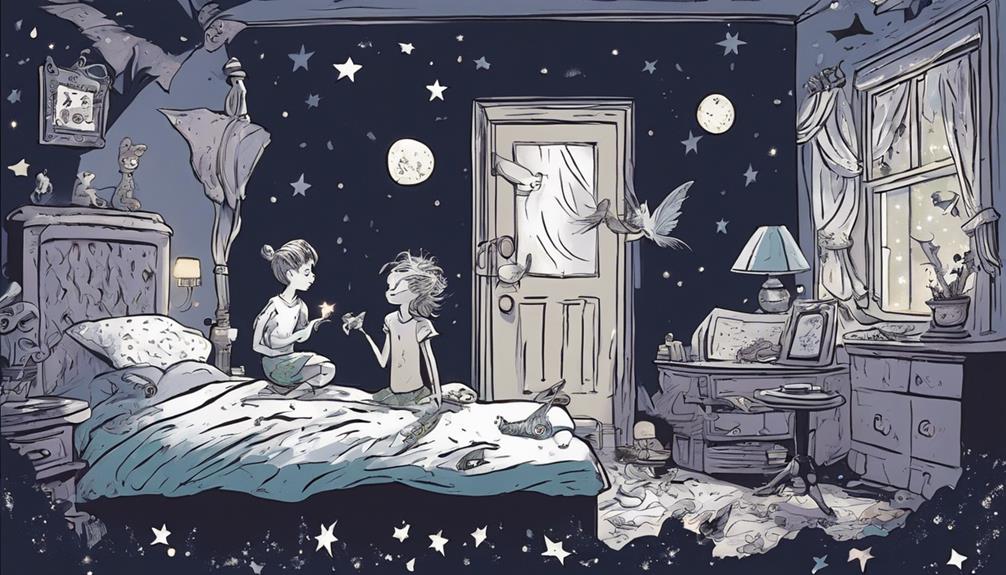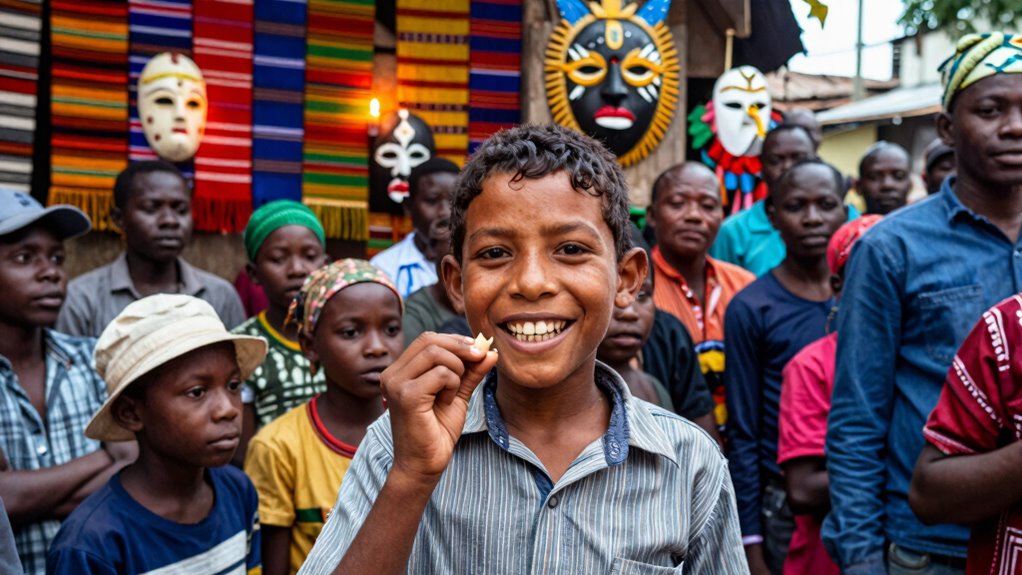
Lost-tooth rituals show up across many cultures because they symbolize growth, change, and cultural identity, helping people mark important life stages. These traditions connect individuals to their heritage and shared beliefs, often involving symbols of luck, protection, or hope. They vary worldwide but serve similar purposes—celebrating change and strengthening social bonds. By exploring these customs further, you’ll discover how universal human experiences inspire diverse cultural expressions.

Turn the school run and nap time into listening time
- Thousands of audiobooks, podcasts and originals
- Listen on your phone, tablet or Echo — also offline
- Cancel anytime
Key Takeaways
- They reflect universal human themes of growth, transition, and hope shared across diverse cultures.
- Rituals serve to reinforce social bonds and cultural identity across generations.
- Common symbolic meanings link teeth to vitality, protection, and personal power worldwide.
- The practices often stem from ancient beliefs and folklore, adapting locally over time.
- Lost-tooth rituals help communities connect with nature, ancestors, and cultural heritage globally.

Losing a tooth is a universal milestone, but how different cultures celebrate this moment varies wildly around the world. These rituals aren’t just about losing a tooth; they carry deep cultural significance that reflects a community’s values, beliefs, and history. You might notice that in some places, the act of losing a tooth is marked with joyful ceremonies, while in others, it’s seen as a rite of passage or a symbol of growth. This widespread presence of lost-tooth rituals shows their importance across diverse societies, rooted in centuries of tradition and cultural identity.
Losing a tooth is a universal milestone, celebrated worldwide with rituals reflecting deep cultural values and history.
The origins of these rituals often trace back to historical beliefs about health, luck, and protection. In many cultures, losing a tooth was thought to be a pivotal step in a child’s development, symbolizing their transition from childhood to adulthood. For example, in Western traditions, the “Tooth Fairy” myth has roots in European folklore, where a fairy or magical creature exchanges a lost tooth for money or a small gift. This practice, dating back hundreds of years, was meant to ease children’s fears about losing their teeth and to encourage good dental hygiene. Its historical origins are linked to ancient beliefs that teeth held personal power or were connected to vitality, which is why they were entrusted to a mythical figure rather than discarded.
Similarly, in other parts of the world, rituals involve specific gestures or offerings that have been passed down through generations. In some Asian cultures, children hide their teeth or place them in special containers, believing that the way they treat their teeth at this age influences their future luck or success. In parts of Africa, the act of pulling a tooth might be accompanied by traditional ceremonies that honor ancestors and seek protection against evil spirits. These customs often serve as communal rites that reinforce social bonds and cultural continuity. Additionally, these practices demonstrate how biodiversity and cultural traditions can intertwine, shaping unique ways communities connect with nature and their environment. Recognizing the cultural significance of these rituals highlights their role in preserving heritage and identity across generations.
The reason why so many parts of the world have developed lost-tooth rituals comes back to their fundamental significance: they mark a key moment in personal development and symbolize hope, protection, or transition. Despite differences in how each culture celebrates, the core idea remains the same—this small act holds great meaning. These rituals connect individuals to their cultural roots, giving them a sense of identity and continuity. Whether through stories, ceremonies, or folklore, lost-tooth traditions reflect humanity’s shared desire to mark growth and change in meaningful ways.
As an affiliate, we earn on qualifying purchases.
Frequently Asked Questions
How Do These Rituals Influence Modern Dental Practices?
You see, these rituals influence modern dental practices by highlighting dental symbolism and cultural significance. They remind you that losing a tooth isn’t just a dental event but a rite of passage or a symbol of growth in many cultures. This awareness encourages practitioners to respect patients’ cultural backgrounds, fostering more empathetic care. It also sparks interest in holistic approaches, blending cultural understanding with contemporary dentistry for a more personalized experience.
Are There Common Symbolic Meanings Across Different Cultures?
You’ll find that many lost-tooth rituals share common symbolic meanings rooted in cultural symbolism and ritual significance. Across diverse cultures, they often represent changeover, maturity, or a new beginning. These rituals serve to honor a rite of passage, marking the shift from childhood to adulthood. Despite differences, their core purpose remains similar: celebrating growth and change through meaningful, culturally significant acts.
When Did These Rituals First Originate Historically?
You’ll find that the historical origins of lost-tooth rituals date back thousands of years, with evidence from ancient Egypt, Greece, and China. These practices likely evolved through cultural exchanges and social evolution, symbolizing shift, maturity, or status. Over time, they’ve adapted to fit local beliefs, but their core meaning—marking important life changes—remains consistent across different societies today.
Do These Rituals Vary Significantly Between Regions?
You’ll find that lost-tooth rituals vary considerably across regions, reflecting diverse cultural variations and beliefs. For example, some cultures see losing a tooth as a sign of coming age, while others associate it with spiritual protection. These rituals hold profound ritual significance, shaping community identity and values worldwide. Notably, over 80% of cultures with these rituals have unique customs, highlighting how deeply rooted and diverse their meanings are across the globe.
How Do Children Typically Perceive These Traditions?
You probably see children view these traditions with childhood curiosity and excitement, often enthusiastic to participate in the ritual. They might find the cultural storytelling behind the lost-tooth rituals fascinating, which helps them understand their community’s values and stories. Kids tend to embrace these customs as a fun milestone, blending curiosity with cultural pride, and often look forward to sharing their own stories about losing teeth as part of a larger tradition.
Conclusion
Your lost tooth isn’t just a small piece of you—it’s a symbol of growth and transformation. Across cultures, these rituals remind us that letting go marks the beginning of new chapters. Just as the tooth falls away to make space for something brighter, so too must you release the old to welcome the new. Embrace these traditions as symbols of renewal—your journey of change is written in every farewell and new beginning.
Fall Picks
fall essentials
As an affiliate, we earn on qualifying purchases.