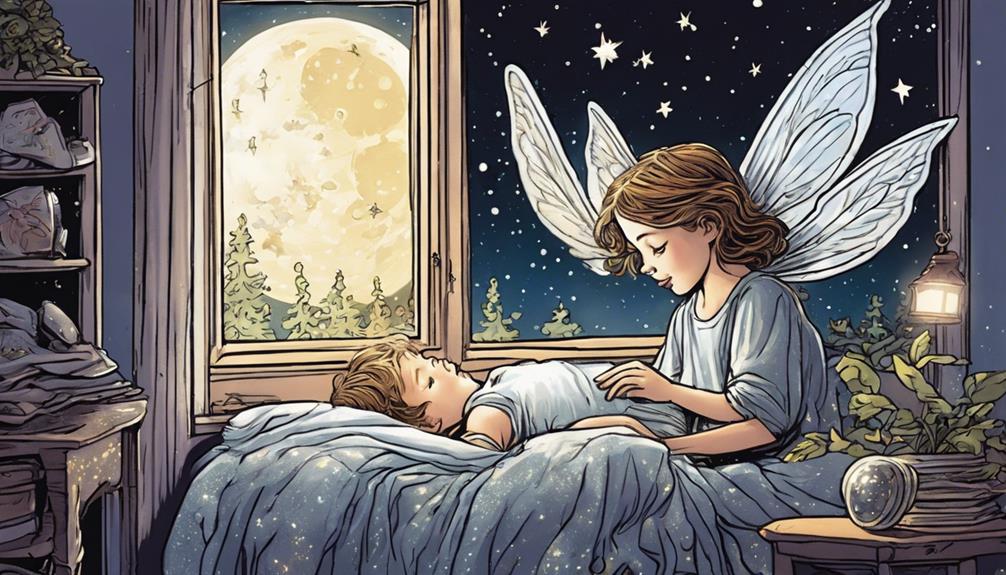
The Tooth Fairy tradition and the related custom of placing a child’s lost tooth in a shoe both symbolize growth, change, and childhood milestones. Kids often leave teeth in shoes or under pillows, believing it brings luck or protects them from evil spirits. These customs vary across cultures, using different footwear and decorations. They celebrate childhood and family traditions, connecting generations. If you want to discover more about these charming rituals, keep exploring their fascinating origins and cultural differences.
Key Takeaways
- The Tooth Fairy tradition often overlaps with the shoe-insertion ritual, where children leave teeth in shoes for the fairy to collect.
- Historically, placing teeth in shoes symbolizes growth, protection, and a transition from childhood to maturity.
- Variations include leaving teeth under pillows or on windowsills, with shoes becoming a popular vessel due to portability.
- Cultural differences influence the type of shoes used and the addition of decorations or small gifts alongside the teeth.
- The tradition merges folklore, storytelling, and modern customs, maintaining its role as a cherished rite of passage across cultures.

Many cultures have unique ways of celebrating losing a tooth, but one charming tradition involves placing a tooth in a shoe for the Tooth Fairy. This custom, prevalent in parts of Europe and North America, has evolved over centuries and reflects a fascinating blend of cultural variations and historical origins. Understanding where this tradition comes from can give you a deeper appreciation for its significance and how it has adapted across different societies.
The practice of placing a tooth in a shoe has roots that are often linked to folklore and superstitions. Historically, children believed that their lost tooth held special powers or was a symbol of growth, so leaving it in a safe place—like a shoe—was thought to protect it from evil spirits or to bring good luck. The shoe, as an everyday object associated with travel and movement, became a natural vessel for this exchange, symbolizing a journey from childhood to maturity. In some European traditions, children would leave their teeth under their pillow or on windowsills, but the shoe became a popular alternative because it was portable, familiar, and easy to access for the fairy or spirit presumed to collect the teeth.
The shoe, a symbol of travel and growth, became a popular vessel for exchanging a child’s lost tooth.
Cultural variations further enrich this tradition. In some regions, children might leave teeth in a specific type of shoe or footwear, such as a boot or slipper, depending on local customs. In Scandinavian countries, for example, the emphasis might be on leaving the tooth in a wooden shoe, reflecting the importance of traditional footwear in their history. In other places, the practice might involve decorating the shoe or adding small gifts alongside the tooth, emphasizing the child’s participation in the ritual. These variations highlight how different societies personalize the tradition, making it a meaningful part of childhood celebrations. Additionally, the storytelling aspect has helped preserve and pass down the tradition through generations.
Over time, the historical origins of the Tooth Fairy and the shoe tradition have merged with modern storytelling and commercial influences. Today, many children still place their teeth in shoes or under pillows, expecting a small reward or gift in return. The tradition has become a charming rite of passage, symbolizing a child’s growth and the transition from childhood innocence to maturity. Its adaptability across cultures and centuries demonstrates its universal appeal, allowing families worldwide to continue a beloved custom that celebrates a milestone in a child’s life. Whether viewed through the lens of history or cultural diversity, the simple act of placing a tooth in a shoe connects generations in a shared story of growth, hope, and tradition.
Frequently Asked Questions
How Did the Tooth-In-The-Shoe Tradition Originate Historically?
You might find that the historical origins of the tooth-in-the-shoe tradition stem from early European customs, where children left their lost teeth in shoes for good luck or gifts. This practice holds cultural significance, symbolizing hopes for health and prosperity. Over time, it evolved into a ritual, showing respect for childhood milestones and connecting families through shared traditions that emphasize the importance of childhood and dental health.
Are There Variations of This Tradition in Different Cultures?
Yes, there are cultural variations of the tooth-in-the-shoe tradition around the world. In some cultures, folklore differences influence how children handle their lost teeth, like placing them under pillows or in special containers. You might find that in certain regions, traditions involve specific rituals or symbols, reflecting local beliefs and customs. These variations highlight how diverse cultural folklore shapes unique ways for children to celebrate losing their teeth across different societies.
What Materials Are Traditionally Used in the Shoe for This Practice?
Imagine stepping into a fairy tale, where traditional footwear like simple cloth or leather shoes, rich in cultural symbolism, serve as the vessel. You often place the lost tooth inside these shoes, sometimes adding small gifts or tokens. Historically, materials like straw, fabric, or even paper have been used, symbolizing humility and hope. These choices reflect the deep cultural significance of footwear as a symbol of protection and good fortune.
Is the Tradition Still Practiced Today in Any Communities?
You’ll find that the tradition is still practiced in some communities today, often with modern adaptations. Families may now incorporate small gifts or notes alongside the tooth, highlighting its cultural significance. While fewer children participate, the core idea remains meaningful, symbolizing a rite of passage and nurturing childhood imagination. This blend of old and new keeps the tradition alive, emphasizing the importance of cultural heritage and personal memory.
How Do Children Typically React to the Tooth-In-The-Shoe Tradition?
Children’s reactions to the tooth-in-the-shoe tradition often resemble a rollercoaster of emotions, from delight to confusion. You might see their eyes light up with curiosity or a shy smile as they place their tiny treasure. Their emotional responses can range from excitement to surprise, depending on their understanding of the tradition. Overall, kids tend to feel a mix of wonder and innocence, making the experience memorable and enchanting for them.
Conclusion
Now that you’ve learned about the Tooth Fairy and the unique tooth-in-the-shoe tradition, isn’t it amazing how different cultures celebrate losing teeth? These customs connect us through shared stories and childhood memories. Maybe next time you lose a tooth, you’ll think about these fun traditions and wonder what the Tooth Fairy might do in your country. After all, isn’t it fun to imagine the magic and mystery behind these age-old customs?