

When children lose many teeth at once, the Tooth Fairy teams up with Raton Pérez to keep the experience joyful and stress-free. They share notes and tokens, celebrating each milestone despite dental challenges. Their collaboration makes sure kids see losing teeth as a positive, magical event, easing confusion and overwhelm. Want to discover how their teamwork keeps childhood stories full of wonder? Keep exploring to find out more.

Turn the school run and nap time into listening time
- Thousands of audiobooks, podcasts and originals
- Listen on your phone, tablet or Echo — also offline
- Cancel anytime
Key Takeaways
- The Tooth Fairy collaborated with Raton Pérez to create messages acknowledging multiple teeth lost at once.
- She left special notes or tokens that recognized each tooth, easing children’s confusion.
- Their teamwork helped maintain joyful childhood stories despite dental complexities like overcrowding.
- The Tooth Fairy supported Raton Pérez by reinforcing positive attitudes toward losing many teeth.
- This partnership ensured children felt comforted and celebrated during challenging dental milestones.
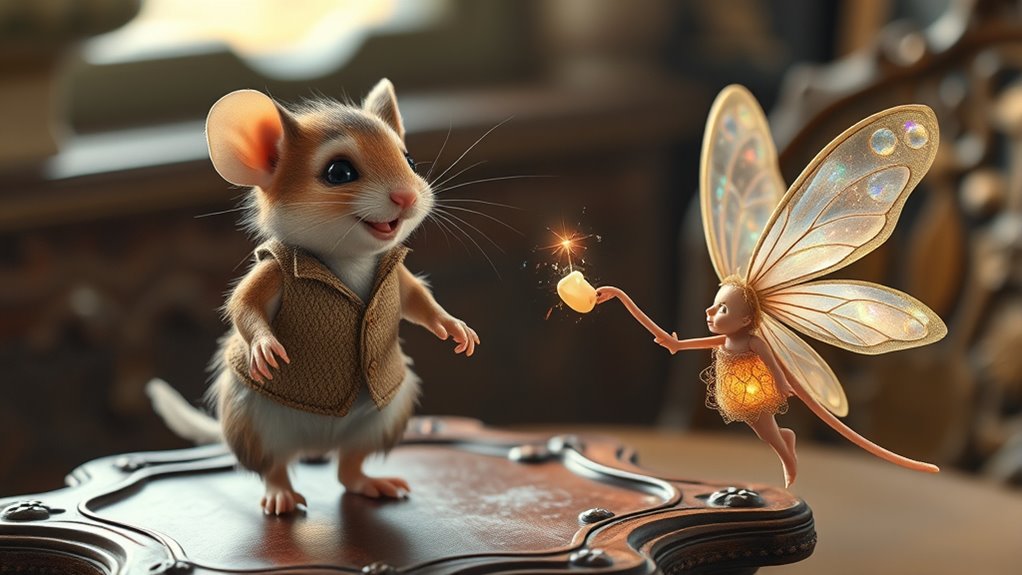
Many cultures have their own special traditions for handling lost teeth, and two of the most well-known figures are the Tooth Fairy and Raton Pérez. These childhood stories are more than just charming tales—they shape how kids view losing teeth and create lasting memories. As a parent or caregiver, you might wonder how these traditions originated and what happens when their roles cross paths, especially in cases where a child’s dental journey becomes complicated.
Many childhood traditions like the Tooth Fairy and Raton Pérez shape kids’ views on losing teeth and create lasting memories.
Raton Pérez, the beloved mouse from Spain and Latin America, has long been part of dental traditions that celebrate childhood milestones. Traditionally, children leave their lost teeth under their pillows, and Raton Pérez visits in the night to exchange the tooth for a small gift or money. These stories are simple but powerful, offering reassurance and excitement during a time that can sometimes be a little uncomfortable. However, when a child starts losing multiple teeth rapidly or encounters dental issues like overcrowding, the role of Raton Pérez can get a little more complicated. That’s where the Tooth Fairy steps in—sometimes unexpectedly.
The Tooth Fairy is a more widespread figure in North America and other parts of the world, and her role can intersect with Raton Pérez’s in unexpected ways. For example, in a child’s busy dental journey, they might lose several teeth in quick succession. This flood of dental changes can leave a child overwhelmed or confused, especially if they’re told different stories from friends or family. That’s when the Tooth Fairy might help ease the transition. She can act as a supportive figure, reinforcing the idea that losing teeth is a normal, positive part of growing up. The Tooth Fairy’s presence can help bridge gaps in the childhood story, making the experience less stressful and more magical.
In some cases, Raton Pérez has even “helped” the Tooth Fairy by creating a more organized approach to dental traditions. For children with many teeth to lose, the fairy might leave notes or tokens that acknowledge the growing number of teeth and celebrate each step. This collaboration between the two figures ensures that the childhood stories remain joyful, even when dental issues become more complex. Ultimately, their combined roles underscore the importance of comfort and encouragement during childhood milestones. They transform what could be a nerve-wracking experience into a memorable, positive event. Through these traditions, kids learn to embrace their changing bodies and develop healthy attitudes about dental care, all while sharing in the magic of childhood stories that last a lifetime.
As an affiliate, we earn on qualifying purchases.
Frequently Asked Questions
How Does the Tooth Fairy Decide Which Children to Visit?
The tooth fairy chooses children based on the belief and myths surrounding her, often visiting those who leave their lost teeth under their pillow. Your visit timing depends on your routines and expectations; she typically arrives at night when you’re asleep. While tooth fairy myths vary, it’s your tradition of leaving a tooth and a note that invites her to visit, making your experience special and magical.
What Is the Origin Story of Raton Pérez?
You might find it fascinating that Raton Pérez’s mythical origins trace back to a Spanish story from the early 20th century. He’s a beloved cultural figure symbolizing childhood innocence and dental health. This mouse’s story highlights his cultural significance, serving as a charming alternative to the Tooth Fairy in many Spanish-speaking countries. His legend emphasizes the importance of caring for teeth while adding a whimsical, magical touch to childhood traditions.
Do the Tooth Fairy and Raton Pérez Work Together?
You might wonder if the tooth fairy and Raton Pérez work together, but they don’t typically collaborate. They each embody different cultural variations and myths surrounding losing teeth. The tooth fairy, popular in the US and other countries, leaves money in exchange for teeth. Raton Pérez, more prevalent in Spanish-speaking countries, also collects teeth but follows different traditions. Both celebrate childhood, but their roles remain separate across cultures, enriching global tooth-losing myths.
How Do They Handle Children With Multiple Lost Teeth?
When children lose multiple teeth, the Tooth Fairy and Raton Pérez coordinate to make the process smooth. After a tooth extraction or natural loss, you’re encouraged to maintain good dental hygiene, brushing gently and avoiding sugary foods. Both visit to collect the teeth, often leaving special notes or small gifts. Their teamwork reassures children, making losing teeth less intimidating and encouraging healthy habits.
Are There Differences in Traditions Across Countries?
You’ll find that traditions vary widely across countries due to cultural variations and language differences. In some places, children expect a fairy, while others celebrate a mouse or another figure. You might notice different customs for leaving teeth, like exchanging gifts or tokens. These differences reflect local beliefs and stories, making each tradition unique. So, when you explore these customs, you’ll see how culture shapes the way children experience losing their teeth worldwide.
Conclusion
As you read about how the Tooth Fairy and Raton Pérez crossed paths, it’s funny to think that sometimes, the universe seems to arrange things perfectly. Maybe it’s no coincidence that their teamwork saved Raton Pérez just when he needed it most. After all, isn’t it amazing how small worlds can connect in unexpected ways? Sometimes, help appears exactly when you least expect it, reminding you that a little magic and coincidence can make all the difference.
Evergreen bestsellers Picks
bestsellers
As an affiliate, we earn on qualifying purchases.