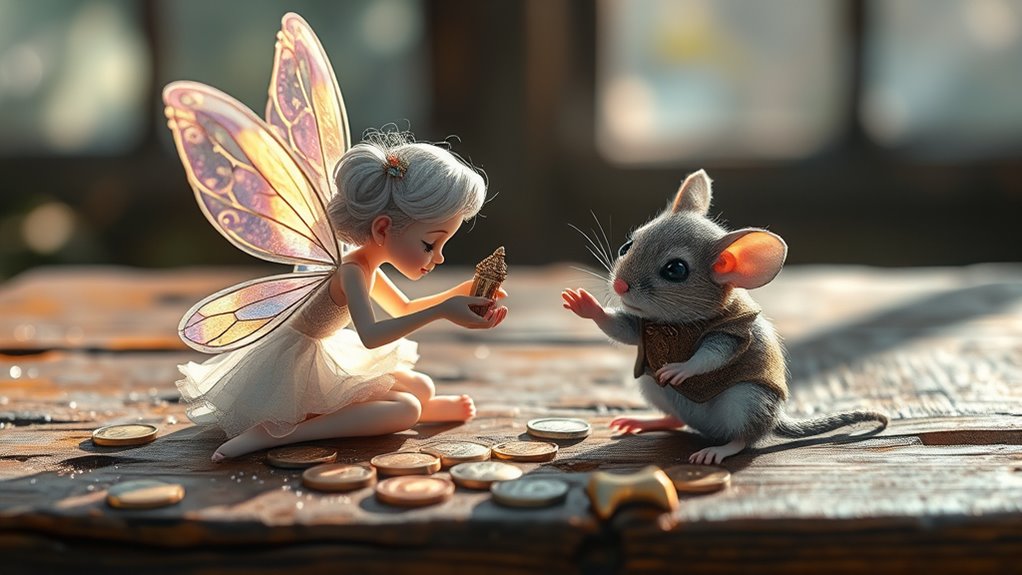

When the Tooth Fairy and the Tooth Mouse exchange gifts, they keep a magical tradition alive that celebrates growth, change, and childhood wonder. You might leave a small note, a coin, or a tiny toy under your pillow or in a box, symbolizing a milestone. These exchanges help you feel connected to your culture and inspire imagination and gratitude. If you keep exploring, you’ll discover even more about the fascinating stories behind this enchanting tradition.
Key Takeaways
- The Tooth Fairy and Tooth Mouse are mythical figures who exchange gifts or money for children’s lost teeth, reinforcing cultural traditions.
- Both traditions involve children leaving a tooth in exchange for a small gift, symbolizing growth and change.
- These myths foster imagination, patience, gratitude, and create meaningful routines during childhood milestones.
- The Tooth Mouse, common in some cultures, often leaves more substantial or personalized gifts compared to the Tooth Fairy.
- Both stories connect children to broader cultural narratives celebrating innocence, transformation, and the magic of childhood.

In many families, the tradition of exchanging gifts between the Tooth Fairy and the Tooth Mouse adds a magical touch to childhood. These customs are part of childhood traditions that help children feel special and connected to a world beyond their everyday experiences. While some kids see the Tooth Fairy and the Tooth Mouse as mere stories, others embrace these cultural myths wholeheartedly, believing in their magic and symbolism. This exchange of gifts is a cherished ritual that fosters imagination, wonder, and a sense of tradition that can last for generations.
The gift exchange between Tooth Fairy and Tooth Mouse nurtures childhood wonder and cultural traditions that last generations.
When you lose a tooth, you might carefully place it under your pillow or in a small box, waiting for the magical visitors to arrive. As part of the cultural myths surrounding these figures, children often leave behind a note or a thank-you for the gifts they receive. These gifts can range from a small amount of money to a tiny toy or a note from the Tooth Fairy or the Tooth Mouse, acknowledging the child’s tooth and the bravery it took to lose it. This act of exchanging gifts isn’t just about the physical item; it’s about celebrating growth, change, and the innocence of childhood.
For many, these traditions serve as a rite of passage, marking a milestone in a child’s development. They help children understand that change—like losing a tooth—is a natural part of life, and that even small acts like leaving a tooth behind can be rewarded with kindness and magic. Over time, these rituals create a comforting routine, tying children to their cultural myths and childhood traditions. They also offer an opportunity for parents and guardians to share stories and reinforce values of gratitude and patience, as children enthusiastically await their small surprise.
You might wonder why these myths have persisted across different cultures and generations. The truth is, they tap into universal themes of transformation and hope. The Tooth Fairy and the Tooth Mouse symbolize the magic of childhood and the importance of imagination. They turn what could be a simple, everyday event into a memorable experience filled with wonder. Whether you believe in these figures or see them as symbolic, the act of exchanging gifts connects children to a broader cultural narrative that celebrates innocence, growth, and the magic of childhood. These traditions remind us to cherish the small moments and embrace the enchantment that stories and myths bring into everyday life. Additionally, embracing creative practice can help children develop their imagination and resilience as they navigate these symbolic moments.
Frequently Asked Questions
How Did the Tradition of Exchanging Gifts Start?
The tradition of exchanging gifts started as a way to symbolize good luck and celebrate childhood milestones, rooted in stories of mythical figures like the Tooth Fairy and Tooth Mouse. These figures represent reward and comfort, making the exchange meaningful. You participate in this gift symbolism to ease the fear of losing teeth and to create a magical experience, reinforcing the idea that good things come with growing up.
Are There Cultural Differences in Tooth Exchange Customs?
Yes, there are cultural differences in tooth exchange customs. In some cultures, dental folklore influences childhood rituals, leading to unique traditions. For example, while the Tooth Fairy is popular in Western countries, other cultures might have different figures or rituals. You might find that in some places, children leave their teeth in specific ways or exchange gifts, reflecting local beliefs and history. These customs help preserve cultural identity through childhood traditions.
What Materials Are Commonly Used for the Gifts?
Think of the gifts exchanged as tiny treasures carved from the fabric of mythology. You’ll often find coins, small toys, or notes made from paper as they’re common choices. These materials reflect the rich tapestry of tooth fairy mythology and cultural symbolism, where shiny coins symbolize prosperity, and toys represent childhood innocence. Such gifts serve as meaningful tokens, connecting you to a tradition woven through centuries and diverse cultures.
Do These Traditions Vary by Age or Tooth Loss Stage?
You’ll notice age-related traditions often influence the gifts and expectations during tooth exchanges. As children reach developmental milestones, like losing baby teeth or getting their adult teeth, the traditions may evolve—small gifts for younger kids and more meaningful tokens for older ones. These changes help mark milestones, making the experience exciting and memorable. So, your child’s age and stage can definitely shape how these tooth exchange traditions unfold.
How Do Children Typically Respond to These Exchanges?
You might be surprised at how children typically respond to these exchanges, often filled with excitement and curiosity. Their reactions range from joyful surprise to nervous anticipation, especially as they passionately await the gift. Child reactions are usually positive, fueled by the magic of the moment and gift anticipation. Sometimes, their wide-eyed wonder makes the experience even more special, creating a delightful coincidence that sparks lasting memories.
Conclusion
You might be surprised to learn that around 50 million teeth are exchanged worldwide each year between the Tooth Fairy and the Tooth Mouse. This magical tradition connects children across cultures, creating a sense of wonder and excitement. As you imagine these tiny exchanges happening every night, it’s easy to feel the joy and hope they inspire. So, next time you lose a tooth, remember you’re part of a beautiful, global story of magic and tradition.