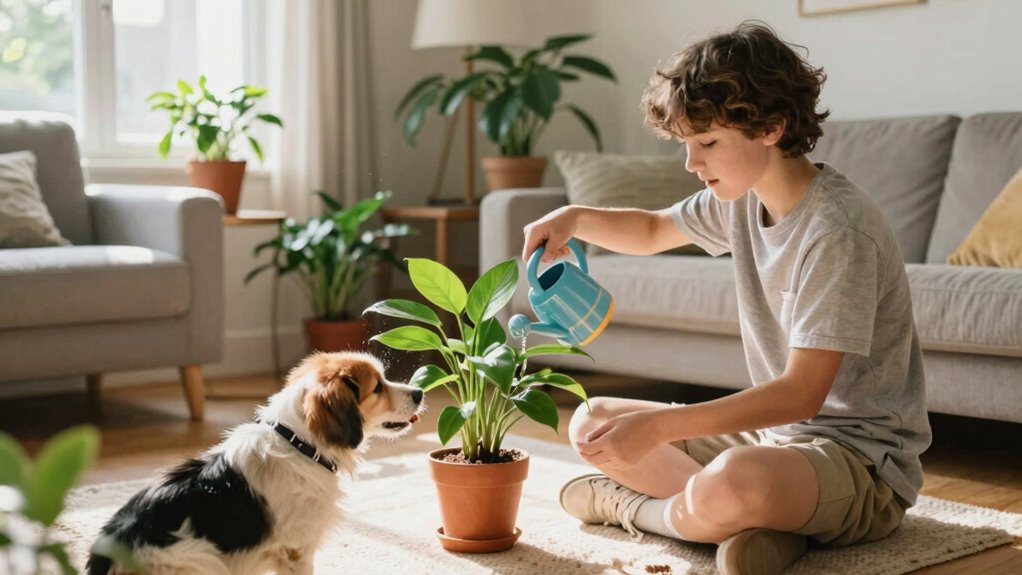

To introduce responsibility with plant care or pet tasks, start by being honest about what’s involved and emphasize that responsibility is a journey, not a one-time event. Make tasks simple, fun, and part of a daily routine, using visual charts and positive praise to motivate consistency. Show patience when mistakes happen and use them as teachable moments. If you keep building on these steps, you’ll find ways to encourage ongoing growth and confidence in your child.

Get baby and family essentials delivered free — and shop member deals
- Fast, free delivery on millions of items
- Access to Prime Big Deal Days deals on October 6–7
- Prime Video, Amazon Music and more included
Key Takeaways
- Be honest about tasks and emphasize that responsibility is a ongoing process, not a one-time event.
- Use visual tools and routines to make tasks predictable and manageable for children.
- Reinforce effort and consistency with positive praise to motivate continued participation.
- Celebrate small successes and turn mistakes into learning opportunities.
- Keep instructions simple and specific to build confidence and understanding over time.

Have you ever wondered how to effectively teach kids responsibility through plant care or pet tasks? It’s a common challenge, but the key lies in setting clear, manageable expectations while motivating consistency. When you introduce these responsibilities, you want your child to understand that caring for a plant or pet isn’t just a chore—it’s a chance to develop trust, patience, and a sense of accomplishment.
Start by managing expectations from the beginning. Be honest about what’s involved, whether it’s watering a plant daily or feeding a pet twice a day. If your child expects instant results or believes the task will be effortless, they might become discouraged or lose interest quickly. Clarify that responsibility is a process, and mistakes are part of learning. For example, if they forget to water the plant, instead of scolding, use it as an opportunity to talk about how consistency is important and how everyone forgets sometimes. This approach helps them see responsibility as a journey, not a one-time task. Understanding responsibility is essential for fostering a positive attitude toward these tasks. Additionally, demonstrating patience and understanding yourself encourages children to develop these qualities as well.
Be honest about responsibilities, embrace mistakes as learning opportunities, and view responsibility as a journey, not a one-time task.
Motivating consistency is essential to helping your child build good habits. Make the tasks manageable and fun. Use a visual schedule or chart to track daily chores, giving your child a sense of progress and ownership. When they see their efforts making a difference—like a plant thriving or a pet feeling happy—they’ll be more inclined to stick with it. Reinforce positive behavior with praise that emphasizes their effort and consistency rather than just the outcome. For example, “I love how you remembered to feed your fish every morning this week—that’s real responsibility!”
It’s also helpful to create routines around these tasks. Kids thrive on predictability, so establishing a specific time each day for plant watering or pet care makes it part of their everyday life. This consistency helps manage expectations, making the responsibility feel less overwhelming and more natural. Keep instructions simple and specific—“Water the plant until the soil feels moist” or “Feed the cat twice a day”—so your child knows exactly what to do without confusion. Developing routine-building skills can significantly improve their ability to handle responsibilities confidently. Moreover, understanding the importance of consistent effort can motivate children to stay engaged with their tasks over time.
Finally, be patient and supportive. Kids will make mistakes, and that’s part of their growth. Celebrate their successes, no matter how small, and remind them that responsibility is about caring and learning. Recognizing that responsibility is a process helps children develop a more positive attitude toward their tasks. By managing expectations and motivating consistency, you foster a positive attitude toward responsibility, turning everyday tasks into valuable lessons that will serve them well into the future.
kids plant watering schedule chart
As an affiliate, we earn on qualifying purchases.
As an affiliate, we earn on qualifying purchases.
Frequently Asked Questions
How Do I Handle Accidental Damage Caused by Children During Tasks?
When kids cause accidental damage during tasks, stay calm and avoid punishment. Use a reward system to encourage careful behavior, praising them when they handle tasks responsibly. Implement consistency strategies by gently reminding them of rules and expectations. Explain what went wrong and how to fix it, turning mistakes into learning opportunities. This approach helps your children understand accountability while fostering a positive, supportive environment.
What Age Is Appropriate for Children to Start Handling Responsibility?
You can start introducing responsibility around age 3 or 4, as this is when children develop enough coordination and understanding for simple tasks. Focus on age-appropriate responsibility timing, like feeding pets or watering plants, and gradually increase complexity. Keep instructions clear, supervise closely, and praise their efforts. This approach helps build confidence and a sense of responsibility while ensuring safety and enjoyment in the process.
How Can I Motivate Reluctant Children to Participate?
To motivate reluctant children, use engaging motivational strategies that make responsibility development fun and rewarding. Offer praise and small incentives, like stickers or extra playtime, to encourage participation. Break tasks into manageable steps to boost confidence. Show enthusiasm and involve them in decision-making to foster ownership. By making responsibilities feel achievable and rewarding, you’ll inspire your children to take initiative willingly and develop a positive attitude towards responsibilities.
What Safety Precautions Should I Take With Pets or Plants?
Think of pet safety and plant safety as your home’s invisible shield. Always supervise pets around plants, guaranteeing they don’t chew or swallow harmful leaves. Keep toxic plants out of reach, and verify that plants are non-toxic and safe for pets. For pets, secure cords and small items that could cause choking. Regularly check plants for pesticides or chemicals, and ensure your pets aren’t exposed to any harmful substances.
How Do I Balance Chores With Other Daily Responsibilities?
To balance chores with your daily responsibilities, focus on time management by creating a schedule that allocates specific moments for tasks. Use reward systems to motivate yourself and stay consistent. Break chores into smaller, manageable steps to avoid feeling overwhelmed. Prioritize your tasks, and don’t forget to include breaks. This way, you stay productive without neglecting other commitments, making your daily routine more manageable and less stressful.
Conclusion
So, here’s the irony: by assigning plant or pet tasks, you’re actually teaching responsibility—something many adults still struggle with. It’s funny how something as simple as watering a plant or feeding a pet can become a lesson in accountability. But don’t forget, just like kids, plants and pets thrive on consistency. So next time you slip up, remember, even your leafy friend or furry buddy might be silently judging your commitment!
Halloween Picks
halloween
As an affiliate, we earn on qualifying purchases.