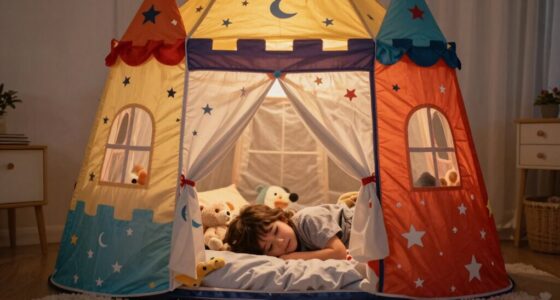
To prevent bedtime audio from becoming a delay tactic, set a clear time limit of 10-15 minutes and stick to it every night. Use a consistent routine that associates the audio with a specific part of bedtime, then encourage your child to stay in bed quietly after it ends. Gradually reduce the audio or its volume over time, helping your child develop self-soothing skills. Keep exploring ways to create a peaceful, independent sleep routine.

Turn the school run and nap time into listening time
- Thousands of audiobooks, podcasts and originals
- Listen on your phone, tablet or Echo — also offline
- Cancel anytime
Key Takeaways
- Play audio for a set, limited duration and stop it consistently to prevent reliance on prolonged listening.
- Gradually reduce audio volume or duration over time to encourage independent falling asleep.
- Use the audio as part of a structured routine, not as a bait to delay bedtime.
- Avoid playing audio from screens; opt for dedicated sound machines to minimize distractions.
- Incorporate calming activities like reading or gentle massage alongside audio to make bedtime more engaging and less delay-focused.
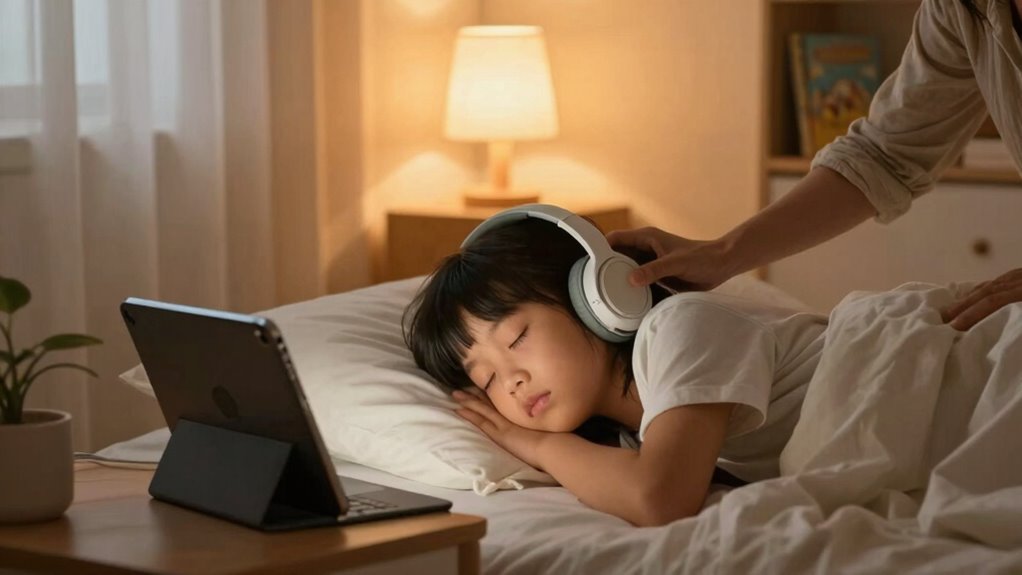
Many parents turn to bedtime audio as a calming tool to help children wind down, but it can quickly become a delay tactic if not managed properly. While playing soothing sounds or stories can be effective, it’s easy for children to cling to their audio routines, especially when they’re feeling anxious or resisting sleep. If left unchecked, this reliance can lead to increased noise distractions, making it harder for your child to settle without the audio, and foster a dependency on technology that might carry over into other parts of their daily life. To prevent this, you need clear strategies that balance comfort with independence.
Managing bedtime audio routines helps children develop independence and reduces reliance on noise distractions.
First, set a specific, limited time for the audio. For example, play it for 10-15 minutes, then turn it off and encourage your child to stay in bed quietly. This helps establish boundaries and signals that bedtime routines have a natural end. Be consistent with the timing so your child knows what to expect and begins to associate the audio with a specific part of the bedtime process rather than an ongoing crutch. Over time, this reduces their reliance and encourages self-soothing skills. Incorporating consistent routines can further reinforce these boundaries and support sleep independence.
Next, pay attention to noise distractions that can interfere with your child’s ability to fall asleep without the audio. If your home environment is noisy, consider using white noise machines or blackout curtains to create a calm, controlled space. This minimizes external noise factors that might make your child cling to audio as a source of comfort, helping them learn to relax in a quieter environment. When you gradually reduce the volume or frequency of the audio sessions, your child learns to fall asleep without needing constant auditory input, strengthening their ability to self-soothe. Incorporating environment modifications can further support this process by creating a peaceful sleep setting. Additionally, understanding how noise pollution impacts sleep quality can help you better tailor your environment to promote restful nights. Developing an awareness of how external factors influence sleep can empower you to make more effective adjustments for your child’s comfort.
It’s also vital to address technology dependency. Playing audio from devices like tablets or smartphones can inadvertently foster attachment to screens, which may cause sleep disruptions or delay the transition to independent sleep. Instead, opt for dedicated, non-screen sound machines, or use old-fashioned options like a radio or a speaker with a timer. This minimizes your child’s exposure to screens before bed, helping them develop healthier sleep habits and reducing their reliance on technology for comfort. Additionally, limiting screen time in the hour before bed can further aid in establishing a consistent, restful routine.
Finally, introduce other calming routines that don’t involve sound, like gentle massage, reading a physical book, or practicing deep breathing exercises. These give your child alternative ways to relax and wind down, making the transition from active wakefulness to sleep smoother. By combining structured audio routines with these calming activities and environment modifications, you can guarantee bedtime remains a peaceful, effective process rather than a delay tactic rooted in noise distractions or technology dependency. Creating a peaceful sleep environment can significantly enhance your child’s ability to fall asleep independently and comfortably.
As an affiliate, we earn on qualifying purchases.
Frequently Asked Questions
How Can I Determine if My Child Genuinely Needs Bedtime Audio?
You can tell if your child genuinely needs bedtime audio by observing their sleep associations. If they struggle to fall asleep without it or become upset when it’s not available, it’s likely helping them feel secure. Notice how they respond during nights without audio. If they sleep peacefully, they might not need it every night. Use bedtime audio thoughtfully to support your child’s sleep, but avoid creating a dependence.
What Are Alternative Calming Methods Besides Audio for Bedtime?
You can transform bedtime into a calming oasis with simple alternatives like music therapy and aromatherapy relaxation. Imagine this: your child drifts off as gentle melodies fill the room, while soothing scents like lavender work their magic. These natural methods create a peaceful environment, making bedtime feel like a gentle, magical escape. Skip the screens and let calming music and aromatherapy relax your child’s mind and body, turning bedtime into a serene, cozy retreat.
How Do I Handle Resistance to Stopping Bedtime Audio?
To handle resistance to stopping bedtime audio, acknowledge your child’s sleep association with it and gently explain that they’re capable of falling asleep without it, reducing auditory dependency. Offer reassurance through soothing gestures, such as a hug or gentle pat, and introduce calming alternatives like soft music or white noise. Stay consistent and patient, gradually decreasing the audio use to help your child build confidence in falling asleep independently.
Are There Specific Types of Audio That Are More Effective?
You’ll find that white noise and calming music therapy are most effective for bedtime routines. White noise helps drown out distractions, creating a consistent sleep environment, while gentle music therapy can relax your mind and body. Experiment with different sounds to see what soothes you best. Stick with the options that promote relaxation without becoming a delay tactic, ensuring your bedtime stays peaceful and consistent.
How Can I Establish a Consistent Bedtime Routine Without Audio?
Did you know establishing a consistent bedtime routine can improve sleep quality by up to 50%? You can do this without audio by creating a calming environment with bedtime stories and soothing scents like lavender. Set a regular time, turn off screens, and focus on relaxing activities. These simple steps help your mind unwind naturally, making it easier to fall asleep and develop a dependable routine without relying on audio as a delay tactic.
Conclusion
By setting clear boundaries and sticking to a routine, you’ll prevent bedtime audio from slipping into another delay. Think of it as planting a sturdy tree—once rooted, it stands firm amidst the winds of temptation. When you honor your bedtime rhythm, you create a sanctuary of peace and rest. Your evenings become a gentle tide, guiding you smoothly into sleep’s embrace, rather than a stubborn wave that keeps pulling you back.
Cold & flu season Picks
humidifiers
As an affiliate, we earn on qualifying purchases.