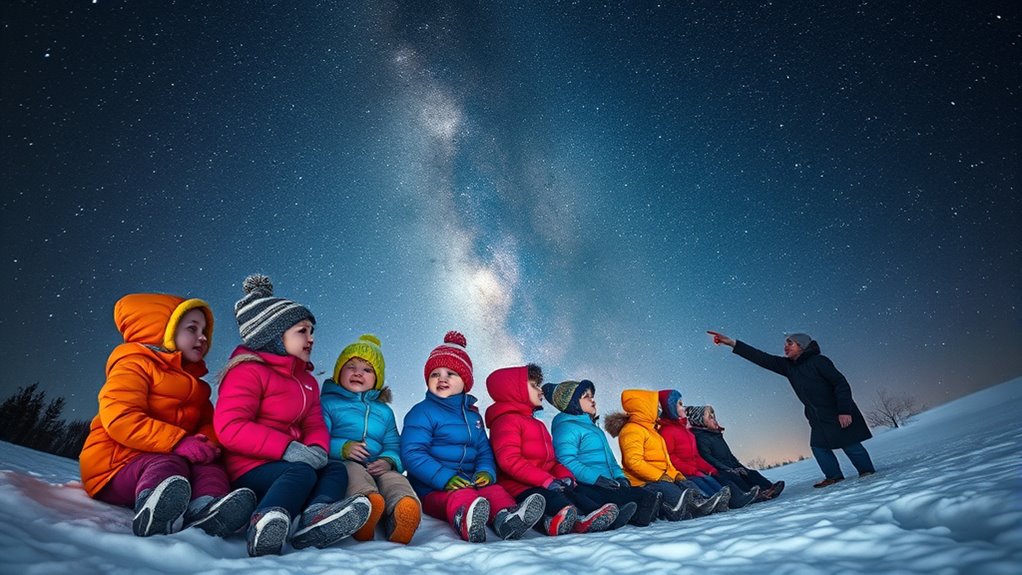

Teaching kids about winter constellations and stargazing is a fun way to spark their curiosity about the night sky. Use clear, crisp winter evenings to introduce bright stars and familiar patterns like Polaris, Ursa Major, and Cassiopeia. Share exciting myth stories behind each constellation to make the experience more meaningful. Start with simple star charts or apps, use a red flashlight, and encourage questions. Keep exploring, and you’ll discover even more about the wonders above.
Key Takeaways
- Use simple star charts or apps to help kids identify bright winter constellations like Orion and Ursa Major.
- Share engaging myths and stories behind constellations to foster curiosity and cultural understanding.
- Encourage hands-on activities, such as drawing constellation shapes or creating stories, to deepen learning.
- Use red-filtered flashlights to preserve night vision and create a comfortable stargazing environment.
- Start with prominent stars and gradually introduce more complex patterns, building recognition and long-term interest.
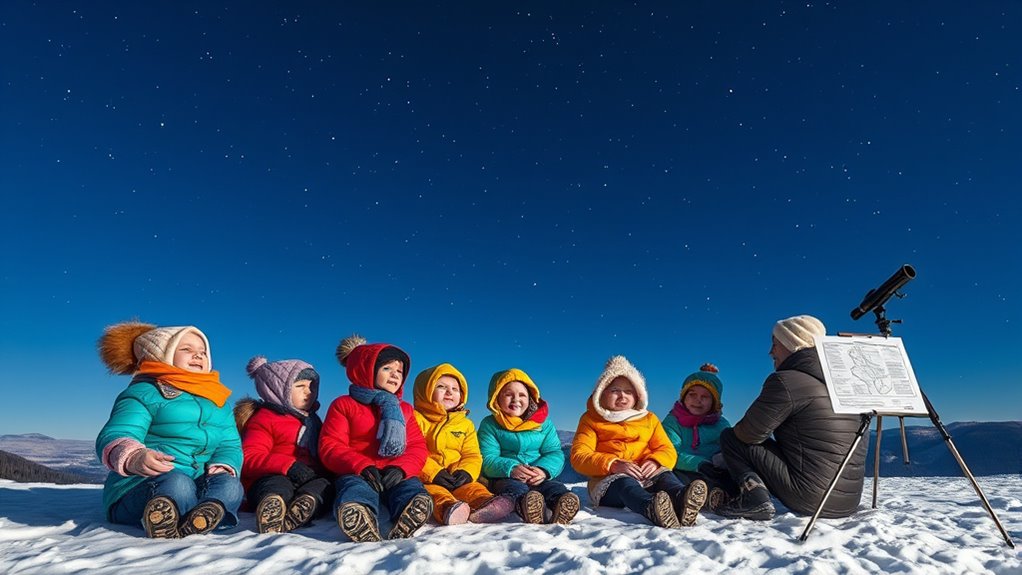
Winter is a perfect time to introduce kids to the wonders of the night sky, as clear, crisp evenings make stargazing more enjoyable. As you step outside, you can start by helping them learn to identify bright winter constellations. These groups of stars form patterns that have fascinated humans for centuries, and teaching kids how to name stars is a great first step. Show them how to find Polaris, the North Star, which remains almost fixed in the sky and acts as a celestial anchor. Once they recognize Polaris, it’s easier to locate other constellations nearby, like Ursa Major and Cassiopeia. Highlighting the shapes these stars create in the sky helps children visualize the patterns and remember them better.
While identifying stars, it’s fascinating to share the stories behind the constellation myths. These myths originate from various cultures—Greeks, Romans, and even Indigenous peoples—who assigned stories to explain the shapes in the sky. For example, the constellation Orion is often associated with the mighty hunter from Greek mythology. Explaining these stories makes stargazing more engaging and sparks imagination. Kids love hearing about how these star patterns represent legendary figures, animals, or gods, and relating these tales to the shapes they see in the sky makes the experience more meaningful. You can even encourage them to create their own stories about the patterns, fostering creativity and a personal connection to the night sky.
As you guide them through naming stars and sharing constellation myths, keep the atmosphere fun and interactive. Use a flashlight with a red filter to preserve night vision, and point out the brightest stars first, gradually progressing to more complex patterns. Consider using a star chart or a stargazing app designed for beginners to help them navigate and understand what they’re seeing. Ask questions like, “Can you find the shape of a hunter or a bear?” to make the activity more participatory. Over time, your kids will start recognizing familiar shapes and recalling the stories behind them, deepening their appreciation of winter skies. Additionally, understanding the concept of naming stars and constellation myths can foster a deeper interest in astronomy and the night sky.
Frequently Asked Questions
What Winter Constellations Are Easiest for Beginners to Identify?
The easiest winter constellations for beginners to identify are Orion, Taurus, and Canis Major. These northern constellations feature easy star patterns with bright, distinctive stars that stand out in the night sky. Orion’s belt is especially simple to spot, making it a great starting point. Once you recognize these patterns, you’ll find it easier to explore other northern constellations and enjoy the winter night sky.
How Can I Make Stargazing Activities More Engaging for Kids?
Imagine turning stargazing into an adventure where every star tells a story. You can make activities more engaging by using interactive stories that captivate their imagination and incorporating constellation crafts to bring the night sky to life. For example, creating star maps or constellation art helps kids connect with the sky personally. These hands-on activities spark curiosity, making learning about winter constellations fun and memorable for young explorers.
Are There Any Safety Tips for Outdoor Winter Stargazing?
When outdoor winter stargazing, prioritize safety by dressing in warm clothing to stay comfortable. Bring a flashlight and confirm it has a red filter or use red tape to prevent ruining your night vision. Be mindful of icy or uneven ground to avoid falls, and stay in well-lit areas if possible. Keep an eye on the weather forecast, and never stargaze alone in remote locations. Safety first makes the experience enjoyable and worry-free.
What Tools or Apps Can Help Kids Learn About Constellations?
Imagine your child easily identifying Orion’s Belt using an interactive star map on your phone. You can try apps like SkyView or Star Walk that feature interactive star maps, making learning fun. Constellation quizzes also engage kids by testing their knowledge in a playful way. These tools turn stargazing into an exciting adventure, helping children connect with the night sky while developing their understanding of winter constellations.
How Can I Explain the Science of Stars to Young Children Effectively?
To explain the science of stars to young children, keep it simple and engaging. Talk about how stars are formed in space through star formation, where clouds of gas and dust come together. Use stories or models to show how light pollution affects our view of stars, making them harder to see. Relate it to their experiences, like how city lights hide the stars, helping them understand why stars are brighter and more numerous in the countryside.
Conclusion
By exploring winter constellations with your kids, you’re not just teaching them about stars—you’re sparking curiosity and a love for the universe. Many believe that introducing children to astronomy early can foster lifelong interest and critical thinking. So, grab a telescope or just look up, and share these celestial stories. Remember, even ancient civilizations tracked stars to navigate and understand their world, proving that stargazing connects us to our ancestors and the cosmos alike.