
To make the Bedtime Clock Trick work for early risers, start by figuring out your ideal wake-up time and work backwards in 90-minute cycles, adding extra minutes for falling asleep. Keep your environment dark, quiet, and cool, and stick to a consistent schedule, even on weekends. Relax before bed and limit screen time. If you stay consistent and fine-tune your routine, you’ll find it easier to reset your sleep cycle—just keep going, and you’ll discover more helpful tips along the way.
Key Takeaways
- Gradually adjust your bedtime in 90-minute cycles aligned with natural sleep patterns to reset your internal clock effectively.
- Optimize your sleep environment—dark, quiet, cool—to signal your body for better sleep onset and maintenance.
- Track dreams and sleep patterns to identify your optimal sleep and wake times, aiding schedule calibration.
- Establish consistent routines and limit screen time before bed to promote melatonin production and sleep quality.
- Use relaxation techniques and environmental supports to reinforce your sleep schedule and improve overall sleep health.
How the Bedtime Clock Trick Helps Reset Your Sleep Cycle
The Bedtime Clock Trick works by helping you adjust your sleep schedule gradually, making it easier to reset your internal clock. Your sleep environment plays a vital role—create a dark, quiet, and comfortable space to signal your brain it’s time to wind down. As your sleep schedule shifts, pay attention to your dreams; they can provide clues about your sleep quality and help you recognize when your body’s internal clock is aligning better. Incorporating consistent calibration of your sleep routines can enhance the effectiveness of the trick. Establishing a regular sleep schedule reinforces your new routine, gradually shifting your sleep-wake cycle forward or backward. Consistent sleep environment adjustments and mindful dream analysis work together to reinforce healthy sleep habits, ensuring your internal clock is reset effectively. Additionally, maintaining a consistent bedtime routine can further support your efforts by signaling to your body that it’s time to wind down. Over time, this approach helps your internal clock adapt, making early mornings feel natural and less disruptive.
Get to Know Your Internal Clock and Sleep Habits
Understanding your internal clock, or circadian rhythm, is key to improving your sleep habits. Recognizing your natural sleep and wake times helps you create a better sleep environment. Pay attention to your sleep environment—dark, quiet, and cool spaces support healthier sleep. Tracking your sleep patterns, including dream analysis, reveals when you naturally feel sleepy or alert. Use this insight to adjust your habits gradually. Do you wake up refreshed or groggy? Do you dream vividly or rarely? Record these details to identify your rhythms. Here’s a quick overview:
| Sleep Pattern | Best Wake Time | Sleep Environment Tips |
|---|---|---|
| Early riser | 5:30-6:30 am | Dim lights before bed |
| Night owl | 8-9 am | Cool, dark room |
| Light sleeper | 10 pm | Minimize noise |
| Deep sleeper | 11 pm | Comfortable bedding |
| Dreamer | REM cycles | Keep a dream journal |
Additionally, understanding the horsepower of electric dirt bikes can help you appreciate the power behind some sleep-enhancing devices. Recognizing how sound vibrations influence brainwave patterns can also support your efforts to establish a healthier sleep routine, especially when combined with knowledge of your internal clock and sleep habits. Incorporating natural sleep cycles into your routine can further optimize your rest, and learning about filter sizing and flow may help improve your sleep environment by ensuring cleaner air.
Finding the Best Bedtime and Wake Time for Early Risers

Finding the best bedtime and wake time, you should aim for your ideal sleep duration and stick to a consistent schedule. Making small adjustments to your bedtime gradually helps your body adapt without feeling restless. By tuning these habits, you’ll wake up refreshed and ready for the day. Incorporating body-based healing techniques can also support your sleep patterns by reducing stress and promoting relaxation. Understanding how performance parts like a well-tuned engine can optimize overall functioning highlights the importance of consistency in your sleep routine. Paying attention to sleep hygiene practices can further enhance your ability to establish a reliable sleep schedule and improve your rest quality. Additionally, being mindful of sleep environment factors such as light, noise, and temperature can significantly impact your sleep quality and help you maintain a steady routine. Recognizing the role of AI discoveries in health innovations may inspire new approaches to improving sleep health through technology.
Ideal Sleep Duration
Have you ever wondered how much sleep you truly need to feel rested and alert? Your ideal sleep duration varies, but most early risers thrive on about 7 to 8 hours. To find your perfect amount, try dream journaling each morning to track how rested you feel. Pay attention to your sleep environment—keep it cool, dark, and quiet to enhance quality. When your sleep environment is optimized, you’re more likely to wake up refreshed with the right amount of sleep. Adjust your bedtime gradually, noticing how different durations affect your energy levels. Remember, sleep hygiene helps your body settle into a rhythm, making it easier to determine how many hours of sleep leave you feeling your best. Incorporating sleep environment optimization can further improve your sleep quality and overall restfulness. Additionally, observing local cultural festivals can inspire a calming bedtime routine by fostering community connection and relaxation. Understanding sleep duration as a personalized concept can help you tailor your bedtime to support your health and productivity.
Consistent Sleep Schedule
Establishing a consistent sleep schedule is key to waking up refreshed and feeling alert throughout the day. To do this, aim to go to bed and wake up at the same times every day, even on weekends. Your sleep environment plays a vital role—keep it cool, dark, and quiet to promote quality rest. Dream journaling before bed can signal your brain that it’s time to wind down, helping you stick to your schedule. Avoid screens and stimulating activities close to bedtime, as they can disrupt your internal clock. Consistency reinforces your body’s natural rhythm, making it easier to fall asleep and wake up early. Incorporating educational resources about sleep habits can further support your routine. Over time, this routine trains your body to anticipate sleep and wakefulness, making early mornings feel more natural and less forced.
Adjusting Bedtime Gradually
If you find yourself waking up too early or feeling groggy in the mornings, adjusting your bedtime gradually can help you find a schedule that works better for you. Shift your bedtime in small increments—15 to 30 minutes earlier or later each night—until you discover the ideal time. While doing this, consider dream journaling; it can reveal how your sleep quality improves as you tweak your schedule. Also, optimize your sleep environment by creating a dark, cool, and quiet space, making it easier to fall asleep and stay asleep longer. Incorporating sleep environment optimization can further enhance your rest. Additionally, paying attention to your natural sleep rhythm can help you align your schedule more effectively. Understanding your sleep cycle can also aid in waking up feeling more refreshed. Recognizing the importance of air quality in your sleep environment can support better rest, especially since pollutants like dust and microplastics can impact your sleep quality. Furthermore, maintaining good sleep hygiene routines, such as avoiding screens before bed and establishing relaxing pre-sleep rituals, can significantly improve your sleep. Patience is key—small adjustments over time help your body adapt without disrupting your natural rhythm, leading to more restorative sleep and waking up refreshed.
How to Calculate Your Personal Sleep Window Using the Clock Trick
To calculate your personal sleep window, start by figuring out how much sleep you need each night. Then, set a consistent bedtime and count backwards in sleep cycles, usually around 90 minutes each, to find the best time to wake up. This simple method helps you wake feeling refreshed and aligns your sleep with natural rhythms.
Determine Your Sleep Needs
Understanding how much sleep your body truly needs is essential for waking up refreshed. To determine this, start by tracking your sleep patterns through dream journaling—note when you fall asleep and wake up naturally. Pay attention to how rested you feel each day. Your sleep environment also plays a role; a quiet, dark, and cool space helps you get quality rest. Avoid relying solely on standard sleep durations, as individual needs vary. Instead, experiment with different sleep lengths, and observe your energy levels. Over time, you’ll identify your ideal sleep window. This personalized approach guarantees you wake up feeling refreshed and ready to go, making the clock trick more effective in establishing a sleep schedule tailored just for you.
Set a Consistent Bedtime
Setting a consistent bedtime is essential for maintaining quality sleep, and the clock trick can help you pinpoint the ideal time. When you establish a regular schedule, your body adapts, making it easier to fall asleep and wake up refreshed. Use your sleep environment to create a calming space—dim the lights, eliminate noise, and keep your room cool. Incorporate dream journaling to track how your sleep patterns evolve, helping you adjust your bedtime as needed. To set your sleep window:
- Determine your ideal wake-up time
- Count backwards in 90-minute sleep cycles
- Find your preferred number of cycles for rest
- Adjust your bedtime based on this calculation
- Stick to this schedule daily for consistency
This approach guarantees your sleep routine aligns with your body’s natural rhythm.
Count Backwards in Sleep Cycles
Counting backwards in sleep cycles is a simple yet effective way to determine the best time to go to bed. Knowing your sleep cycles helps you wake up feeling refreshed, especially when you consider your sleep environment and dream analysis. Typically, a sleep cycle lasts about 90 minutes, so planning your sleep around complete cycles can improve rest quality. To do this, decide what time you want to wake up and count backwards in 90-minute intervals, adding a little extra time for falling asleep. By aligning your bedtime with these cycles, you reduce the chances of waking during deep sleep. This method guarantees your sleep environment fosters uninterrupted rest, and it can even provide insights into your dreams, helping you optimize your sleep window naturally.
Step-by-Step: How to Use the Bedtime Clock Technique Effectively
To use the Bedtime Clock technique effectively, you need to start by determining your ideal wake-up time. Once set, count backwards in 90-minute sleep cycles to find your optimal bedtime. Prepare your sleep environment by dimming lights, reducing noise, and maintaining a comfortable temperature. Incorporate relaxation techniques like deep breathing or gentle stretches to signal your body it’s time to wind down. To stay consistent, set a regular sleep schedule, even on weekends. Keep these tips in mind:
Start by setting your wake-up time, then adjust your bedtime using 90-minute sleep cycles for better rest.
- Create a calming sleep environment
- Practice relaxation techniques before bed
- Stick to a consistent sleep and wake time
- Avoid screens at least 30 minutes before bed
- Adjust your bedtime based on your sleep cycles
Following these steps helps your body naturally wake up refreshed.
Common Sleep Mistakes to Avoid With the Clock Trick

Even with the best intentions, it’s easy to fall into common sleep mistakes that can undermine the effectiveness of the Clock Trick. One mistake is neglecting your sleep environment; a noisy or uncomfortable space makes it harder to fall asleep at the right time. Keep your room dark, quiet, and cool to support restful sleep. Another mistake is overanalyzing or misinterpreting dreams, which can cause unnecessary worry and disrupt your sleep cycle. Instead of fixating on dream interpretation, focus on maintaining a consistent sleep routine. Avoid screens before bed, as they can interfere with your body’s natural melatonin production. By creating a calm sleep environment and not overthinking dreams, you’ll improve your chances of waking early and feeling refreshed.
Tips to Make the Bedtime Clock Hack a Lasting Habit
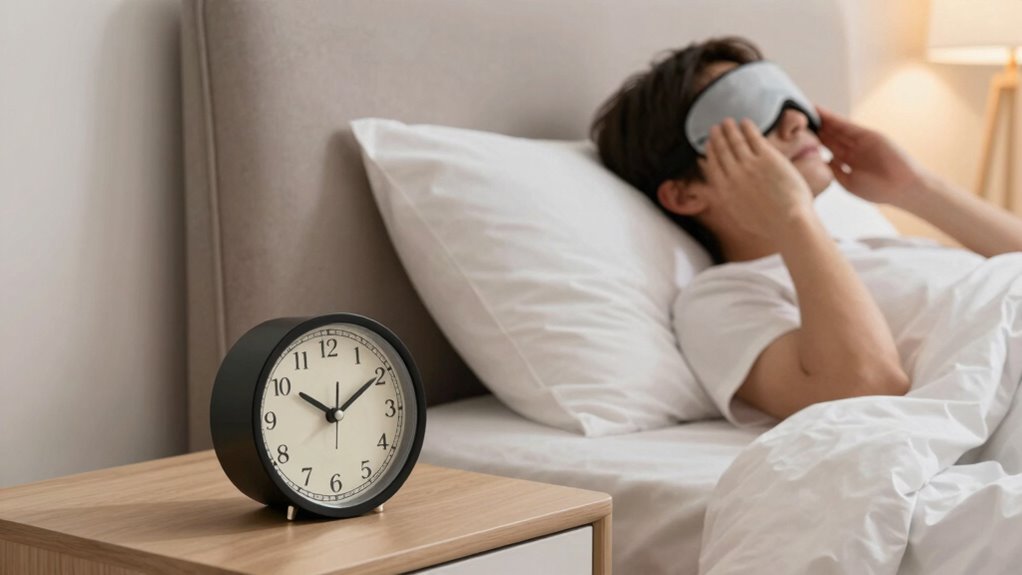
Establishing the Bedtime Clock Hack as a lasting habit requires consistency and deliberate effort. To do this, focus on creating a sleep environment that signals relaxation and prepares your mind for rest. Keep your room dark, cool, and quiet to improve sleep quality. Develop a pre-sleep routine that includes activities like gentle stretching or reading, avoiding screens that interfere with dream interpretation. Set a regular sleep schedule, even on weekends, to reinforce your new habit. Track your progress and adjust your environment as needed. Remember, consistent sleep cues help your brain associate specific cues with bedtime, making the clock trick more effective. Over time, these small adjustments will turn the hack into a natural part of your nightly routine.
The Science Behind Sleep Cycles and Waking Up Refreshed
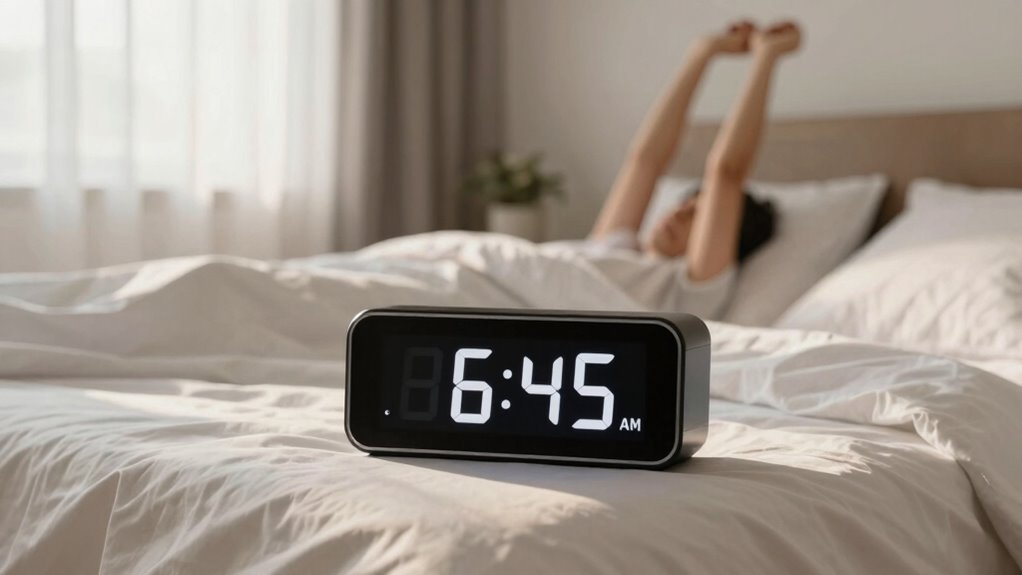
Understanding your sleep cycles is essential for waking up feeling refreshed because your body moves through different stages of sleep that each serve distinct functions. During these cycles, you experience light sleep, deep sleep, and REM sleep, where dreams often occur. Dream analysis can reveal how your subconscious processes emotions and experiences, impacting overall rest quality. Your sleep environment plays a vital role, as a dark, quiet, and cool space supports smoother progression between sleep stages. Waking up during REM or light sleep means you feel more refreshed and alert, while waking in deep sleep can leave you groggy. By aligning your sleep schedule with your natural cycles, you help guarantee you wake up at the ideal time, feeling energized and ready for the day.
What to Do If the Bedtime Clock Trick Isn’t Working for You
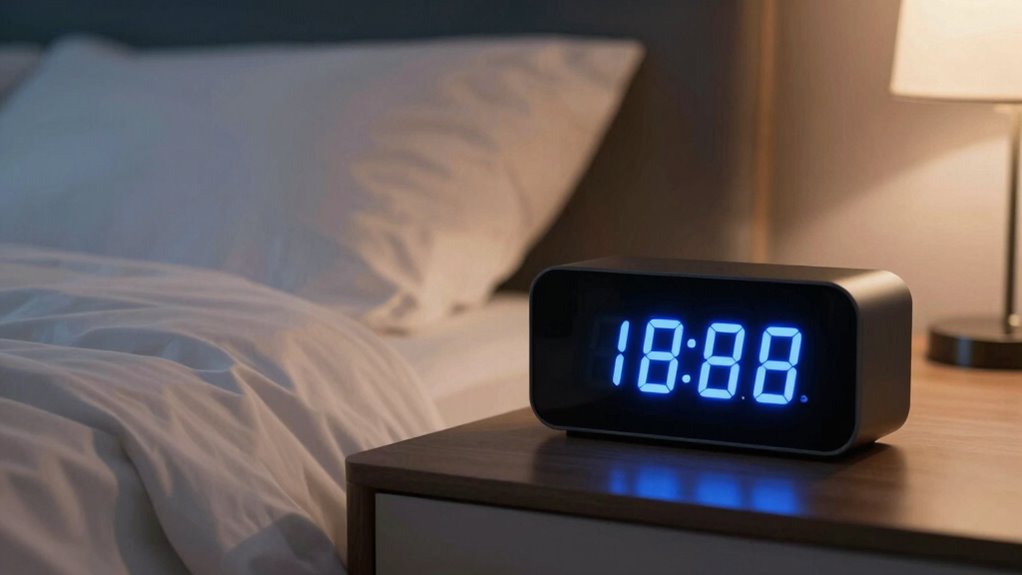
If the Bedtime Clock Trick isn’t helping you wake up refreshed, it’s time to reassess your approach. First, consider your sleep environment—make sure your room is dark, cool, and quiet. Improving this can markedly impact your sleep quality. Next, try dream journaling before bed to clear your mind and reduce anxiety about waking up early. If disruptions persist, track your sleep habits to identify patterns or issues. You might also experiment with adjusting your bedtime gradually rather than relying solely on the clock. Ultimately, avoid screens and caffeine close to bedtime, as they interfere with your sleep cycle. Combining these strategies helps create a more supportive environment and mental state, increasing the chances that your sleep will sync better with your desired wake-up time.
Frequently Asked Questions
Can This Clock Trick Work for Night Owls?
Yes, this clock trick can work for night owls, especially if you incorporate dream journaling and optimize your sleep environment. By setting a consistent bedtime with the clock, you train your body to adjust gradually. Dream journaling helps you identify patterns, while a comfortable sleep environment promotes better rest. Over time, this combination encourages night owls to fall asleep earlier and wake up refreshed, making the trick effective for them too.
Is There an Ideal Age for Using This Method?
There isn’t a strict ideal age for using this bedtime clock trick, as age considerations and developmental factors vary. Young children benefit from consistent routines, but their understanding of time is still developing. Older kids and teenagers may grasp the concept better, making it more effective. Adjust the approach based on your child’s maturity and developmental stage, ensuring the method aligns with their ability to follow and understand the routine.
How Long Does It Typically Take to See Results?
You might see results within a week or two, especially if you focus on maintaining sleep consistency and sticking to your morning routines. It’s important to stay patient and consistent, as your body needs time to adjust to the new schedule. Keep track of your progress and make small tweaks if needed. With dedication, you’ll notice your sleep patterns improving, helping you wake up earlier and feeling more refreshed each day.
Can This Technique Help With Insomnia?
Yes, this technique can help with insomnia by aligning your sleep patterns with your circadian rhythms. When you stick to a consistent bedtime, it reinforces your body’s natural sleep-wake cycle, making it easier to fall asleep and stay asleep. Over time, your sleep patterns become more regular, reducing insomnia symptoms. By syncing with your circadian rhythms, you promote better sleep quality and overall restfulness.
Should I Adjust the Clock if I Travel Frequently?
Think of your sleep schedule as a river flowing through different landscapes. When you travel across time zones, you need to adjust your clock to stay aligned with the current landscape. This means making time zone adjustments to your bedtime and wake-up time, based on your travel routines. By doing so, you help your internal clock stay synchronized with your environment, making jet lag less of a boulder blocking your flow.
Conclusion
Try the bedtime clock trick to reset your sleep cycle and wake up refreshed. While some say your internal clock is fixed, research suggests it can adapt with consistent habits. If this method doesn’t work immediately, don’t give up—adjust your routines gradually. With patience and persistence, you might find your ideal sleep window. Remember, your body’s flexibility is greater than you think, and small changes can lead to big improvements in your mornings.