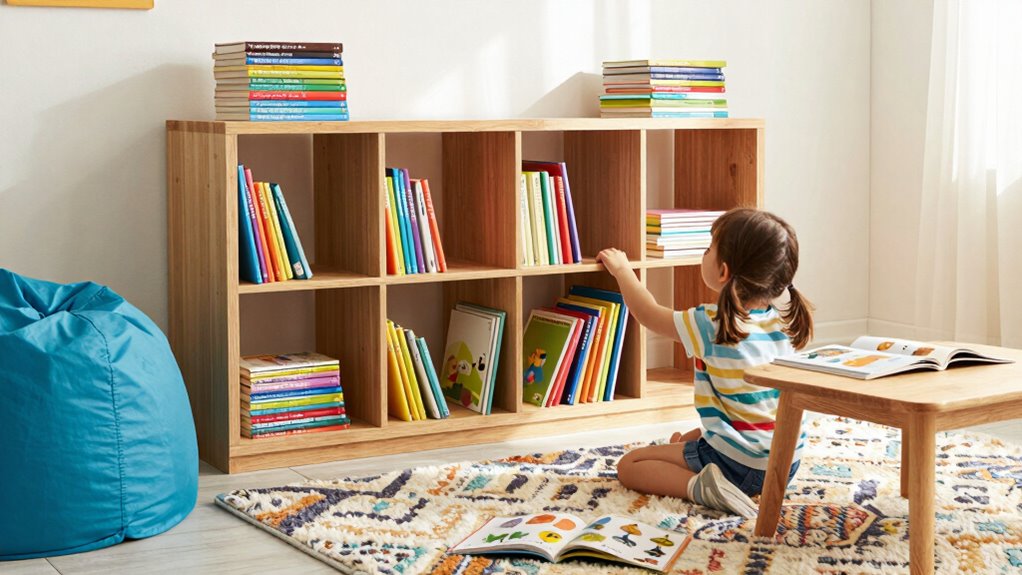

To encourage kids to pick up books independently, arrange them at their eye level with covers facing outward so they can easily recognize and reach for titles that catch their interest. Use clear, colorful labels or pictures for categories and highlight new or favorite books to spark curiosity. Create a cozy, inviting space with cushions or small furniture to make the area tempting. Keep the setup organized and accessible—if you want to discover more tips, keep reading.

Turn the school run and nap time into listening time
- Thousands of audiobooks, podcasts and originals
- Listen on your phone, tablet or Echo — also offline
- Cancel anytime
Key Takeaways
- Arrange books at eye level with covers facing outward for easy recognition and quick access.
- Use colorful labels and themed groupings to make books visually appealing and inviting.
- Keep frequently used or favorite books within reach to encourage spontaneous selection.
- Create a cozy, designated reading nook with cushions and accessible shelves to foster independent browsing.
- Regularly rotate and highlight new or interesting titles to maintain curiosity and interest.

Creating a well-organized and inviting bookshelf can make a big difference in encouraging your child’s love for reading. When you arrange books thoughtfully, you turn your space into a place where your child naturally gravitates toward exploring stories and pictures without needing prompts. The key is making books easily accessible and engaging, so they become a part of everyday life. Interactive reading plays a crucial role here; choosing books with engaging pictures, flaps, textures, or simple stories invites your child to participate actively. This kind of interaction sparks curiosity and makes reading feel more like play than a chore. As you set up the shelves, pick titles that encourage this kind of engagement, and place them where your child can reach and handle them comfortably.
A thoughtfully arranged, accessible bookshelf turns reading into playful exploration, inspiring a lifelong love of stories and discovery.
Visual accessibility is essential. Keep popular books at your child’s eye level, so they can pick out what interests them without help. When books are at a height where your child can see the covers clearly, it prompts spontaneous choices and fosters independence. Avoid stacking books in a way that hides their covers or makes them hard to grab—display cover-side out whenever possible. Rotate books periodically to keep the selection fresh and exciting, always highlighting new or favorite titles. This not only maintains visual appeal but also keeps your child’s interest alive. Incorporate visual accessibility principles to make sure children can easily identify and select books that catch their eye.
In addition, consider grouping books by themes or series. When children see collections organized around topics they love, it encourages them to explore further and develop their interests. Use baskets or bins for less frequently read books or those that require gentle handling, so they’re preserved and easy to find. Incorporate elements like colorful labels or pictures to differentiate categories, which helps your child recognize and select books independently. Creating a dedicated reading space can also enhance visual accessibility and interactive reading. A cozy corner with a small table or cushions invites your child to settle in comfortably. Surround this space with a variety of books, making it clear that reading is a fun, normal part of daily life. Including organized storage solutions can make maintaining the setup easier and more inviting for children. When your child’s books are within reach and presented engagingly, they’re more likely to pick up a book on their own. Over time, this setup fosters a natural habit of reading, where picking up a book becomes an instinctive choice rather than an enforced activity. Your thoughtful organization and emphasis on visual accessibility turn your bookshelf into a portal of discovery, helping your child develop a lifelong love for reading.
children's picture book display shelves
As an affiliate, we earn on qualifying purchases.
As an affiliate, we earn on qualifying purchases.
Frequently Asked Questions
How Often Should I Rotate the Books on Display?
You should rotate the books on display every two to four weeks. This keeps the collection fresh and encourages kids to explore new titles. Use creative display techniques like stacking, vertical arrangements, or themed setups to make the books inviting. Regularly changing the book storage and display keeps kids engaged, sparks curiosity, and helps them discover different genres or authors, making reading a fun, ongoing adventure.
What Age-Appropriate Books Should I Include?
Imagine a colorful shelf filled with books that beckon your child’s curiosity—bright covers and familiar characters. For ages 2-5, include picture books with simple themes like friendship or animals, fostering early reading habits. As they grow, add early readers with engaging stories and themes like adventure or family. For older kids, include chapter books that challenge their imagination. Tailoring themes keeps their interest alive, encouraging spontaneous reading.
How Can I Encourage Reluctant Readers to Pick up Books?
To motivate reluctant readers, create inviting reading spaces that make books appealing and comfortable. Use colorful, organized shelves at their eye level, and include a variety of genres to spark curiosity. Incorporate fun elements like cozy seating or themed decor. When kids see a welcoming environment, they naturally want to explore, making them more likely to pick up books on their own. Your inviting setup encourages spontaneous reading moments.
Should I Include Digital or Interactive Books?
Yes, include digital and interactive books in your setup. Digital libraries offer easy access to a wide range of stories, encouraging kids to explore independently. Interactive storytelling captivates children by making reading engaging and fun, fostering a love for books. By blending physical books with digital options, you create a dynamic environment where kids are naturally drawn to read, boosting their confidence and curiosity without needing prompting.
How Do I Organize Books for Different Reading Levels?
Organize books for different reading levels like a colorful ladder, guiding kids naturally. Use distinct reading zones with labeled book baskets, each designated for a specific level—picture books, early readers, or chapter books. Place easier books in the lower baskets and more challenging ones higher up. This setup encourages kids to explore independently, choosing appropriate books that match their skills and interests without needing constant supervision.
Conclusion
By arranging books within easy reach and making them inviting, you encourage kids to explore independently. Did you know that children who have access to books at home are 50% more likely to develop strong reading habits? So, take a moment to organize your shelves thoughtfully—your efforts can spark a lifelong love of reading. When books are accessible and appealing, kids naturally reach for them, turning curiosity into a joyful habit that lasts a lifetime.
Halloween Picks
halloween
As an affiliate, we earn on qualifying purchases.