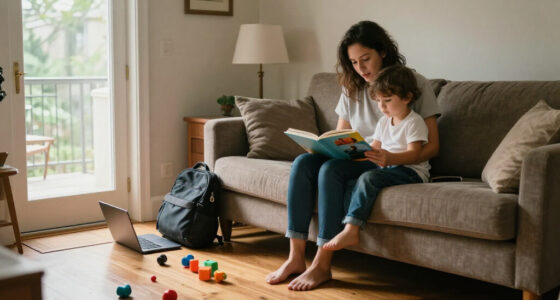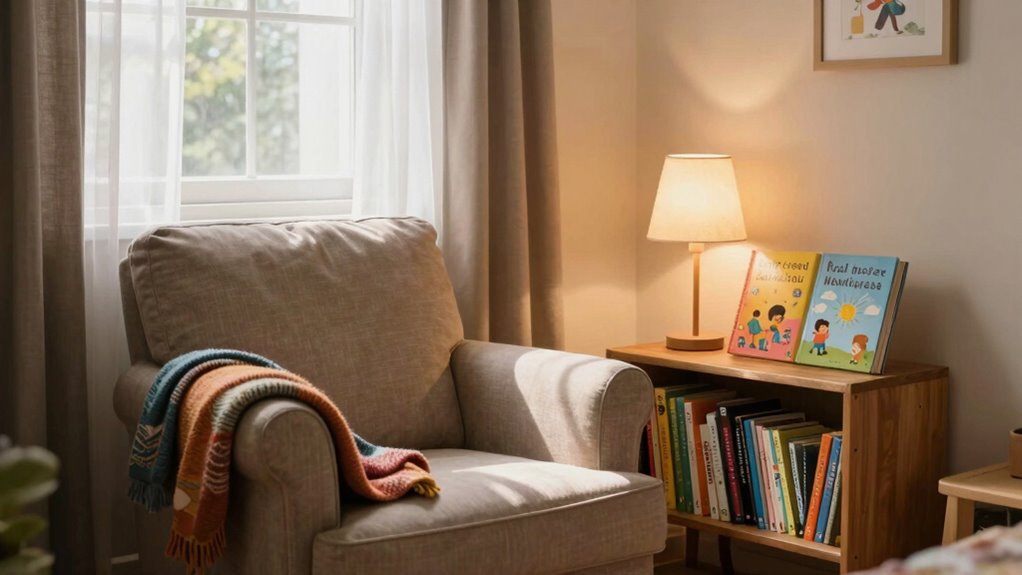

For a cozy, eye-friendly corner, make sure the light is just right. Use natural light during the day, but diffuse it with sheer curtains to avoid glare. Add an adjustable lamp for cloudy days or evening reading, keeping it about 12-18 inches above the pages. Avoid harsh or flickering lights to prevent eye strain. Balancing natural and artificial light creates a welcoming space, and knowing how to optimize this can make a big difference—keep reading to learn more.

Get baby and family essentials delivered free — and shop member deals
- Fast, free delivery on millions of items
- Access to Prime Big Deal Days deals on October 6–7
- Prime Video, Amazon Music and more included
Key Takeaways
- Ensure the reading corner has ample natural light near windows, diffused with sheer curtains to prevent glare.
- Use adjustable, warm-toned artificial lamps to provide consistent, comfortable illumination without causing eye strain.
- Proper light placement (12-18 inches above pages) prevents reflections and shadows that can hinder reading.
- Balance natural and artificial lighting to create a versatile, inviting space suitable for day and night reading.
- Prioritize energy-efficient lighting options to maintain a safe, sustainable, and well-lit environment for children.

Creating the perfect reading corner depends heavily on adequate lighting, as insufficient or harsh light can strain your eyes and diminish your reading experience. As a parent, you want to guarantee your child’s space is both inviting and comfortable, and lighting plays an essential role in that. Natural light is your best ally in creating an ideal environment. Position the reading corner near a window, allowing sunlight to flood the space during the day. Not only does natural light reduce eye strain, but it also boosts mood and concentration, making reading more enjoyable. However, direct sunlight can sometimes be too intense, causing glare on pages or discomfort. To prevent this, use sheer curtains or blinds to diffuse the light, making sure it’s soft and even. This way, your child gets the benefits of natural illumination without the negatives.
Artificial lighting is equally important, especially when natural light isn’t available or during evening hours. A good reading light should be bright enough to illuminate the pages evenly without creating harsh shadows or glare. Look for adjustable lamps that allow you to control the direction and intensity of the light. Warm-toned bulbs tend to be easier on the eyes and create a cozy atmosphere, encouraging longer reading sessions. Avoid overly bright or cool-toned lights, which can cause eye fatigue. Keep the lighting at a comfortable distance from the reading material—generally, a lamp placed about 12 to 18 inches above the pages works well. This prevents shadows and assures the light covers the entire reading surface. Additionally, understanding light levels in reading corners can help you optimize the space for your child’s comfort and eye health. Being aware of light levels also helps prevent the reader from experiencing discomfort or distraction caused by improper illumination. Proper lighting can also help prevent potential eye strain, which is a common issue when illumination is inadequate.
Moreover, considering the energy efficiency of your lighting choices can contribute to sustainable living practices while reducing energy costs. As you set up the space, consider combining natural and artificial lighting for maximum results. During the day, rely on sunlight, but have a quality reading lamp ready for cloudy days or nighttime reading. Remember to check that the light source does not produce flickering or glare, which can be distracting and strain your child’s eyes. Also, make sure the light is positioned to avoid reflections on the pages, which can be frustrating and hinder focus. By balancing natural light with thoughtful artificial lighting, you create a versatile and eye-friendly environment that encourages your child to read comfortably and happily. Proper lighting isn’t just about visibility; it’s about fostering a positive, engaging space that nurtures your child’s love of books and learning.
adjustable reading lamp for children
As an affiliate, we earn on qualifying purchases.
As an affiliate, we earn on qualifying purchases.
Frequently Asked Questions
How Does Natural Light Influence Reading Comprehension?
Natural light greatly boosts reading comprehension by enhancing reading comfort and supporting visual development. When you guarantee your child’s reading corner has ample natural light, they experience less eye strain and better focus. This improved comfort helps them stay engaged longer. Additionally, natural light promotes healthy visual development, which is essential for reading skills. So, making the most of natural sunlight in your child’s reading space positively impacts their ability to understand and enjoy books.
Are LED Lights Better Than Incandescent for Reading Corners?
LED lights often shine brighter for less energy, making them a smarter choice for reading corners. They’re more efficient, providing consistent, bright illumination that helps prevent eye strain. Incandescent bulbs, while offering a warm glow like a cozy fire, consume more energy and tend to flicker, which can distract young readers. Choosing LED efficiency guarantees your child has a well-lit space to immerse themselves in books comfortably and safely.
How Often Should Lighting Be Adjusted as Children Grow?
You should adjust the lighting in your child’s reading corner regularly to maintain lighting consistency as they grow. Typically, check and tweak the lighting every six months or when your child’s height changes markedly. This guarantees the light remains comfortable and effective for reading, reducing eye strain. Frequent adjustments help sustain ideal illumination, fostering a positive reading environment that adapts to their evolving needs and keeps their eyes healthy.
Can Improper Lighting Cause Eye Strain in Children?
Improper lighting can be a sneaky culprit behind eye fatigue, making your child’s eyes work overtime. When lighting isn’t right, it can strain their eyes and hinder healthy vision development. You want to create a cozy, well-lit reading corner so your child’s eyes aren’t forced to focus too hard. Regularly adjusting the light guarantees their eyes stay comfortable, preventing unnecessary strain and supporting their ongoing vision growth.
What Are Affordable Ways to Enhance Lighting in Reading Areas?
To enhance lighting in your child’s reading area affordably, consider simple lighting upgrades like adding a desk lamp with adjustable brightness or using LED bulbs in existing fixtures. Use affordable solutions like clip-on lights or battery-operated lamps for targeted illumination. Rearrange furniture to maximize natural light during the day. These cost-effective options improve visibility, reduce eye strain, and create a cozy reading corner without breaking the bank.
Conclusion
By gently tuning the light in your child’s reading corner, you create an inviting space where their imagination can flourish. A cozy, well-lit nook subtly encourages focus and comfort, making reading a delightful escape rather than a chore. Remember, the right lighting isn’t just about visibility—it’s about nurturing a love for books in a warm, welcoming environment. So, softly perfecting these details can turn a simple corner into a treasured haven for learning and discovery.
Fall Picks
fall essentials
As an affiliate, we earn on qualifying purchases.