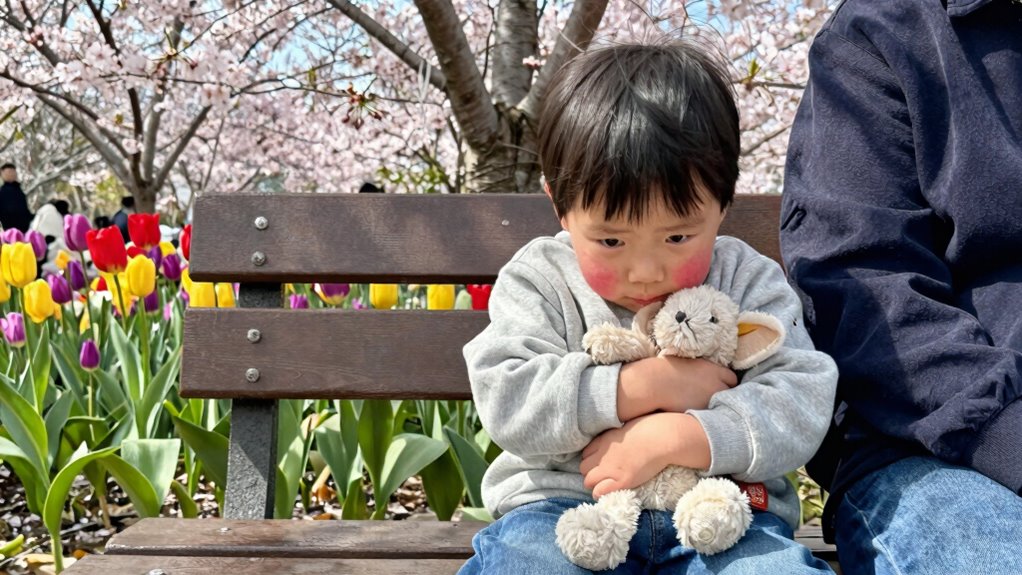

Spring anxiety in kids can be subtle, making it easy to overlook. You might notice your child feeling more irritable, withdrawn, or anxious during homework or social activities. Physical signs like headaches or tummy aches are common but often dismissed as minor illnesses. Seasonal changes, like longer days, may also affect their mood. If you’re curious about more signs and ways to help, keep exploring how you can support your child through these challenges.

Turn the school run and nap time into listening time
- Thousands of audiobooks, podcasts and originals
- Listen on your phone, tablet or Echo — also offline
- Cancel anytime
Key Takeaways
- Physical complaints like headaches or stomachaches may signal anxiety often overlooked as minor illnesses.
- Withdrawal from outdoor activities and social interactions can indicate rising stress levels.
- Increased irritability and difficulty focusing during homework suggest internalized academic pressure.
- Seasonal changes and environmental factors can contribute to unnoticed mood shifts in children.
- Lack of open communication about feelings may cause parents to miss early signs of spring-related anxiety.
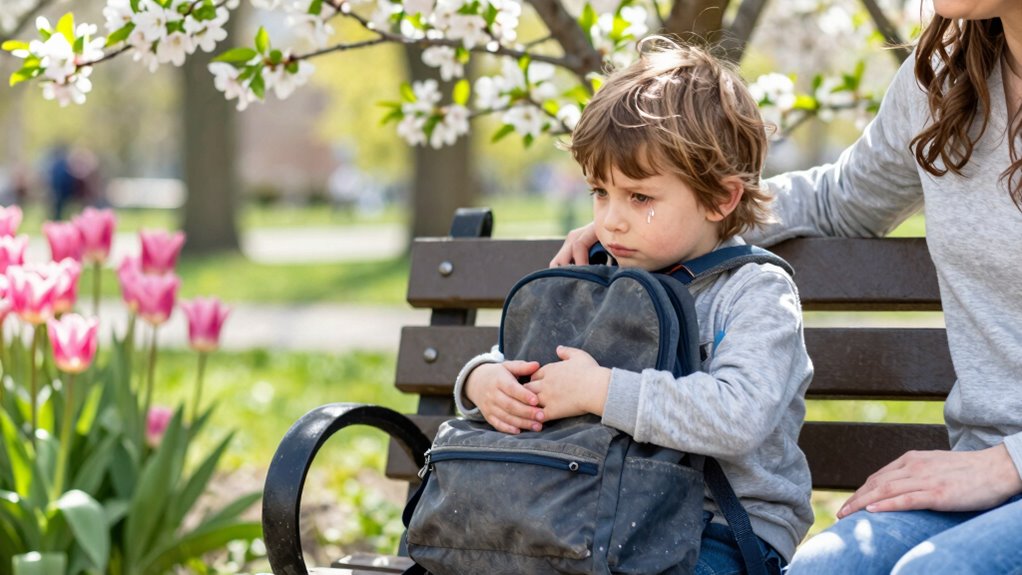
Spring often brings a shift in routines, especially as the school year wraps up. The pressure to perform well academically can intensify, making your child feel overwhelmed. Academic pressure doesn’t always translate into overt stress; your child might start to seem unusually distracted or tired during homework time. They might complain about feeling “too anxious to focus” or seem more irritable after school, even when they previously enjoyed learning. These are signs that the stress from impending exams or project deadlines is taking a toll. Sometimes, children internalize this pressure, which can lead to feelings of inadequacy or fear of failure, fueling their anxiety.
Spring stress can cause fatigue, distraction, and irritability in children, signaling the need for support and understanding.
You may also notice your child avoiding outdoor activities they once loved. Instead of running around or playing sports, they might prefer to stay indoors or appear reluctant to join friends outside. While it’s normal for kids to have off days, persistent withdrawal can be a red flag. It’s important to recognize that spring anxiety isn’t just about the weather or seasonal changes; it’s often linked to the combined stress of academic expectations and social pressures. Your child might also complain of physical symptoms like headaches or stomachaches, which are common anxiety responses but easy to dismiss as minor ailments. Recognizing seasonal changes and their impact on mental health can be crucial for early intervention. Additionally, understanding how biodiversity and environmental factors influence mental well-being can help in creating a supportive environment for your child. A new understanding of environmental influences can provide insights into how to better support children’s mental health during these times.
Furthermore, engaging your child in mindfulness practices can help them develop coping skills for managing their anxiety. Incorporating relaxation techniques into their daily routine can also significantly reduce stress levels. As a parent, your instinct might be to encourage your child to “just relax” or “shake it off,” but that doesn’t address the root cause. Instead, try creating an open dialogue, asking how they’re feeling about school and activities. Offer reassurance that it’s okay to feel overwhelmed sometimes and that you’re there to support them. Encourage a balance between outdoor activities and rest, emphasizing fun rather than achievement. Recognizing these often-missed signs early can make a big difference in helping your child manage their spring anxiety before it becomes more serious.
Products Worth Considering

Therabody Theragun Relief Massage Gun, 3-Speed, Black

Garmin Forerunner 55 GPS Running Smartwatch, Black

OMRON Complete 2-in-1 Upper Arm Blood Pressure Monitor with EKG
As an affiliate, we earn on qualifying purchases.
Frequently Asked Questions
Can Spring Anxiety Affect a Child’s Academic Performance?
Spring anxiety can definitely affect a child’s academic focus, as their spring mood shifts may cause distraction or stress. When your child feels overwhelmed or anxious, it’s harder for them to concentrate on schoolwork or retain information. You might notice a decline in their motivation or performance. Addressing these feelings early can help improve their emotional well-being and keep their academic progress on track during the spring season.
Are Certain Children More Prone to Spring Anxiety Than Others?
You might notice some children are more prone to spring anxiety, as if their emotional weather is more sensitive to seasonal triggers. Individual vulnerabilities, like a history of anxiety or sensory sensitivities, act as the stormy clouds that make them more susceptible. These kids often feel the shifting seasons more intensely, so understanding their unique vulnerabilities helps you support them through this turbulent time.
How Long Does Spring Anxiety Typically Last in Kids?
Spring anxiety in kids usually lasts a few weeks, often coinciding with seasonal mood changes. You might notice your child feeling more anxious or irritable during this period. To help, encourage coping strategies like outdoor activities, regular routines, and open conversations about their feelings. These approaches can ease their shift into spring, supporting their emotional well-being and helping them manage seasonal mood shifts effectively.
Are There Specific Activities That Help Reduce Spring Anxiety?
You can help reduce spring anxiety in your child through outdoor play and mindfulness techniques. Encourage them to spend time outside, engaging in activities like biking, playing at the park, or gardening, which can boost mood and reduce stress. Incorporate simple mindfulness exercises, such as deep breathing or guided imagery, to help your child manage anxious feelings. These activities promote relaxation and build resilience during spring’s unpredictable changes.
When Should Parents Consider Professional Help for Their Child’s Spring Anxiety?
You should consider professional help if your child’s spring anxiety persists despite parental support and engaging in therapy options. Look for signs like ongoing sadness, withdrawal, or physical symptoms that interfere with daily activities. If these symptoms last more than a couple of weeks or worsen, reaching out to a mental health professional can provide targeted support. Parental involvement combined with therapy can substantially help your child manage their anxiety effectively.
Conclusion
As you navigate spring’s brighter days, remember that your child’s anxiety might be hiding behind a smile, much like a secret knight’s armor. Stay vigilant and notice the subtle signs, for even the bravest of hearts need comfort. With gentle understanding, you can help them face the season’s changes with courage, turning what feels like a dragon’s lair into a peaceful meadow. Keep watch, and you’ll help your little one bloom just like the season itself.