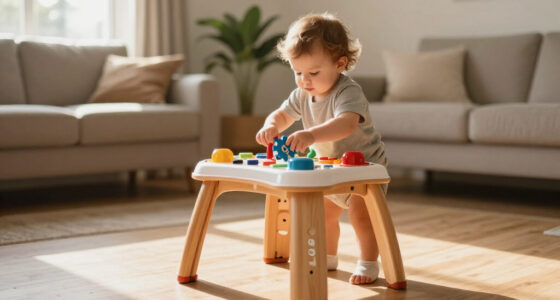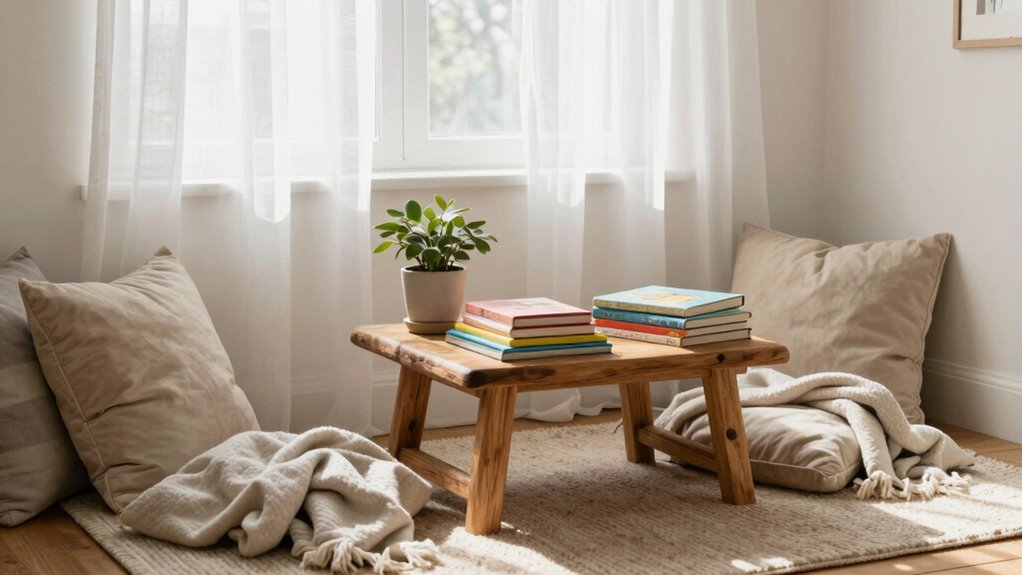

Creating a sensory-friendly space helps your sensitive child feel safe, comfortable, and less overwhelmed. Use soft textures, calming colors, and gentle lighting to create a cozy environment that promotes focus and emotional regulation. Keep the area clutter-free and include elements like soundproofing and sensory toys to reduce outside distractions. When the space is tailored to their needs, your child is more likely to enjoy and engage. Continue exploring ways to design the perfect spot for your child’s needs.

Turn the school run and nap time into listening time
- Thousands of audiobooks, podcasts and originals
- Listen on your phone, tablet or Echo — also offline
- Cancel anytime
Key Takeaways
- A calm, clutter-free environment with soft lighting minimizes sensory overload and promotes focus.
- Incorporating textured, cozy seating encourages tactile engagement and emotional comfort.
- Using soothing colors and natural elements creates a peaceful atmosphere conducive to reading.
- Soundproofing and noise-reducing features help mitigate external distractions for sensitive children.
- Selecting gentle, visually calming books and interactive stories supports engagement without overwhelming.
sensory-friendly reading nook cushions
As an affiliate, we earn on qualifying purchases.
As an affiliate, we earn on qualifying purchases.
Understanding How Sensitivity Affects Your Child’s Reading Space
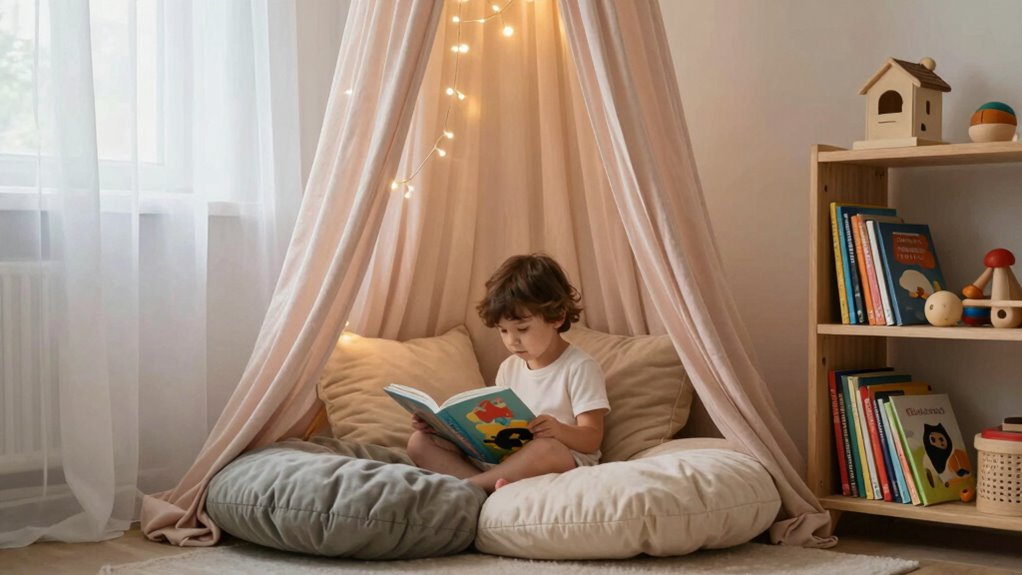
Have you ever noticed that some children seem more easily overwhelmed by their surroundings? If so, you’re probably aware that their sensory preferences play a big role in how they experience the world. For sensitive kids, emotional comfort is essential, especially during reading time. They may be easily distracted or overstimulated by loud noises, bright lights, or clutter. To create a supportive reading space, pay attention to their sensory needs—whether they prefer soft lighting, gentle textures, or quiet environments. Incorporating natural elements can also promote a peaceful atmosphere that aligns with their needs. Being mindful of household organization can further reduce potential distractions and create a calmer environment for your child. Additionally, choosing quiet and calming colors for the space can help minimize overstimulation and foster relaxation. Understanding sensory processing can also help you better adapt the environment to support their unique needs. Recognizing how sensory overload impacts their behavior allows you to make more informed adjustments to their environment.
Features of a Cozy, Calm Reading Nook for Sensitive Kids

Creating a cozy, calm reading nook for sensitive kids involves carefully selecting features that promote comfort and tranquility. Focus on sensory integration by choosing soft textures, gentle lighting, and quiet surroundings to reduce overstimulation. Use plush cushions, blankets, or bean bags to provide physical comfort, helping your child feel safe and relaxed. Incorporate calming colors like pastels or neutrals to foster emotional comfort and lessen anxiety. Keep noise levels low, perhaps adding a white noise machine or soft background music. The goal is to create a space that feels secure and inviting, allowing your child to unwind and focus. Understanding the importance of color accuracy can help you select the right hues that promote a calming environment, making the nook a perfect sanctuary for sensitive kids to enjoy reading peacefully. Additionally, choosing regulatory considerations can help ensure the space remains safe and suitable for your child’s needs, further enhancing their comfort. Being mindful of paint finish quality can also contribute to creating a safe, non-toxic environment that supports your child’s well-being. Incorporating knowledge about best products for sensitive skin ensures that all materials used are gentle and non-irritating, further supporting a safe and soothing space. Moreover, paying attention to home design details such as furniture placement can help maximize comfort and minimize clutter, creating an even more calming atmosphere.
How to Create a Safe and Inviting Reading Corner at Home

To make a reading corner truly safe and inviting, start by choosing a quiet, low-traffic spot in your home where your child can focus without distractions. This minimizes sensory overload and creates a calm environment. To enhance comfort and safety, consider adding:
- Soft lighting or a lamp to reduce harsh glare
- Soundproofing elements like rugs or curtains for noise reduction
- Comfortable seating, such as cushions or a small armchair
These touches help your child feel secure and relaxed, encouraging longer and more enjoyable reading sessions. Keep the space simple and clutter-free to avoid overstimulation. Incorporating dehumidifier reviews can also help maintain a comfortable, mold-free environment, especially in humid areas. Additionally, selecting sensory-friendly furniture can further support your child’s comfort and focus. Remember, a designated, calming corner supports your child’s sensory needs and fosters a love of reading.
What Books Are Best for Sensitive Children?

Choosing the right books for sensitive children means selecting stories that respect their emotional and sensory needs. Look for books that feature gentle language and calming visuals, which help create a soothing reading experience. Interactive storytelling can be especially effective, encouraging children to engage at their own pace and feel involved without overwhelming them. Sensory books, with textured elements or sound features, can also enhance their connection to the story while providing comforting sensory input. Avoid books with loud or chaotic imagery that might overstimulate. Instead, opt for stories that promote empathy, understanding, and gentle exploration. Incorporating neural interface insights into book design can further tailor reading experiences to sensitive children’s needs, fostering adaptable content formats that respond to individual sensory sensitivities. Additionally, choosing books with calming visuals and minimal sensory overload can support their emotional regulation and comfort during reading sessions. Paying attention to sensory-friendly features can make a significant difference in creating a positive and engaging reading environment for sensitive kids.
Troubleshooting Common Challenges When Setting Up a Reading Space

Setting up a cozy, effective reading space for sensitive children can sometimes present unexpected hurdles. Sensory overload is a common challenge, making it hard for your child to focus or feel comfortable. Noise can also be disruptive, so noise reduction becomes essential. To troubleshoot these issues:
- Use soft, calming colors and textures to reduce sensory overload.
- Incorporate noise-canceling elements like curtains, rugs, or white noise machines.
- Keep the space simple and clutter-free to avoid overwhelming distractions.
- Consider using specialized heat-gun kits to create calming lighting or temperature adjustments that can help regulate sensory sensitivities.
- Additionally, selecting high-quality, cafe-like coffee options or sensory-friendly lighting can subtly influence the ambiance to promote relaxation.
- Regularly monitor and adapt the environment to ensure it remains supportive as your child’s needs evolve, especially considering the importance of early detection in breast cancer symptoms. Understanding the impact of sound healing science can also inform how you incorporate soothing sound elements into the space for enhanced sensory regulation.
- Incorporating evidence-based strategies, such as understanding content quality and topical authority, can further enhance the effectiveness of your setup and support your child’s sensory needs.
Final Tips for a Sensitive-Friendly Reading Nook

To create a sensitive-friendly reading nook, focus on soft lighting that won’t overwhelm your child’s eyes and mood. Choose comfortable seating options that provide gentle support and help your child feel relaxed. Small adjustments in lighting and furniture can make a big difference in making the space inviting and calming. Additionally, using accessibility features like Guided Access can help limit distractions and create a focused environment tailored to your child’s needs. Incorporating family-friendly amenities such as calming decor or sensory-friendly elements can further enhance the space’s comfort and appeal. Incorporating soundproofing techniques can also help reduce outside noise, making the environment even more suitable for sensitive children. Incorporating mythology-inspired names into decor or labels can add a touch of strength and wisdom to your child’s special space.
Soft Lighting Choices
Soft lighting creates a calm environment that helps sensitive kids focus and relax while reading. The right lighting ambiance reduces glare and overstimulation, making the space more inviting. Use warm, dimmable lights or fairy lights to create a soothing glow. Incorporate sensory materials like soft lampshades or fabric-covered fixtures to enhance the gentle atmosphere.
Here are some tips:
- Opt for adjustable lighting to control brightness throughout the day
- Choose fixtures with diffusers to prevent harsh shadows
- Incorporate natural light with sheer curtains for a balanced glow
Comfortable Seating Options
Choosing the right seating is essential for creating a comfortable reading nook that caters to sensitive kids. Opt for furniture with soft sensory textures, like plush cushions or fabric-covered chairs, to enhance comfort and sensory engagement. Consider seating options that provide noise reduction, such as bean bags, upholstered armchairs, or padded floor cushions, to minimize distractions and create a calming environment. Avoid hard or scratchy surfaces that might cause discomfort or sensory overload. Adjustable or supportive seating can help kids find their perfect position, making reading more enjoyable. Keep the space cozy and inviting by layering different textures and ensuring the seating encourages relaxation. The goal is to create a peaceful spot where sensitive kids feel safe, comfortable, and ready to immerse themselves in stories.
Frequently Asked Questions
How Can I Involve My Child in Designing the Reading Space?
You can involve your child in designing the reading space by encouraging child-led design, where they choose colors, decorations, and furniture. Focus on sensory-friendly materials like soft cushions, textured rugs, and calming lighting to create a comfortable environment. Let them pick their favorite books and accessories, making the space uniquely theirs. This involvement fosters ownership and comfort, helping sensitive kids feel secure and enthusiastic to enjoy their reading nook.
What Are Signs My Child Feels Overwhelmed in Their Reading Nook?
In a flash, you notice your child rubbing their eyes or fidgeting during reading time, signaling they’re overwhelmed. Pay attention to noise levels and lighting preferences, as too much noise or harsh lighting can cause distress. If they seem anxious or distracted, adjust the environment—dim the lights or reduce background noise. Observe their reactions closely, and create a calming, cozy space that caters to their sensory needs to help them feel secure.
How Often Should I Update or Change the Reading Environment?
You should update your child’s reading environment every few months to keep it fresh and engaging. Incorporate sensory friendly design elements, like soft lighting and textured cushions, to maintain comfort and focus. Regular changes prevent boredom and help your child stay interested. Pay attention to their reactions—if they seem distracted or overwhelmed, it’s time to refresh the space to better suit their sensory needs.
Are There Specific Colors That Help Sensitive Children Relax?
Like a gentle river calming troubled waters, soft, muted colors promote relaxation in sensitive children. In color psychology, cool tones such as blues and greens foster tranquility and focus. Incorporate calming decor with these hues to create a serene space where your child feels safe and comfortable. Avoid overly bright or chaotic colors, as they can overstimulate. Instead, choose soothing shades that nurture peace and encourage a love of reading.
How Can I Encourage My Child to Spend More Time in Their Reading Space?
To encourage your child to spend more time in their reading space, establish consistent reading routines that make it a daily habit. Create inviting quiet zones with comfy seating and calming decor to make the space appealing. Offer choices in books or activities to foster independence, and join them occasionally to model enjoyment. These strategies help your child associate their reading space with relaxation and fun, naturally increasing their time spent there.
Conclusion
Creating a cozy, calming reading space isn’t just about comfort; it’s about understanding your child’s sensitivity and nurturing their love for books. Some believe that a peaceful environment helps sensitive kids thrive, and science suggests that a sense of safety boosts learning. Trust your instincts and tweak the space until it feels just right. When your child feels secure and welcomed, reading becomes a joy—not a challenge.
Cold & flu season Picks
humidifiers
As an affiliate, we earn on qualifying purchases.