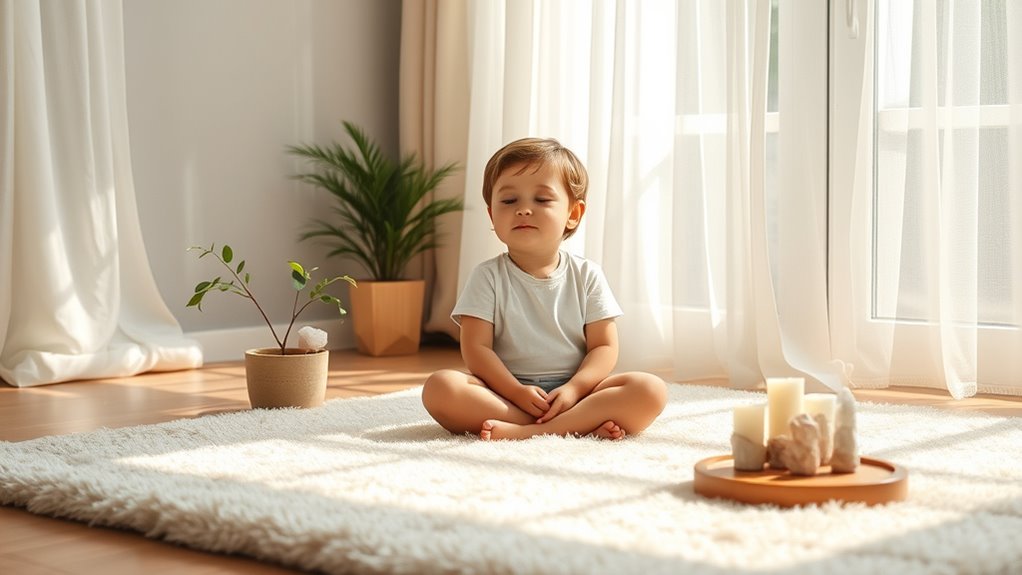

To encourage kids to embrace quiet time and meditation, create a cozy, distraction-free space with calming colors and soothing objects. Introduce simple mindfulness and breathing exercises as fun activities, like blowing out candles or imagining peaceful scenes. Use routines before bedtime or after busy moments to help them feel secure and relaxed. By making these practices engaging and consistent, you’ll help your child develop self-awareness and emotional resilience—keep exploring for more helpful tips.
Key Takeaways
- Create a dedicated, cozy space to make quiet time inviting and routine.
- Incorporate fun mindfulness activities, like deep breathing with imagery or simple visualization.
- Use calming sounds or gentle music to establish a peaceful atmosphere during quiet time.
- Turn mindfulness exercises into engaging games to promote focus and positive associations.
- Consistently reinforce routines and involve children in choosing calming practices to foster acceptance.
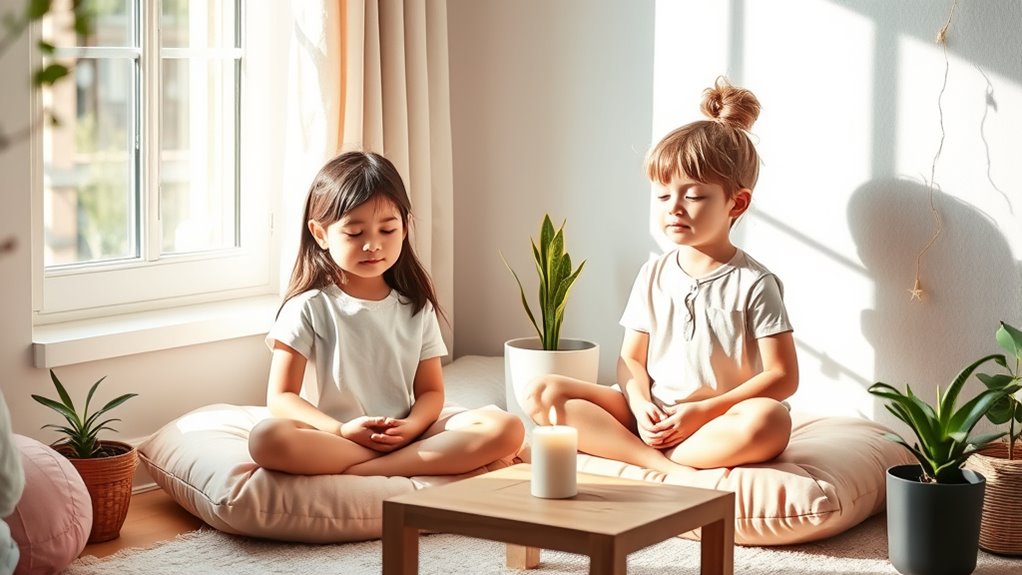
In today’s fast-paced world, encouraging kids to embrace quiet time can be a valuable way to help them relax and recharge. Kids often get caught up in a whirlwind of activities, screens, and constant stimulation, making it essential to teach them how to slow down and find inner calm. One effective way to do this is by introducing mindfulness exercises and calming routines into their daily schedule. These practices not only promote relaxation but also help children develop emotional resilience, focus, and self-awareness.
Start by creating a dedicated space for quiet time, free of distractions and clutter. This could be a cozy corner with soft cushions, calming colors, or soothing objects like stuffed animals or nature-themed decorations. When you introduce mindfulness exercises, guide them through simple breathing techniques. For example, encourage them to take slow, deep breaths, feeling the air fill their lungs and then gently exhaling. You can make this fun by asking them to imagine blowing out a candle or smelling a favorite scent. These exercises help children become more aware of their body and mind, reducing anxiety and fostering a sense of control.
Incorporate calming routines into their day that reinforce the idea of taking a break and settling down. For instance, establish a routine where, after a busy activity or before bedtime, they spend a few minutes in quiet reflection or meditation. Use gentle music or nature sounds to create a peaceful atmosphere, and consider guiding them through short visualizations, like imagining a peaceful beach or a quiet forest. Consistency is key—when children know what to expect, they’re more likely to embrace these moments as a natural part of their day.
You can also make mindfulness exercises engaging by turning them into games or stories. For example, challenge them to find five things they can see, four they can hear, three they can touch, and so forth. This encourages present-moment awareness and helps ground them during stressful times. Incorporating brain-boosting foods into their diet can also support overall mental clarity and focus, making it easier for children to benefit from these calming routines. Over time, these calming routines become an integral part of their lifestyle, making it easier for them to manage their emotions and navigate challenges.
Frequently Asked Questions
How Can Parents Model Meditation Habits Effectively?
You can model meditation habits by practicing parental mindfulness daily and showing consistency in your meditation routine. When your kids see you calm, focused, and taking time for yourself, they naturally learn to do the same. Share your experiences openly, involve them in short meditation sessions, and make it a regular part of your family life. Your consistent practice inspires them to develop their own peaceful habits.
What Are Age-Appropriate Meditation Techniques for Children?
Think of age-appropriate meditation techniques as gentle breezes guiding your child. You can start with simple breathing exercises, where they breathe slowly like blowing out candles. Incorporate mindfulness activities, like paying attention to sounds or sensations, to help them stay present. Short, fun sessions of 3-5 minutes work best, gradually increasing as they become more comfortable. These techniques make meditation accessible and enjoyable for young children.
How Long Should Kids Meditate Daily for Benefits?
You should aim for about 5 to 10 minutes of meditation daily for kids to see benefits. This meditation duration helps build consistency without overwhelming them, making daily mindfulness easier to maintain. As they grow more comfortable, you can gradually extend the time. Keep sessions simple and engaging, focusing on breathing or gentle visualization, so your children develop a positive attitude towards regular quiet time and meditation.
How to Handle Resistance From Reluctant Children?
Did you know nearly 60% of children resist quiet time? To handle their resistance, use behavioral reinforcement by praising their efforts and progress. Make meditation fun with creative engagement, like guided imagery or storytelling. Offer choices to give them a sense of control, and keep sessions short initially. Over time, positive reinforcement and engaging activities will help reluctant kids embrace quiet time more willingly.
Are There Any Recommended Meditation Apps or Resources for Kids?
Yes, there are great meditation apps and resources for kids. Look for apps that focus on guided imagery and mindful breathing, like Calm Kids or Headspace for Kids. These apps make meditation fun and engaging, helping kids relax and build focus. You can also find books and videos that teach simple breathing exercises and calming stories, making it easier for your child to embrace quiet time and meditation.
Conclusion
By helping your kids embrace quiet time and meditation, you’re guiding them toward their own personal Zen, much like a modern-day Buddha finding peace amid chaos. Remember, nurturing this calm within them isn’t just about today—it’s about shaping mindful adults of tomorrow. So, encourage those moments of silence, and watch as your children discover their inner strength and serenity, quietly becoming the heroes of their own peaceful journeys.