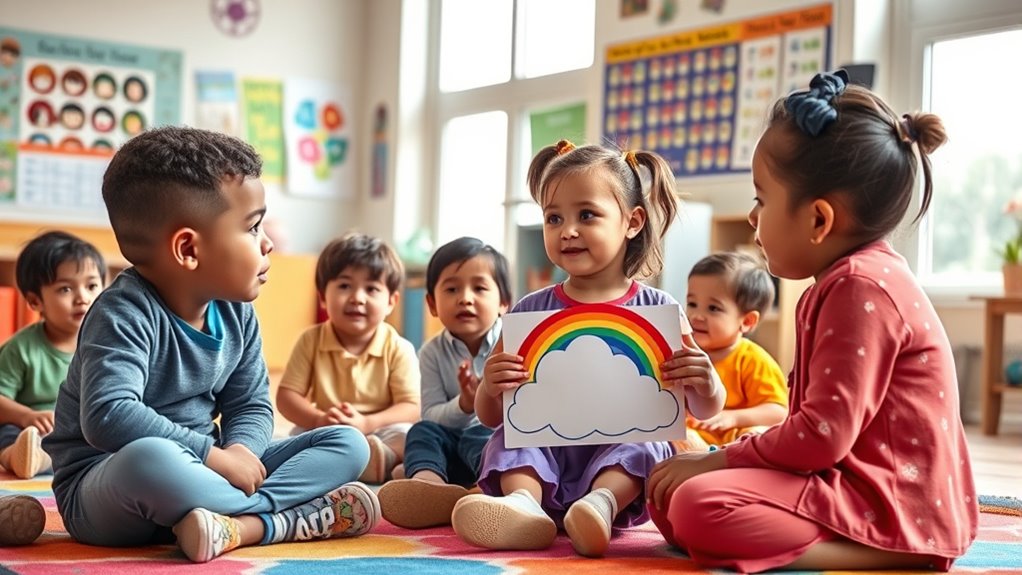

To help your child recognize and manage big emotions, start by teaching them to identify feelings with tools like feelings charts and simple words. Practice labeling emotions regularly to build understanding and boost emotional literacy. Encourage coping strategies such as deep breaths or stepping away when feelings escalate. Consistently validating their feelings and guiding them in self-soothing techniques helps develop healthy responses. Keep exploring these strategies, and you’ll find more ways to support their emotional growth.

Turn the school run and nap time into listening time
- Thousands of audiobooks, podcasts and originals
- Listen on your phone, tablet or Echo — also offline
- Cancel anytime
Key Takeaways
- Use feelings charts and simple words to help children identify and label their emotions accurately.
- Teach and model coping strategies like deep breathing or counting to help children regulate intense feelings.
- Validate children’s emotions to foster understanding and create a safe space for emotional expression.
- Encourage regular emotional check-ins to develop self-awareness and reinforce emotional recognition.
- Practice patience and consistency in teaching emotional skills, promoting long-term emotional growth and resilience.
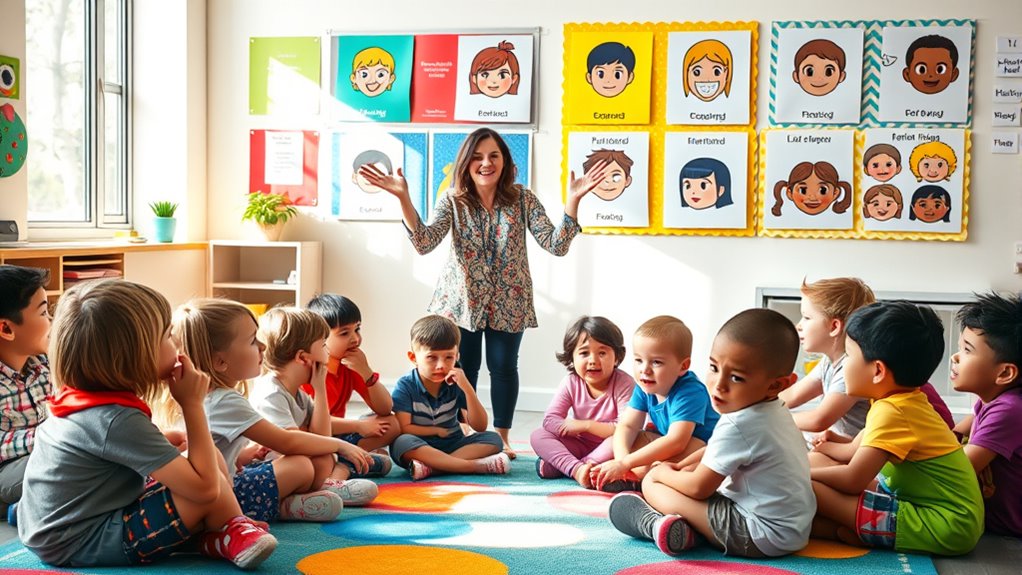
Understanding and managing big emotions is a essential skill that can help children navigate life’s challenges with confidence. When you focus on developing their emotional literacy, you’re giving them the tools to identify and understand their feelings. Emotional literacy involves teaching kids to recognize emotions like anger, frustration, sadness, or excitement, and to label them accurately. This awareness is the first step toward managing these strong feelings effectively. As you guide your child through emotional literacy, encourage them to talk about what they’re feeling, using simple words or even feelings charts that make it easier for them to express themselves. The more they practice naming their emotions, the better they’ll become at understanding what’s happening inside.
Once your child can identify their emotions, it’s important to introduce coping strategies—methods they can use to regulate their feelings rather than being overwhelmed by them. Coping strategies might include taking deep breaths when they feel angry, counting to ten before reacting, or stepping away from a stressful situation. You can teach these strategies through role-playing or by modeling them yourself in everyday situations. When kids see you managing your emotions calmly, they learn that it’s possible to handle intense feelings in a healthy way. Reinforcing these coping strategies helps your child feel more in control and less helpless during emotional episodes. Additionally, understanding the role of emotional regulation in managing big feelings can empower children to develop healthier responses over time.
Building emotional literacy and coping skills doesn’t happen overnight. It requires patience and consistent effort. You might start by validating your child’s feelings, letting them know that it’s okay to feel upset or frustrated. This validation helps them feel understood and safe, making it easier for them to open up about their emotions. As they become more comfortable with their feelings, teach them practical ways to soothe themselves, like listening to calming music, drawing, or talking to a trusted adult. Encourage regular check-ins about emotions, so they develop a habit of reflection and self-awareness.
As an affiliate, we earn on qualifying purchases.
Frequently Asked Questions
How Can Parents Model Healthy Emotional Regulation?
You can model healthy emotional regulation by showing empathy and sharing vulnerability. When you acknowledge your feelings calmly and explain how you manage stress or frustration, your kids learn to do the same. Demonstrate empathy by listening and validating others’ emotions. By openly expressing your struggles and coping strategies, you teach your children that it’s okay to feel big emotions and handle them in a healthy way.
What Are Age-Appropriate Ways to Discuss Feelings With Young Children?
Think of feelings as colorful paint and your words as the brushes. To help your child understand feelings, use simple feeling vocabulary like “happy” or “sad,” and share emotion stories from your day. For example, tell a story about feeling proud after finishing a project. This makes emotions relatable and helps your child build a rich emotional vocabulary, making it easier for them to recognize and manage their feelings.
How Do Cultural Differences Influence Emotional Expression in Kids?
Cultural norms greatly influence how kids express emotions, shaping what’s considered appropriate emotional display. As a parent or caregiver, you notice that some kids might be more reserved or openly expressive based on their cultural background. You can help by respecting these differences, encouraging children to share their feelings in ways that feel natural to them, and teaching them that all emotional expressions are valid, fostering understanding and emotional intelligence across diverse cultural contexts.
What Signs Indicate a Child Needs Professional Emotional Support?
Did you know that 1 in 5 children experience mental health issues? If you notice signs of distress like persistent sadness, withdrawal, or extreme mood swings, it’s time to think about seeking help. Children might struggle to manage their emotions or show signs of anxiety or depression. Recognizing these signs early helps you get them the support they need, making a positive difference in their emotional well-being.
How Can Schools Support Emotional Development Alongside Parents?
You can support emotional development in schools by implementing classroom strategies like social-emotional learning activities and fostering a supportive environment. Encourage peer support through group work and buddy systems, which help kids develop empathy and communication skills. Collaborate with parents by sharing progress and strategies, creating a consistent approach. Together, these efforts help children recognize and manage their emotions effectively, setting a strong foundation for their overall well-being.
Conclusion
By teaching kids to recognize and handle big emotions, you’re giving them essential skills for life. Did you know that children who learn emotional regulation are 25% less likely to develop anxiety or depression later on? When you help your child understand their feelings, you’re setting them up for healthier relationships and better problem-solving. Keep guiding them patiently—your support makes a lasting difference in their emotional well-being.
Columbus Day / Indigenous Peoples' Day Picks
long weekend sales
As an affiliate, we earn on qualifying purchases.