To turn gardening into a fun patience lesson, involve kids in simple, hands-on tasks like planting seeds, watering, and observing sprout growth. Keep the garden colorful and easy to navigate, allowing them to take ownership of the space. Use daily check-ins to highlight progress and setbacks, emphasizing that plants need time and care to thrive. By integrating fun activities like composting and design, you make patience part of an exciting journey—discover how much more you’ll learn as you explore.

Get baby and family essentials delivered free — and shop member deals
- Fast, free delivery on millions of items
- Access to Prime Big Deal Days deals on October 6–7
- Prime Video, Amazon Music and more included
Key Takeaways
- Incorporate fun, colorful tools and plant markers to make gardening visually appealing and engaging for children.
- Involve kids in every step, from choosing plants to watering, fostering ownership and excitement.
- Use time-lapse photos or growth charts to visually show progress, emphasizing patience and persistence.
- Turn gardening into interactive stories about plant life cycles, making waiting periods educational and entertaining.
- Celebrate small successes and setbacks alike to teach resilience and the value of consistent care.
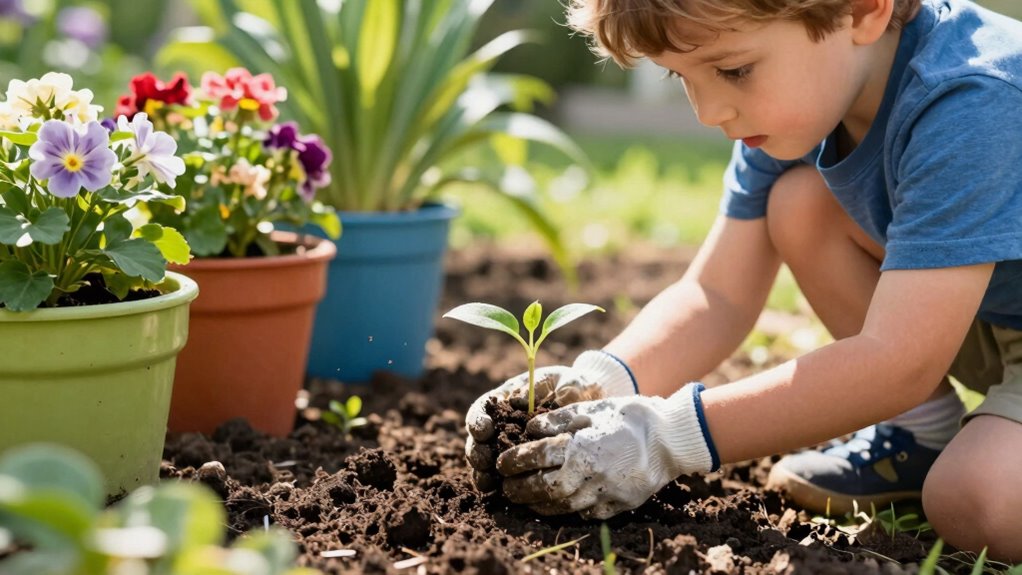
Gardening offers a valuable opportunity to teach kids patience, as they learn that growth and results take time. When you involve children in planting, you help them understand that nurturing a garden isn’t about instant gratification but about consistent effort and care. To make this experience engaging, focus on planting techniques that are simple and hands-on. Let your kids dig small holes, choose seeds, and carefully place them in the soil. Show them how to gently cover the seeds and water the area, emphasizing that every step requires attention and patience. As they observe the tiny sprouts emerging weeks later, they’ll start to grasp the importance of waiting and caring for their plants. Additionally, understanding the importance of biodiversity can deepen their appreciation for different plants and how they contribute to a healthy garden ecosystem. Recognizing that a diverse environment supports resilience and growth can reinforce the value of patience in nurturing a thriving garden. Incorporating soil health practices can also help children see how different factors influence plant growth and development. Engaging children in composting activities can further demonstrate how natural processes support healthy soil, reinforcing patience and environmental responsibility. In terms of garden design, it’s best to keep things straightforward and visually appealing to hold your kids’ interest. Use colorful pots, plant markers, and different textures to make the garden inviting. When planning your garden, involve your children in selecting what to grow—perhaps flowers, herbs, or vegetables they like. This gives them a sense of ownership and excitement about their project, making patience easier to develop. As they watch their chosen plants grow, you can talk about how the design of the garden influences growth, teaching them that patience also involves understanding how timing and placement matter in gardening. Incorporating plant care techniques can help them learn that consistent attention speeds up healthy development. Throughout the process, encourage your kids to observe their garden daily. Make it a routine to check on the plants together, noting changes and discussing what the plants need. This regular interaction reinforces that growth isn’t immediate, and it teaches them to be attentive and caring. When setbacks happen—like a plant not sprouting as expected or pests appearing—use these moments as lessons in patience and problem-solving. Help them see that gardening is about persistence, not perfection. Understanding the scientific principles behind plant growth can further enhance their appreciation for the natural process and the patience it requires.
As an affiliate, we earn on qualifying purchases.
Frequently Asked Questions
How Can I Make Gardening More Engaging for Children?
To make gardening more engaging for children, incorporate fun activities like creating garden art and nature journaling. Let them design colorful plant markers or paint rocks to place in the garden. Encourage them to observe and draw plants, insects, and weather changes in their journals. These activities make gardening interactive, spark creativity, and help kids develop patience as they watch their efforts grow and transform over time.
What Are the Easiest Plants for Kids to Grow?
Did you know that 85% of kids say gardening is fun? The easiest plants for your kids to grow include radishes, sunflower seeds, and lettuce because they require simple plant care and quick results. When selecting seeds, choose beginner-friendly options, and involve them in every step. This hands-on experience helps teach patience and responsibility while making gardening exciting and accessible for children.
How Do I Handle Impatience When Plants Take Too Long to Grow?
When plants take too long to grow, use plant patience strategies like setting small, achievable goals and tracking progress. Celebrate growth milestone rewards to keep motivation high, like praising your child or giving small treats when a plant reaches a new stage. Remind them that patience pays off, and every day they care for their plant, they’re learning valuable lessons about perseverance and nurturing, making the wait more rewarding.
Can Gardening Help Improve a Child’s Focus and Concentration?
You notice your child’s focus sharpens as they tend to their garden, a coincidence highlighting gardening’s power to boost mental discipline and sensory development. By engaging with soil, plants, and water, they learn patience and attention to detail, strengthening their concentration. Gardening encourages mindfulness, making it easier for kids to stay present and attentive. This natural activity transforms focus and sensory skills into a fun, meaningful experience that sticks with them.
What Tools Are Safest for Children to Use in the Garden?
You should choose child-friendly equipment designed with safety in mind, like small, lightweight trowels, shovels, and pruning tools with rounded edges. Always look for garden tool safety features, such as non-slip grips and blunt blades. Supervise children closely and demonstrate proper handling. Avoid sharp or heavy tools to prevent injuries. By selecting safe, age-appropriate tools, you make gardening enjoyable and secure, encouraging your kids to learn and grow with confidence.
Conclusion
Gardening teaches patience like tending to a delicate garden—each seed needs time, care, and attention to bloom. When you involve kids, you’re handing them a tiny universe where growth is slow but steady, rewarding their patience with vibrant blooms and proud smiles. Embrace the journey, not just the results, and watch as your child learns that good things—like a flourishing garden—take time to grow. Patience becomes their most beautiful harvest.
Cold & flu season Picks
humidifiers
As an affiliate, we earn on qualifying purchases.