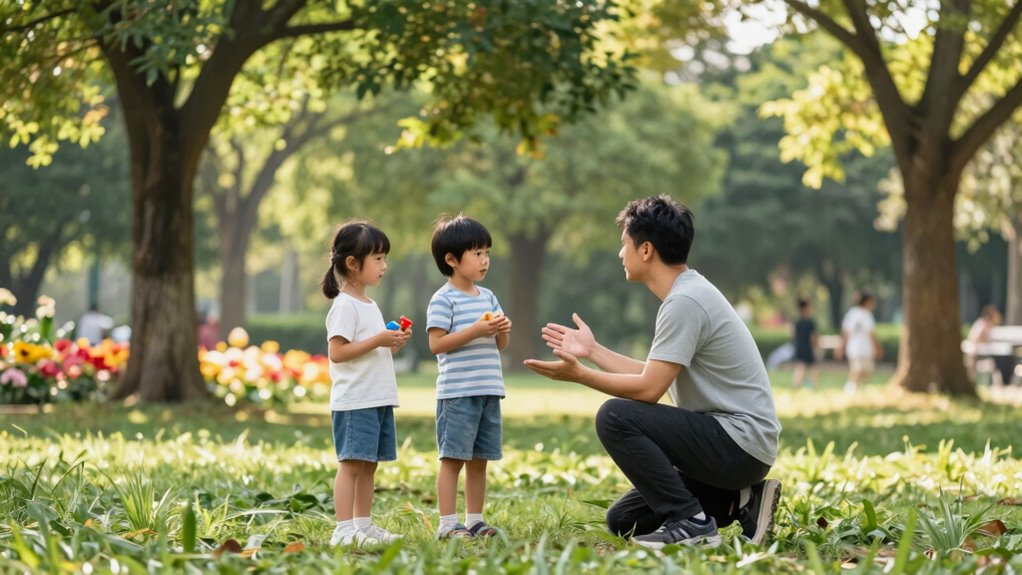

When talking to kids about fairness, explain that it’s not about everyone getting exactly the same but about making sure each person’s needs are met. Use stories or examples to show how fairness involves understanding each other’s feelings and adjusting your help. Emphasize kindness and compassion, so they see fairness as caring for others rather than strict equality. If you keep exploring, you’ll find simple ways to help kids grasp this important idea.

Turn the school run and nap time into listening time
- Thousands of audiobooks, podcasts and originals
- Listen on your phone, tablet or Echo — also offline
- Cancel anytime
Key Takeaways
- Explain that fairness means giving everyone what they need to succeed, not identical treatment.
- Use stories to illustrate how fairness adapts to different situations and individual needs.
- Emphasize that caring and understanding are more important than everyone receiving the same thing.
- Teach that fairness involves flexibility and compassion, recognizing each person’s unique circumstances.
- Encourage listening to children’s questions and concerns to help them understand fairness compassionately.

Talking to kids about fairness can be challenging, but it’s an essential part of helping them develop empathy and a sense of justice. When you want to explain why things aren’t always perfectly equal, sharing personal stories can be powerful. For example, you might tell a story about a time you had to share something special with a friend and how it felt to be kind, even if you didn’t get exactly what you wanted. These stories make the idea of fairness more relatable and show your child that everyone’s experiences are different but still valid.
Teaching empathy is key here. Instead of promising that everything will be the same, help your child understand that fairness isn’t about everyone getting the same thing but about being considerate of each person’s needs and feelings. You can say, “Sometimes, I give more attention to my younger sibling because they need extra help, but that doesn’t mean I love the others any less.” This approach shows that fairness involves understanding others’ situations, not strict equality. When you share personal stories, you model how to think compassionately about others, making the concept of fairness more tangible.
It’s important to clarify that fairness isn’t about everyone having exactly the same things or experiences. Instead, it’s about making sure everyone has what they need to succeed or feel respected. For example, if your child sees a friend receive a different amount of time on the playground, you might explain that sometimes, people need different things to feel included or happy. You can tell a story about a time you had to adjust how you helped someone based on their needs, emphasizing that fairness involves flexibility and understanding. Recognizing that individual needs can vary helps children see fairness as a flexible and compassionate approach rather than a strict rule. Learning about equity can help children understand that fairness is about providing support where it’s most needed, rather than identical treatment for everyone.
Encourage your child to see fairness as a way to promote kindness and understanding. When they ask questions or express concerns, listen carefully and validate their feelings. Use your stories and examples to show that fairness is about doing what’s right for each person, not just equal division. In doing so, you teach empathy and help them grasp the deeper idea that fairness involves caring for others’ well-being. This approach helps them build a balanced view—one rooted in compassion and understanding, rather than a rigid sense of equality that can sometimes overlook individual needs. Additionally, understanding the concept of fairness in a broader context can help children develop a more nuanced perspective about justice and compassion.
children's empathy and fairness books
As an affiliate, we earn on qualifying purchases.
As an affiliate, we earn on qualifying purchases.
Frequently Asked Questions
How Do I Handle My Child’s Feelings of Jealousy?
When your child feels jealous, you should empathize with their feelings and validate their emotions. Let them know it’s okay to feel upset and share that everyone experiences jealousy sometimes. Use active listening to understand their perspective, and help them express their feelings openly. This approach fosters empathy development, showing them that their emotions are normal and important, which helps them process jealousy healthily instead of acting out.
What’s the Best Way to Explain Privilege to Kids?
You can explain privilege to kids by sharing personal experiences that highlight differences they’ve observed. Use simple, relatable examples to foster empathy, helping them understand that some people have advantages others don’t. Emphasize that privilege isn’t about guilt but about recognizing disparities so they can be kind and fair. Encourage open conversations, answer questions honestly, and reinforce that understanding privilege can help us support others better.
How Can I Address Fairness in Competitive Situations?
Ever wondered how to handle fairness in competitions? You can teach your kids to share empathy by acknowledging feelings when outcomes aren’t equal, emphasizing effort over winning. Encourage them to set boundaries, like celebrating others’ successes and understanding that fairness isn’t always about identical results. Remind them that it’s okay to feel disappointed, but kindness and respect in competitive situations foster a healthier view of fairness and help build character.
When Should I Intervene in Sibling Disputes Over Fairness?
You should step in during sibling disputes over fairness when sharing boundaries are crossed or when emotions escalate. Encourage empathy by helping each child understand the other’s feelings and perspective. Gently guide them to find fair solutions together, emphasizing that fairness isn’t always about equality but about respecting each other’s needs. Your intervention teaches them how to resolve conflicts constructively while fostering understanding and kindness.
How Do I Teach Kids to Be Fair Without Fostering Entitlement?
You teach kids to be fair by respecting boundaries and encouraging empathy. Show them how to listen and understand others’ feelings, emphasizing that fairness isn’t about equal treatment but about kindness and understanding. When conflicts arise, guide them to contemplate others’ perspectives, helping them see different needs and circumstances. This approach fosters fairness without creating entitlement, teaching kids to value respect and compassion in their interactions.
Conclusion
Remember, explaining fairness isn’t about making everything perfectly even, but about helping your kids understand the bigger picture. By focusing on kindness, effort, and understanding, you guide them to see the value in different circumstances. It’s okay if some things seem a little uneven — what matters is the heart behind their actions. Keep the conversation open, gentle, and honest, and your children will learn to navigate life’s delicate balance with wisdom and compassion.
Fall Picks
fall essentials
As an affiliate, we earn on qualifying purchases.