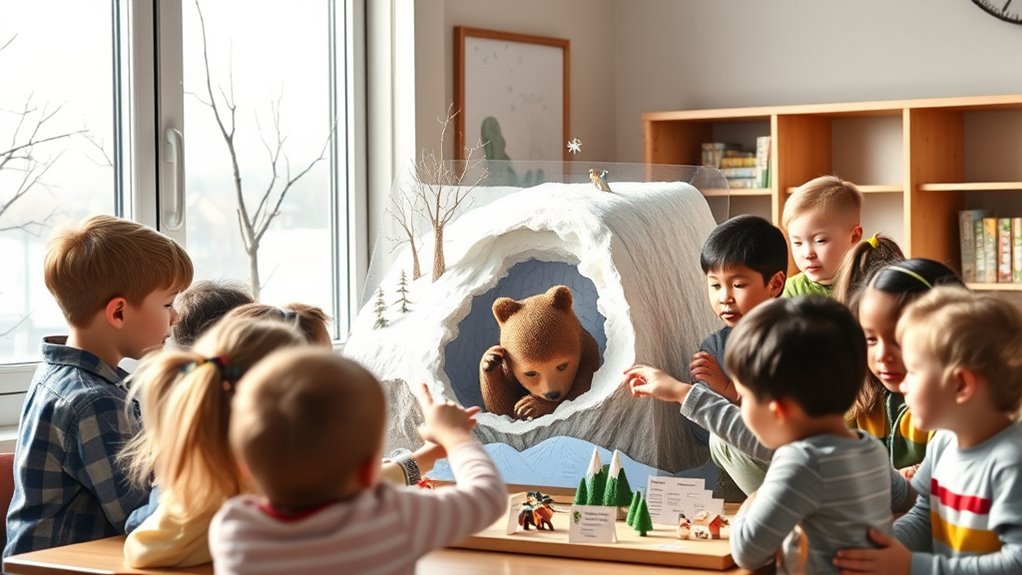

Teaching kids about the science of hibernation shows them how animals survive winter by conserving energy through deep sleep. You can explain that animals build dens or burrow underground to stay warm and store fat beforehand to use as fuel during hibernation. Use fun activities or stories to help children see how animals adapt and stay safe during cold months. Keep exploring these amazing survival tricks—there’s much more to discover about nature’s clever solutions.
Key Takeaways
- Use engaging activities like role-playing to demonstrate animals’ behaviors during hibernation.
- Create stories explaining how animals prepare by eating extensively and storing fat for winter.
- Show visual aids or videos of hibernating animals to illustrate their adaptations and environments.
- Explain the concept of energy conservation by comparing it to human actions like turning off lights or bundling up.
- Encourage hands-on experiments or crafts that mimic hibernation, fostering curiosity and understanding of animal survival strategies.
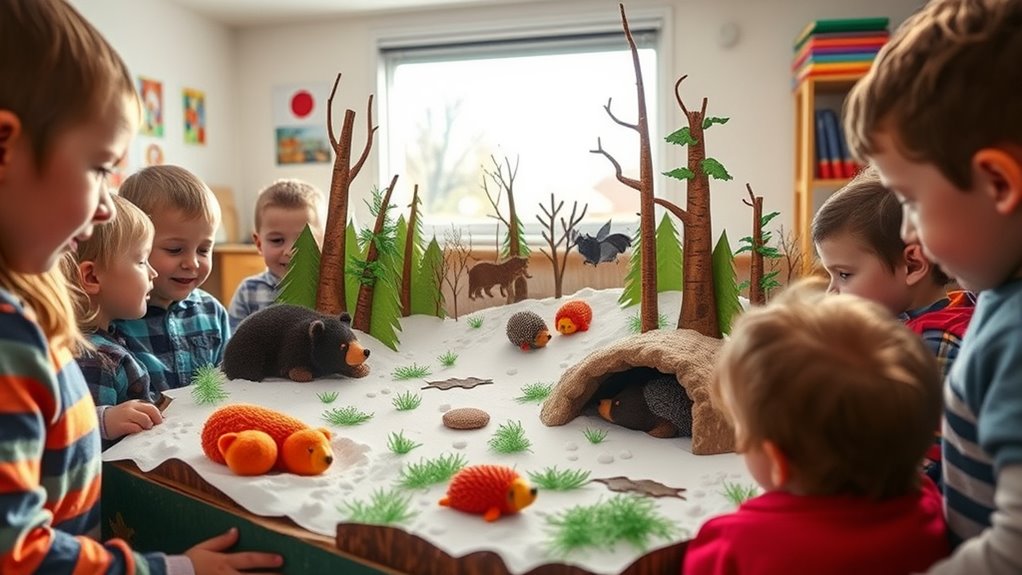
Hibernation is a fascinating process that helps animals survive the cold winter months, and teaching kids about it can spark their curiosity about nature and science. When you explain how animals prepare for hibernation, you’re showing them how nature uses energy conservation strategies to get through tough times. During hibernation, animals enter a state of deep sleep, drastically reducing their metabolic rate. This slowdown allows them to conserve energy, which is essential because food is scarce in winter. By understanding this, kids learn that animals have developed remarkable adaptations to survive harsh environments. These adaptations aren’t just about staying warm—they’re about making every bit of energy count.
Hibernation helps animals survive winter by conserving energy through deep sleep and metabolic slowdown.
You can help kids see how animal adaptations are key to their survival. For instance, some animals, like bears, build dens or caves to stay warm and safe during hibernation. Others, such as certain frogs or insects, burrow underground or hide in logs. These behaviors are all about conserving energy and protecting themselves from the cold. These strategies are part of what makes hibernation such a clever survival tactic drastically reducing metabolic rate, which helps animals endure periods when food is unavailable. When teaching children, you can emphasize that these adaptations are the result of millions of years of evolution, tailored specifically to each species’ environment. By highlighting these differences, you make the lesson more engaging and help kids appreciate the diversity of life on Earth.
Another way to make learning about hibernation interactive is to talk about how animals prepare for winter. They might eat a lot before hibernation begins, storing fat that serves as their energy reserve. This fat is then slowly used up during hibernation, keeping them alive without eating. You can encourage kids to think about how humans also conserve energy in different ways, like turning off lights or wearing warm clothes. This connection makes the concept more relatable and shows how energy conservation is a universal principle, not just for animals but for us too.
Finally, you can do simple experiments or activities to demonstrate energy conservation. For example, show how animals slow down by mimicking hibernation—maybe by lying still and conserving your own energy for a few minutes. Or, create a story about a bear preparing for winter, emphasizing the importance of animal adaptations. When kids understand that hibernation is about energy conservation, they start to see the clever ways animals stay alive through tough seasons. Teaching them about these science concepts not only makes learning fun but also fosters a deep respect for nature’s ingenuity.
Frequently Asked Questions
Do All Animals Hibernate During Winter?
Not all animals hibernate during winter. Some, like bears and hedgehogs, do, relying on animal adaptations like thick winter coats and fat reserves. Others stay active by wearing winter clothing or finding shelter to stay warm. You can observe these differences in how animals prepare for winter, understanding that each species adapts uniquely to survive the cold, some resting through hibernation, while others adapt their behavior to cope with the cold weather.
How Do Hibernating Animals Breathe and Stay Alive?
Hibernating animals breathe and stay alive by lowering their metabolic rate and body temperature. This slowdown reduces their need for oxygen, allowing them to breathe far less often than when active. Their heart rate also decreases, conserving energy. By entering this state, they can survive on stored fat and endure the cold months until spring arrives. This adaptation helps them survive harsh winter conditions with minimal energy use.
Can Humans Hibernate Like Animals?
Humans can’t truly hibernate like animals, despite some hibernation myths. Our bodies aren’t adapted for long periods of extreme cold and slow metabolism during winter. While scientists explore human adaptation strategies for space travel or medical purposes, genuine hibernation remains beyond our natural abilities. Instead, we use methods like sleep and controlled cooling for certain treatments, but full hibernation is not possible for humans at this time.
How Long Can Animals Stay in Hibernation?
Ever wonder how long animals can stay in hibernation? Some, like bears, can hibernate for up to seven months, while others, like bats, hibernate for just a few weeks. During this time, their metabolic slowdown helps conserve energy through extended periods of inactivity. Isn’t it amazing how these creatures adapt so effectively to survive harsh winters? Their ability to slow down metabolism keeps them alive when food is scarce.
What Triggers Animals to Start and End Hibernation?
You might notice that animals start and end hibernation based on environmental cues like temperature and daylight. These cues trigger a metabolic slowdown, prompting animals to enter hibernation when conditions are cold and food is scarce. As temperatures rise and days lengthen, these signals stimulate animals to wake up and end hibernation, helping them conserve energy and survive through harsh seasons.
Conclusion
Now that you know how hibernation is nature’s way of hitting pause, you can see it’s like a cozy winter blanket wrapping animals in warmth and rest. Teaching kids about this fascinating process helps them understand the incredible ways animals survive through the cold months. Remember, explaining science can be like planting a seed—grow curiosity and watch their wonder bloom. So, share this cool knowledge and inspire young explorers to discover more about our amazing world!