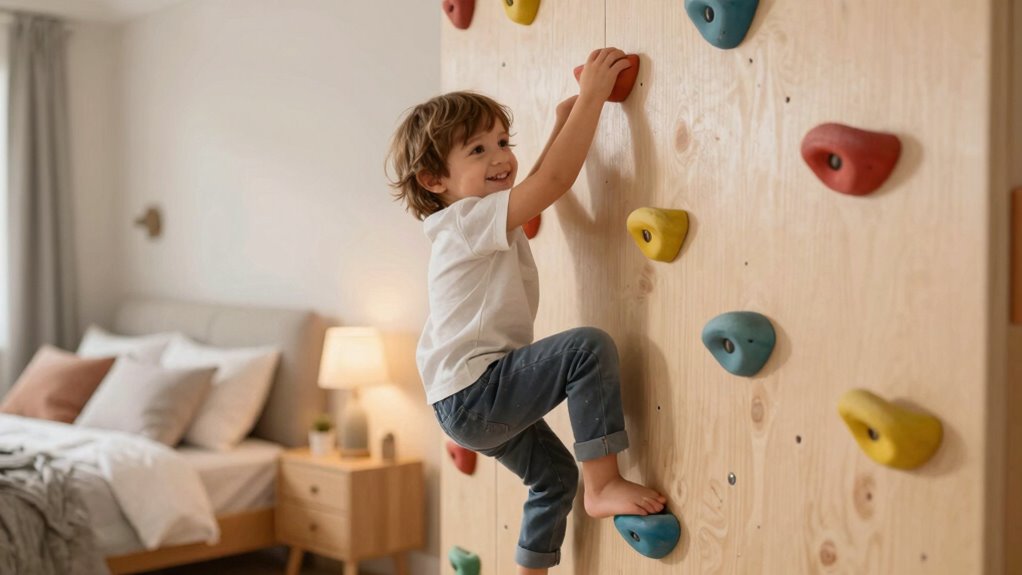

Climbing play can improve bedtime for certain kids by helping them burn off excess energy and develop better self-regulation. When you provide a safe, well-designed climbing area, your child gains rich sensory input and strengthens body awareness. This active play encourages a smoother shift from activity to calmness, reducing hyperactivity and promoting relaxation. As a result, your child may settle more easily and sleep more soundly. Keep exploring to discover how safety and environment factors play a key role.

Turn the school run and nap time into listening time
- Thousands of audiobooks, podcasts and originals
- Listen on your phone, tablet or Echo — also offline
- Cancel anytime
Key Takeaways
- Climbing helps children burn excess energy, making it easier to settle down at bedtime.
- It provides sensory input that calms the nervous system and reduces restlessness.
- Active climbing promotes self-awareness and body regulation, easing transitions to sleep.
- Safety measures boost confidence, creating a secure environment that encourages relaxation.
- Structured climbing activities support emotional stability, leading to improved sleep habits.

Climbing play can be be a fantastic way to help kids burn off energy and develop their strength, but it can also impact their bedtime routine. When you incorporate climbing activities, especially indoors, you need to prioritize indoor safety to prevent accidents. A well-designed climbing area with soft mats, sturdy equipment, and clear boundaries helps guarantee your child can explore freely without risking injuries. When safety is a given, kids can focus on the benefits rather than worrying about falls or bumps. This sense of security encourages them to explore confidently, which can ultimately lead to a more relaxed shift to bedtime.
Prioritize indoor safety with soft mats and sturdy equipment for confident, injury-free climbing and a smoother bedtime transition.
For children who thrive on sensory input, climbing play can serve as a powerful tool for sensory integration. Kids with sensory processing needs often seek out or avoid certain stimuli, and climbing provides a rich, proprioceptive experience. The firm pressure on muscles and joints during climbing helps regulate their nervous system, reducing feelings of restlessness or overstimulation. When a child has had adequate sensory input through climbing, they often feel calmer and more centered afterward. This calming effect can make bedtime less challenging, as they’re less likely to be overwhelmed by sensory overload or hyperactivity. Incorporating sensory input into their routine can enhance their overall emotional well-being and readiness for sleep. Additionally, providing appropriate sensory activities can further support their calming process.
Furthermore, climbing helps children develop body awareness and improve their coordination, which are important for a smooth bedtime routine. As your child learns to navigate different climbing structures, they become more aware of their body movements and boundaries. This awareness can translate into better self-regulation at bedtime, helping them recognize when they’re tired and ready to wind down. In addition, climbing encourages the release of pent-up energy, which might otherwise manifest as hyperactivity or difficulty settling down. By channeling their energy into a structured activity, kids often find it easier to shift from active play to calm, restful states. Incorporating indoor safety measures can further ensure that their active play remains secure, creating a safe environment conducive to restful sleep. Ensuring good indoor air quality can also support their overall health, promoting better sleep habits and comfort during nighttime.
As an affiliate, we earn on qualifying purchases.
Frequently Asked Questions
How Does Climbing Specifically Affect a Child’s Sleep Hormones?
Climbing play boosts your child’s hormonal regulation by increasing physical activity, which helps balance sleep hormones like melatonin and cortisol. When they climb, their exertion promotes a natural shift in their sleep cycle, making it easier to fall asleep and stay asleep. This activity helps reset their biological clock, ensuring a healthier sleep pattern. As a result, your child feels more rested and ready for the day after a good night’s sleep.
Are There Age Limits for Safe Climbing Play Before Bed?
Age restrictions and safety considerations vary, but generally, children under age three should avoid vigorous climbing due to developmental limits and risk of falls. For older kids, guarantee climbing equipment is age-appropriate, sturdy, and supervised. Always assess your child’s physical ability and comfort level. By following safety guidelines and considering age restrictions, you help prevent accidents and promote safe, enjoyable climbing play before bedtime.
Can Climbing Play Replace Other Bedtime Routines Effectively?
Sure, climbing play can replace traditional bedtime routines—if you want a wild, indoor safety adventure. You set up climbing equipment, and your kids burn off energy in ways that tire them out naturally. Instead of reading stories or calming baths, they’ll be scaling walls and swinging, making sleep inevitable. Just remember, safe climbing equipment is key, or you might be trading bedtime peace for a trip to the ER.
What Types of Climbing Activities Are Most Beneficial for Bedtime?
You should focus on calming climbing activities like indoor obstacles or gentle outdoor bouldering. These activities help your child release excess energy in a controlled way, promoting relaxation before bed. Indoor obstacles can be tailored to be less intense, while outdoor bouldering allows for natural, calming engagement. Both options encourage physical exertion that’s not overly stimulating, making it easier for your child to wind down and settle into a restful sleep.
How Can Parents Ensure Safety During Evening Climbing Play?
Ironically, safety during evening climbing play is simple—just supervise closely and gear up properly. You should implement supervision strategies like constant observation and setting clear rules. Equip your child with appropriate safety gear, such as helmets and pads, to prevent injuries. Keep climbing areas clutter-free and well-lit. By maintaining vigilance and equipping your child correctly, you create a safe environment, allowing them to enjoy climbing without unnecessary risks.
Conclusion
So, next time your little adventurer is bouncing off the walls, consider a bit of climbing play before bedtime. It’s like giving them a secret potion that helps burn off excess energy and calm their minds. Just like knights of yore found strength through brave deeds, your child can find peace through climbing. With a little outdoor adventure, you might just turn bedtime into a restful, enchanted slumber—no need for a magic wand, just some safe climbing fun.
Columbus Day / Indigenous Peoples' Day Picks
long weekend sales
As an affiliate, we earn on qualifying purchases.