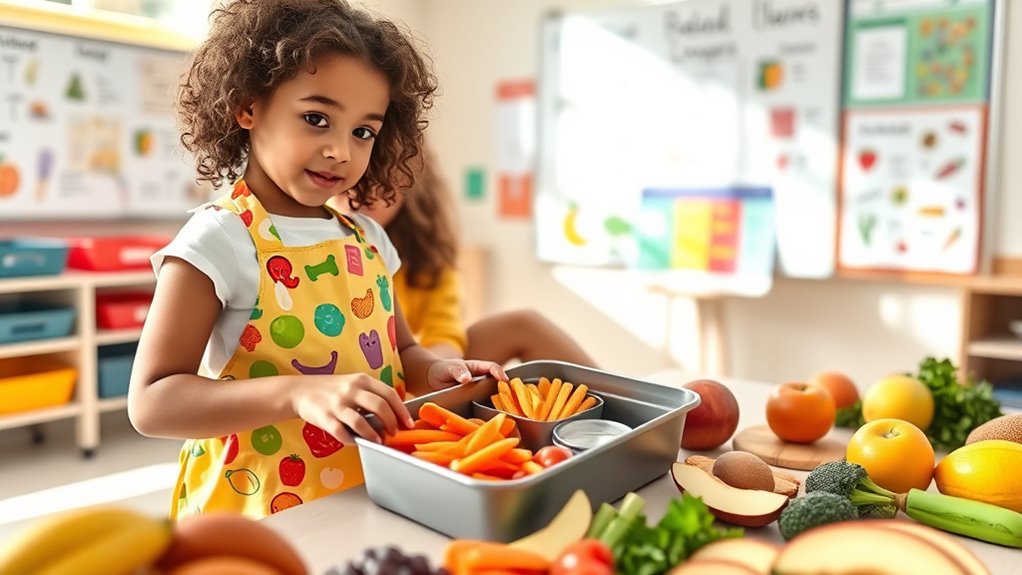

Teaching your kids to plan balanced school lunches helps them make healthier choices and build independence. Involve them in picking and preparing meals, teaching portion control and how to include all food groups. Encourage creativity by letting them customize their lunches with fruits, vegetables, and proteins. Show them practical packing tips to keep meals fresh and easy to carry. Keep exploring these strategies to support your child’s confidence and lifelong healthy eating habits.
Key Takeaways
- Involve children in selecting and assembling meals to foster independence and understanding of nutrition.
- Teach portion control using visual guides and divided containers to promote moderation and balance.
- Plan lunches with a variety of food groups to ensure nutrient diversity and sustained energy.
- Encourage creativity by allowing kids to customize meals, making healthy eating enjoyable.
- Guide kids through practical packing skills to build confidence and ensure meals stay fresh and manageable.
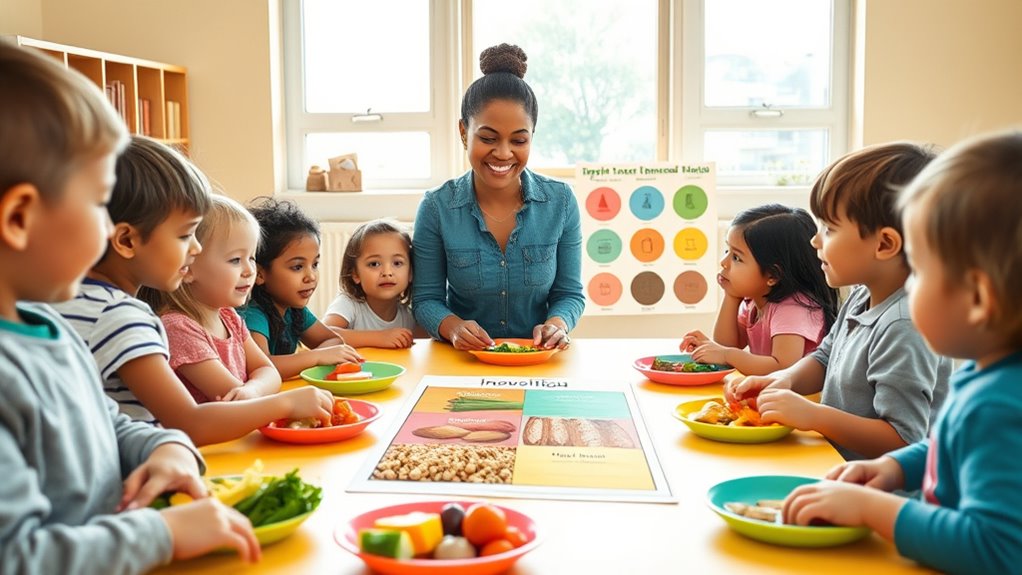
Teaching kids to plan balanced school lunches empowers them to make healthier choices and develop lifelong habits. When you involve them in the process, you’re helping them understand the importance of nutrition and teaching skills that will serve them well into adulthood. One effective way to do this is by encouraging meal prep, where kids can assemble their lunches ahead of time. This not only saves time in the mornings but also allows them to choose what they want to include, fostering independence and mindfulness about their food choices.
Involving kids in meal prep teaches healthy habits and fosters independence in choosing nutritious lunches.
As they participate in meal prep, teach them about portion control. Showing them how to measure or estimate appropriate serving sizes helps prevent overeating and emphasizes the value of balance. For example, you might teach them to fill half their lunch plate with vegetables, a quarter with lean protein, and the remaining quarter with whole grains. Using small containers or divided lunch boxes makes it easier to manage portions and visualize a balanced meal. Reinforcing these habits encourages them to think critically about their food intake and develop a sense of responsibility for their health. Understanding the basics of soaring and gliding can inspire patience and precision, which are valuable traits when preparing meals.
Involving children in planning their lunches also means discussing the different food groups and why each is important. You can turn it into a fun activity by creating a checklist or a menu of options, helping them select a variety of foods that provide essential nutrients. This approach encourages curiosity and helps them understand the impact of their choices. When they see the connection between their selections and how they feel during the day—more energetic, less sluggish—they’ll be more motivated to stick to healthy habits.
Additionally, teach them to be creative with their lunch ideas. Allowing room for variety and personal preferences keeps them engaged and excited about their meals. When kids prepare their own lunches, they learn to balance taste and nutrition, making it more likely they’ll enjoy eating what they’ve made. Remember to keep it simple and adaptable, so they don’t feel overwhelmed. Offer options like different fruits, vegetables, and proteins, and discuss how each adds value to their meal.
Finally, emphasize the importance of packing a lunch that’s not only nutritious but also practical. Packing a lunch that stays fresh and is easy to carry boosts their confidence and independence. By guiding them through meal prep, portion control, and balanced choices, you’re empowering them to make healthier decisions for themselves now and in the future. This hands-on involvement builds skills and habits that can last a lifetime, setting them up for a healthier, more mindful approach to eating.
Frequently Asked Questions
How Can I Encourage My Child to Make Healthy Lunch Choices?
You can encourage your child to make healthy lunch choices by involving them in nutritional education and meal planning. Talk about the benefits of healthy habits, like energy and focus, making it fun and engaging. Offer a variety of nutritious foods and let them choose their favorites. Praise their efforts and set a positive example yourself. This approach helps them develop confidence and a lifelong habit of choosing healthy foods.
What Are Quick and Easy Balanced Lunch Ideas for Kids?
You can prepare quick, easy balanced lunches by doing simple meal prep on weekends, like pre-assembling sandwiches or packing salads in advance. Focus on portion control by including manageable servings of protein, veggies, and carbs. Keep snacks healthy and ready to grab, such as fruit slices or yogurt. This way, your child has nutritious options that are effortless to pack, saving time and encouraging balanced eating habits.
How Do I Handle Food Allergies and Sensitivities?
When handling food allergies and sensitivities, you prioritize prevention with proper food allergy management. Always read labels carefully, double-check ingredients, and communicate with school staff. You accommodate sensitivities by offering safe substitutes, keeping allergen-free snacks handy, and educating your kids about avoiding triggers. By staying vigilant and proactive, you make certain your child’s lunch is both safe and satisfying, fostering confidence and comfort during mealtime.
What Are Affordable Options for Nutritious School Lunches?
You can pack budget-friendly snacks like homemade granola bars or yogurt with granola, along with fruit and vegetable options such as apple slices, baby carrots, or cucumber sticks. Buying in bulk and choosing seasonal produce helps keep costs down. Prepare lunches in advance, and involve your kids in selecting affordable, nutritious items. This approach guarantees your child gets a well-rounded, healthy meal without overspending.
How Can I Involve Kids in Planning Their Lunches?
Getting kids involved in planning their lunches can be a game-changer. You can use simple meal prep strategies and family meal planning to make it fun and educational. Encourage them to pick their favorite healthy foods, create a weekly menu, and help with packing. This not only empowers them but also teaches valuable skills, making them more excited about eating nutritious meals. Your active participation encourages independence and healthier choices.
Conclusion
Now that you’ve learned to lead little learners in planning perfect, protein-packed, and colorful lunches, you’re ready to foster fun, nutritious habits. By blending balance with creativity, you’ll boost their brainpower and build better eating habits. So, start small, stay supportive, and watch your kids confidently create clever, colorful, and complete lunches. Remember, with patience and practice, your little ones will soon master making meals that are not only tasty but truly terrific!