
TL;DR

Turn the school run and nap time into listening time
- Thousands of audiobooks, podcasts and originals
- Listen on your phone, tablet or Echo — also offline
- Cancel anytime
An EdSource analysis found that 45% of California K-12 students—more than 2.6 million—attend schools where tree canopy covers 5% or less of student-use areas. The report also found that nearly 4,900 public schools were in areas rated high or severe heat risk during an Oct. 5 heat wave, underscoring the gap between rising heat exposure and schoolyard shade.
Nearly half of California’s K-12 students attend schools where trees cover 5% or less of the areas students use, an EdSource analysis found, as heat increasingly affects campuses during the school year. The analysis counted more than 2.6 million students in those schools; on Oct. 5, nearly 4,900 public schools were in areas rated high or severe heat risk by the state, according to EdSource’s analysis of CalHeat scores.
The analysis found that 44% of public schools had tree canopy over 5% or less of student-use areas, while 45% had coverage of 6% to 15% and about 11% had more than 15%. The median coverage in student zones was 6.4%, according to a report by Green Schoolyards America. Less than half of school tree canopy was accessible to students; about 55% of trees and greenery were around perimeters, entrances or parking lots.
The heat figures show how quickly exposure can shift. On Aug. 10, the week many students returned to school, more than 2,600 public schools, including charter schools, were in areas classified as high heat risk. On Oct. 5, during a heat wave that brought temperatures close to 100 degrees in parts of Los Angeles and the Bay Area, about 4,900 schools—nearly half of California’s public schools—were in areas rated high or severe risk, EdSource reported. Those are area-based risk ratings, not measurements of indoor temperatures at each campus.
Some districts and communities are changing schoolyards. At Parkway Elementary in Sacramento, a 2024 collaboration with Green Schoolyards America transformed 15,000 square feet of campus, adding 58 trees and 44 shrubs, along with arborist support and resources for teachers. The state’s CalFire Green Schoolyards Grant Program has also supported campus projects; Gov. Gavin Newsom announced transformations at 215 schools, according to the report.
Heat Exposure Meets Sparse Schoolyard Shade
The figures point to a practical safety challenge for schools: many campuses have limited tree cover in the spaces where students spend time, while heat-risk areas can include large numbers of schools during fall as well as late summer. Shade can reduce direct sun exposure, but the report does not establish that tree planting alone can protect students from dangerous heat or address every campus risk.
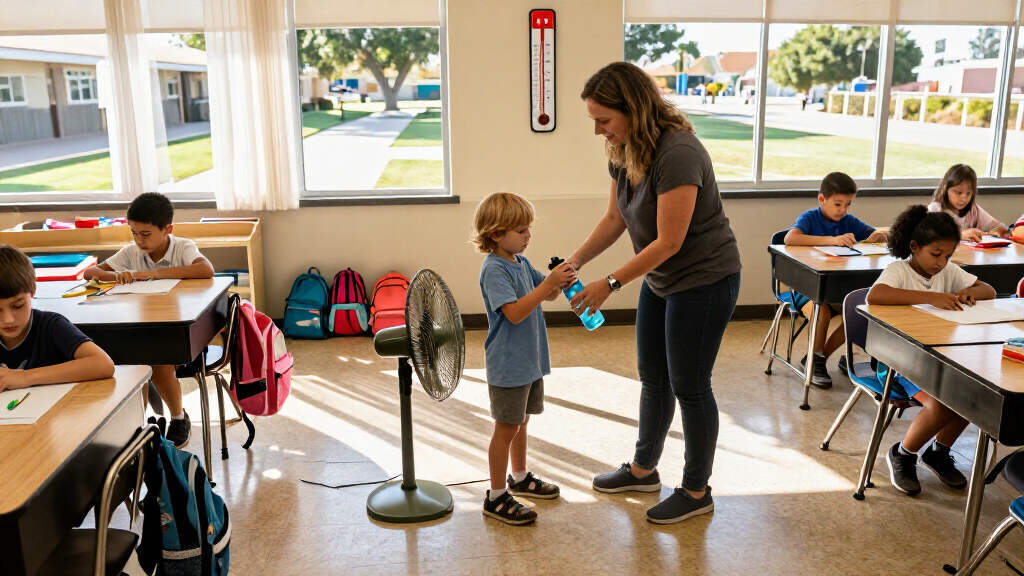
UCLA urban planning and geography professor Kelly Turner said schools can use a combination of measures, including shade, air conditioning, swimming pools, changed recess schedules and water breaks. She also said substantial infrastructure changes can be difficult because many California schools lack funding for basic safety upgrades. The report describes green schoolyards as offering possible benefits beyond cooling, such as more places for play and learning; those benefits are presented as potential outcomes, not quantified statewide results.
Products Worth Considering

Hyperice Venom 2 Heated Vibration Back Wrap

Garmin Forerunner 965 GPS Multisport Smartwatch with AMOLED Display and Charging Bundle

Blueair Blue Pure 211i Max Air Purifier for Large Rooms
As an affiliate, we earn on qualifying purchases.
Where Schoolyard Trees Are Planted
California’s schoolyard efforts vary from campus to campus. Parkway Elementary’s project replaced part of a blacktop area with trees, shrubs and outdoor learning space. Other examples cited by EdSource include Washington Elementary in Berkeley and 122nd Street Elementary in Los Angeles, where students took part in campus greening activities.
Green Schoolyards America CEO and founder Sharon Gamson Danks said schools across the state are aiming for campuses with 30% shade or green space. She argued that trees need to be planted where students spend time and where heat risk and financial constraints are greatest. EdSource also reported that California summer temperatures have risen by roughly 3% since 1896, with more than half of that increase occurring since the 1970s, citing the Scripps Institution of Oceanography.
““We specifically need more trees where the need is the greatest, where the places the schools are in are the hottest environments and have the least capacity to change that themselves financially.””
— Sharon Gamson Danks, CEO and founder of Green Schoolyards America
Campus Conditions Vary by School
The analysis reports heat risk for the areas where schools are located, not campus-by-campus readings of playground or classroom temperatures. It does not establish how many students faced unsafe conditions on the dates cited, or how school operations changed in response to each heat event. The supplied report also does not provide a statewide estimate of the cost or timeline for expanding shade, cooling systems or other protections.
Tree-canopy percentages describe coverage, but the report’s figures do not show how much shade is available at different times of day or whether trees are located beside the play and learning spaces students use. It remains unclear how many of the 215 announced grant-supported projects have been completed and how much they will reduce heat exposure at participating schools.
More Campus Changes, Funding Questions
Schools can use immediate measures such as moving recess, increasing water breaks and adjusting physical activity during hot weather, while longer-term work may involve planting trees, adding shade structures or improving cooling. The report describes these approaches but does not set out a statewide deadline or common implementation plan.
The next indicators to watch are whether grant-backed schoolyard projects are completed, whether new shade is placed in student-use areas, and whether districts can fund maintenance and other heat protections. The source material does not identify a next statewide review date, so the scale and pace of further changes remain uncertain.
Key Questions
How many California students attend schools with very little tree cover?
EdSource found that more than 2.6 million students, or 45% of K-12 students, attend schools where tree canopy covers 5% or less of student-use areas.
How many schools faced high or severe heat risk in the report?
EdSource’s analysis found that about 4,900 public schools were in areas rated high or severe heat risk on Oct. 5. The count refers to state-rated area risk, not direct temperature readings inside each school.
What can schools do during a heat wave?
The report cites shade, air conditioning, swimming pools, adjusted recess times and water breaks as possible measures. Turner said short-term changes can help while infrastructure improvements are difficult to fund.
Are California schools adding trees and green space?
Yes. Examples include a 2024 project at Parkway Elementary that added 58 trees and 44 shrubs, and grant-supported school transformations announced at 215 schools. The report does not say how many of those projects are complete.
Source: rss