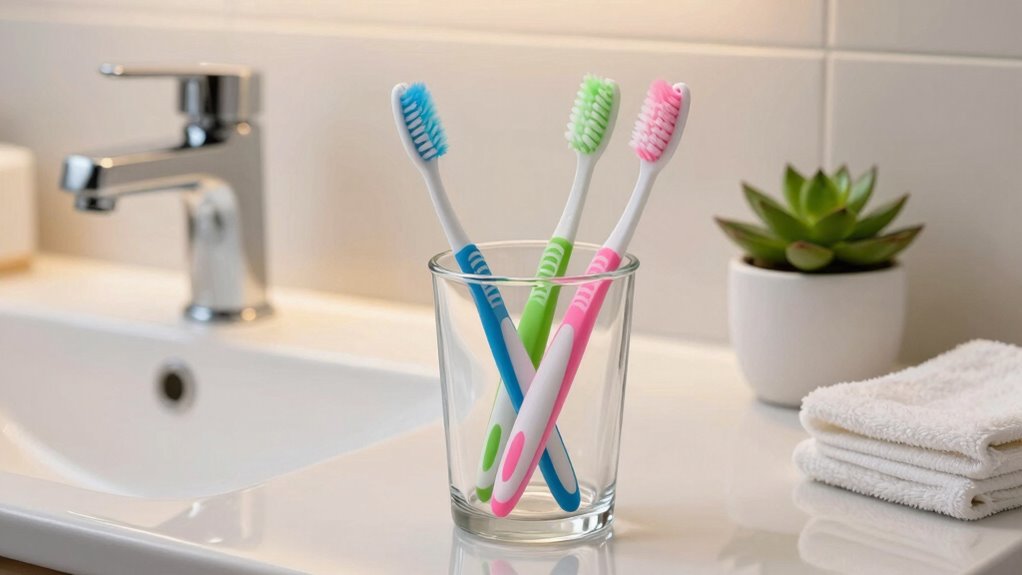

During hot, humid months, you should store your toothbrush in a well-ventilated holder made of plastic or ceramic to promote quick drying. Keep it upright and away from surfaces like countertops or near toilets to prevent contamination. Allow it to air dry completely after each use, and disinfect weekly with hydrogen peroxide or a sanitizer. Properly storing your toothbrush can help prevent mold and bacteria buildup; discover more tips for ideal storage.
Key Takeaways
- Use ventilated, open-slot holders to promote airflow and prevent moisture retention.
- Store toothbrushes upright and separate to avoid cross-contamination and ensure proper drying.
- Keep toothbrushes outside the bathroom in dry, well-ventilated areas to reduce humidity exposure.
- Disinfect toothbrushes weekly with hydrogen peroxide or sanitizer to minimize bacterial growth.
- Avoid closed containers; ensure toothbrushes are completely dry before storing to prevent mold.
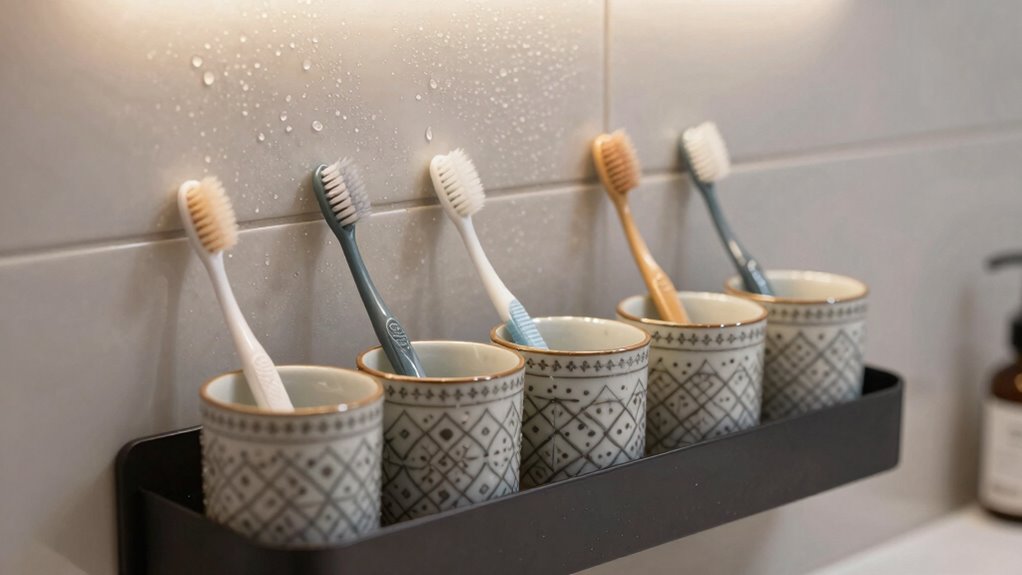
During hot, humid months, knowing how to properly store your toothbrush can prevent bacteria growth and keep your oral hygiene routine effective. Humidity creates the perfect environment for bacteria and mold to flourish, making the way you store your toothbrush more critical than ever. To maintain good toothbrush hygiene, you need to pay attention to storage materials and placement, guaranteeing your toothbrush dries thoroughly and stays clean between uses.
Start by choosing the right storage materials. Avoid keeping your toothbrush in closed containers or airtight covers, as these trap moisture and promote bacterial growth. Instead, opt for a well-ventilated toothbrush holder that allows air to circulate around the bristles. Materials like plastic or ceramic holders with open slots work well, as they facilitate quick drying and prevent mold. Steer clear of storage options made of rubber or foam, which tend to retain moisture and can become breeding grounds for germs. If you prefer a travel case, choose one with ventilation holes to avoid trapping humidity during transport.
Choose ventilated, open-slot holders to ensure quick drying and prevent mold growth on your toothbrush.
Positioning your toothbrush also plays a crucial role in maintaining toothbrush hygiene. Keep your toothbrush upright and separated from other brushes to prevent cross-contamination. Don’t store your toothbrush directly on surfaces like the countertop, where dust and bacteria can settle. Instead, place it on a clean, dry surface or inside a holder that allows it to air dry without touching other objects. If you share a bathroom, make sure each family member uses a separate holder and cleans it regularly to prevent the spread of germs. Proper storage can significantly impact bacterial growth and overall toothbrush hygiene. Additionally, air circulation is essential in preventing moisture buildup that fosters bacteria. Proper ventilation helps reduce moisture buildup and inhibits bacterial proliferation, which is especially important during humid conditions.
Regularly cleaning your toothbrush and its storage area is essential during humid months. Rinse your toothbrush thoroughly after each use and allow it to air dry completely before storing it away. Consider disinfecting your toothbrush weekly with a hydrogen peroxide rinse or a specialized toothbrush sanitizer. Keeping your storage materials clean is equally important—wash your toothbrush holder with soap and water at least once a week to eliminate any accumulated bacteria. Additionally, bacteria growth can be significantly reduced by storing your toothbrush away from sources of moisture and aerosols, such as near the toilet. Using appropriate storage methods can further enhance your toothbrush’s cleanliness and longevity.
Finally, avoid storing your toothbrush in the bathroom near the toilet, as aerosols from flushing can carry bacteria onto your brush. Instead, choose a spot outside the bathroom or a corner of the room that remains dry and well-ventilated. By paying attention to toothbrush hygiene and selecting appropriate storage materials, you can considerably reduce bacteria buildup and ensure your oral health stays in top shape during humid months.
As an affiliate, we earn on qualifying purchases.
Frequently Asked Questions
Can Storing Toothbrushes in the Refrigerator Prevent Bacterial Growth?
Storing your toothbrush in the refrigerator can help prevent bacterial growth by keeping it cool and reducing moisture that bacteria thrive on. However, it’s not a foolproof method, as bacteria can still develop if the toothbrush isn’t kept clean or covered properly. Instead, focus on rinsing thoroughly after use, letting it air dry, and using a clean, dry holder. Refrigerator storage can be a helpful supplement but isn’t a sole solution.
Is It Safe to Share a Toothbrush Holder With Others?
It’s not safe to share a toothbrush holder with others because of tooth brush hygiene and sharing risks. Sharing increases the chance of spreading bacteria, viruses, and other infections. Each person should have their own designated holder to prevent cross-contamination. Regularly cleaning your toothbrush holder also helps reduce germs. Prioritize your oral health by keeping your toothbrush separate and practicing good hygiene habits to avoid unnecessary health risks.
How Often Should I Replace My Toothbrush During Humid Months?
You should replace your toothbrush every 3 to 4 months during humid months, especially if the toothbrush material shows wear or fraying. Hot, humid storage temperatures can accelerate bacteria growth, so it’s essential to change your brush frequently. Even if it looks fine, bacteria can hide in the bristles. Regular replacement helps maintain oral hygiene and prevents infections, keeping your toothbrush effective and safe to use.
Do UV Sanitizers Effectively Sterilize Toothbrushes?
UV sanitizers can effectively sterilize toothbrushes, enhancing your toothbrush hygiene by killing bacteria and viruses. The UV sterilization process targets germs that can linger after brushing, reducing the risk of infections. While they’re useful, remember that regular cleaning and replacing your toothbrush are essential. UV sanitizers are a helpful addition but shouldn’t replace good hygiene practices. Using one can give you extra peace of mind during hot, humid months.
Should I Store Toothbrushes in a Closed or Open Container?
Storing your toothbrush in an open container is better, especially in hot, humid months, where bacteria thrive. Studies show bacteria levels increase 60% when toothbrushes are stored in closed containers due to moisture buildup. Open storage allows air circulation, helping toothbrushes dry faster and reducing bacteria growth. So, choose open storage for better oral hygiene, and make sure to replace your toothbrush regularly.
Conclusion
By storing your toothbrush properly during those hot, humid months, you prevent it from becoming a breeding ground for germs. Think of your toothbrush as a tiny warrior fighting plaque—keeping it dry and well-ventilated guarantees it stays ready for battle. Don’t let moisture turn your brush into a hidden fortress of bacteria. With a simple change, you can keep your smile fresh and healthy, shining brighter than the summer sun.