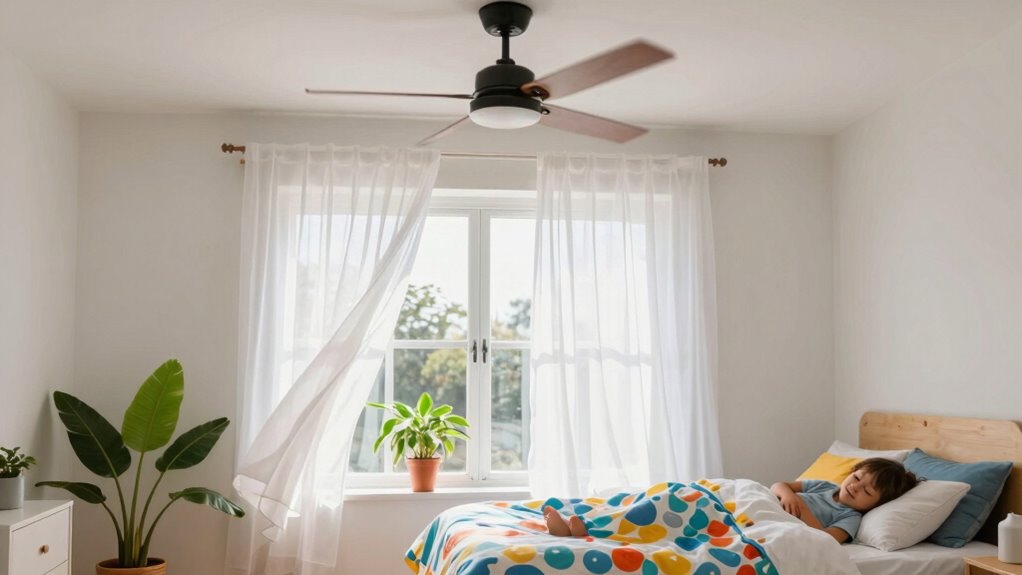

Improving airflow in a warm kids’ room helps create a cooler, more comfortable space that promotes better sleep. When fresh air circulates well, heat and humidity are carried away, making it easier for your child to settle and stay asleep throughout the night. Better airflow also helps regulate temperature and reduce stuffiness, so the room doesn’t feel too hot or stale. If you keep exploring, you’ll discover simple ways to make these improvements and guarantee your child sleeps well.

Turn the school run and nap time into listening time
- Thousands of audiobooks, podcasts and originals
- Listen on your phone, tablet or Echo — also offline
- Cancel anytime
Key Takeaways
- Improved airflow reduces room temperature, creating a cooler environment that promotes more comfortable sleep for children.
- Better circulation removes stale, warm air, preventing stuffiness and restlessness during sleep.
- Enhanced airflow helps regulate humidity, reducing discomfort and the risk of mold or dust mites.
- Consistent air movement supports longer, uninterrupted sleep cycles by preventing overheating.
- Proper ventilation promotes healthier indoor air quality, contributing to better overall sleep and well-being.
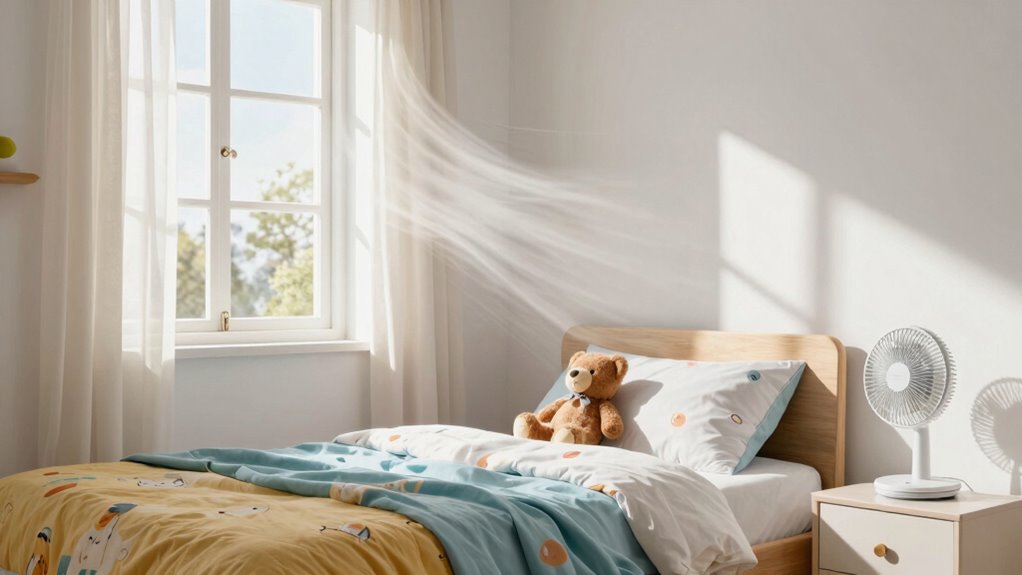
Sleeping comfortably in a warm kids’ room can be a challenge, but improving airflow can make a big difference. When air circulation is poor, heat tends to build up, making the room uncomfortably warm and stuffy. This can lead to restless nights for your child, as they struggle to settle and stay asleep. By enhancing air circulation, you help create a more balanced environment that supports better sleep. Good airflow ensures that hot, stale air doesn’t linger, allowing fresh air to move in and carry away excess heat. This process aids in temperature regulation, which is vital for your child’s comfort. When the room maintains a cooler, more consistent temperature, your child is less likely to wake up sweaty or overheated, getting the restful sleep they need.
Improving airflow helps keep kids’ rooms cool, comfortable, and conducive to restful sleep.
You can improve airflow in several practical ways. Opening windows regularly allows cooler outdoor air to enter, naturally promoting air circulation. Using a fan or oscillating fan can help distribute air evenly throughout the room, preventing hot spots and creating a gentle breeze that keeps the temperature more stable. If you have ceiling fans, ensure they’re set to spin counterclockwise during warmer months to push cool air downward. Ventilation systems, like air purifiers with fresh air intake, can also contribute to better airflow and healthier indoor air quality. These methods work together to regulate the room’s temperature, making it easier for your child to fall asleep and stay asleep through the night. Proper air circulation not only improves comfort but also supports overall indoor air quality. Additionally, maintaining good airflow can help reduce humidity buildup, which can make the room feel warmer and promote mold or dust mites, further impacting sleep quality. Ensuring proper ventilation can also help prevent the accumulation of indoor pollutants that may disturb your child’s rest.
Temperature regulation isn’t just about cooling the room; it’s about maintaining a consistent, comfortable climate. When the air moves efficiently, it prevents heat from accumulating, reducing the likelihood of sudden temperature spikes that can disturb sleep. You’ll notice that your child sleeps more soundly when the environment feels just right—neither too hot nor too cold. Proper air circulation also helps prevent humidity buildup, which can make the room feel warmer and promote mold or dust mites, further impacting sleep quality. By focusing on airflow and temperature regulation, you’re creating a healthier, more inviting space that promotes longer, uninterrupted sleep cycles.
In the end, simple adjustments to improve airflow can transform a warm, stuffy kids’ room into a cool, comfortable sanctuary. Your efforts to boost air circulation aren’t just about comfort—they’re essential for your child’s health and sleep quality. When the room maintains a balanced temperature, your child will wake up feeling refreshed and ready for the day. Better airflow isn’t a luxury; it’s a practical solution that makes a tangible difference in your child’s nightly rest.
As an affiliate, we earn on qualifying purchases.
Frequently Asked Questions
How Does Airflow Affect a Child’s Sleep Cycle?
Improved airflow enhances your child’s sleep cycle by boosting air quality and reducing sleep disruptions. When airflow is good, fresh air circulates, preventing stuffiness and toxins from building up, which can disturb sleep. You’ll notice your kid sleeping more peacefully, waking refreshed. Better airflow creates a comfortable environment, helping your child stay in deeper sleep stages longer, leading to improved overall rest and health.
What Are the Safest Ways to Improve Room Airflow?
You can improve room airflow safely by ensuring good air quality and exploring ventilation options like opening windows, using fans, or installing air purifiers. Don’t worry about noise or drafts—properly placed fans and purifiers boost airflow without disturbance. Regularly ventilate your child’s room to refresh the air, reduce humidity, and prevent allergens. This creates a healthier sleep environment, helping your child rest comfortably through warm nights.
Can Increased Airflow Reduce Nighttime Sweating in Kids?
Yes, increased airflow can reduce nighttime sweating in kids by improving nighttime comfort. When you boost airflow, you help regulate the room’s temperature, preventing it from becoming too warm or humid. This sweat reduction helps kids stay more comfortable and sleep more soundly. Ensuring proper airflow through fans or open windows allows fresh air to circulate, making the environment cooler and helping your child wake up feeling refreshed instead of sweaty.
How Quickly Can Airflow Improvements Impact Sleep Quality?
Improvements in airflow can enhance sleep quality within hours, especially if air quality and ventilation methods are optimized. When you increase ventilation, fresh air replaces warm, stale air quickly, reducing overheating and sweating. You’ll notice your child sleeping more comfortably in just a night or two. Consistent airflow improvements create a cooler, more breathable environment, helping your child fall asleep faster and enjoy deeper, more restful sleep throughout the night.
Are There Specific Airflow Devices Recommended for Children’s Rooms?
Think of your child’s room as a cozy garden—airflow is the gentle breeze that keeps it fresh. An air purifier cleans the air, removing allergens, while a ceiling fan circulates it, preventing stuffiness. For kids’ rooms, look for quiet, energy-efficient models designed for safety. Both devices work together to create a cool, fresh environment that promotes restful sleep and supports your child’s health.
Conclusion
As you improve airflow in warm kids’ rooms, you might notice their sleep becomes more restful, almost as if the breeze itself whispers comfort. Sometimes, a gentle breeze coincidentally coincides with their deepest, most peaceful sleep, reminding you that small changes can have surprising, soothing effects. It’s funny how something as simple as fresh air can transform bedtime into a cozy, cool escape—proving that sometimes, nature’s little touches make all the difference.
Fall Picks
fall essentials
As an affiliate, we earn on qualifying purchases.