
To safeguard your braces during baseball, softball, and lacrosse, start by scheduling a brace adjustment for a secure fit. Wear a sport-specific, preferably custom-fitted mouthguard that covers all braces and stays in place. Practice wearing it during drills to guarantee comfort and effective shielding. Regularly check for loose brackets or wires and maintain good oral hygiene. Follow these steps, and you’ll be better prepared—there’s more you can do to keep your smile safe this season.

Turn the school run and nap time into listening time
- Thousands of audiobooks, podcasts and originals
- Listen on your phone, tablet or Echo — also offline
- Cancel anytime
Key Takeaways
- Schedule regular brace adjustments before the season to ensure a secure fit and reduce breakage risk during play.
- Wear a sport-specific, properly fitted mouthguard that covers all braces and teeth for maximum protection.
- Practice inserting and wearing the mouthguard during drills for comfort and confidence during actual games.
- Use additional protective gear like helmets and face guards to minimize impact on braces and mouth area.
- Maintain excellent oral hygiene, regularly check for loose brackets or wires, and avoid hard objects while playing.
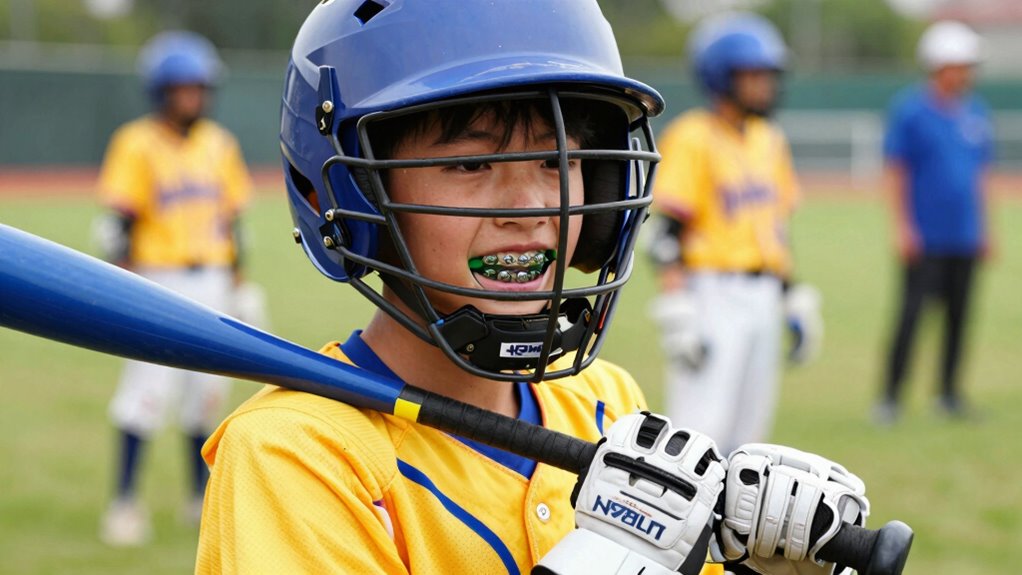
If you have braces and are gearing up for baseball, softball, or lacrosse season, protecting your dental hardware is vital. These sports involve high-impact plays and fast-moving objects, which can easily cause damage to your braces or even lead to oral injuries. Before stepping onto the field, schedule a brace adjustment if needed. An orthodontist can fine-tune your braces to guarantee they’re secure and comfortable, reducing the risk of breakage during play. An ill-fitting brace can be more prone to damage or cause discomfort when you’re active, so making sure they’re properly adjusted is a smart first step.
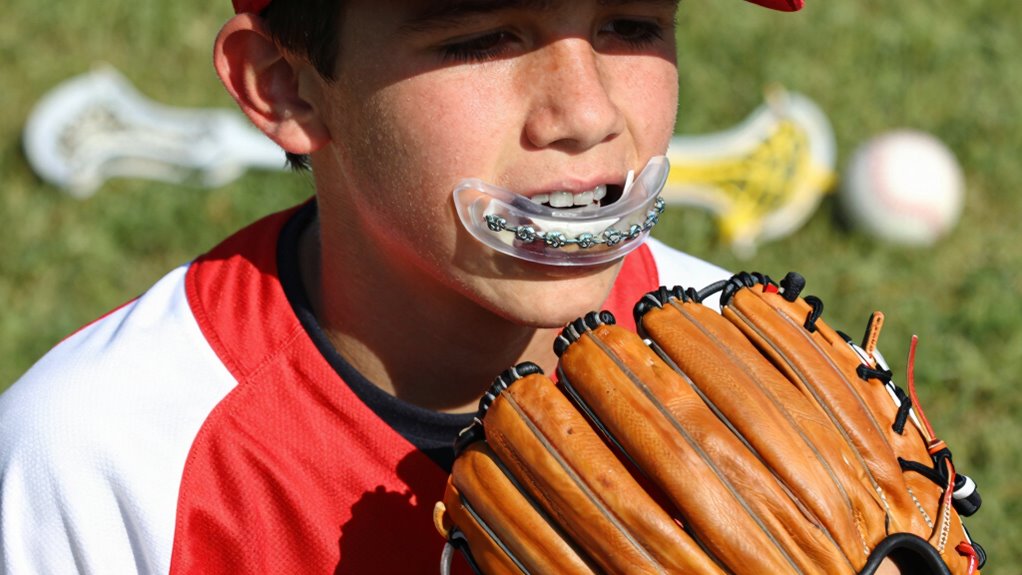
One of the most effective ways to protect your braces while playing is by wearing a sport-specific mouthguard. Standard mouthguards provide some protection, but sports mouthguards designed for athletes with braces are specially molded to fit over brackets and wires, offering a snug fit that minimizes movement. These mouthguards absorb shock better and prevent the brackets from breaking or loosening when hit by a ball or collided with another player. Be sure to select a mouthguard that’s approved for sports use and custom-fitted if possible, as it will offer the best protection and comfort.
Sport-specific mouthguards provide a secure, shock-absorbing fit to protect braces during active play.
When you’re preparing to play, take the time to properly insert your sports mouthguard, ensuring it covers all the necessary areas of your teeth and braces. A loose or ill-fitting mouthguard won’t provide maximum protection and might come out during a game, putting your braces at risk. It’s also wise to practice wearing your mouthguard during drills or practice sessions to get used to speaking and breathing comfortably while wearing it. Remember, a well-fitted mouthguard can be the difference between avoiding a broken bracket or dealing with a painful injury. Additionally, being aware of the impact of high-speed sports on dental hardware can help you stay vigilant and proactive about protection. Using the right protective gear can significantly reduce the chances of dental injuries during contact sports.
Maintaining a proper oral hygiene routine during sports is crucial, as it helps prevent infections or complications from minor injuries or mouth abrasions. Beyond mouthguards, avoid biting down on hard objects, such as ice or hard candy, while wearing braces. These can cause brackets to pop off or wires to bend. Keep your lips and cheeks protected by wearing a mouthguard even during practice, as accidental hits are common. Regularly checking your braces for any loose brackets or wires and reporting issues to your orthodontist promptly can prevent further damage. It’s also beneficial to understand proper dental care during sports to maintain your oral health and avoid complications from minor injuries. Regular cleaning of your mouthguard and maintaining good oral hygiene will also help prevent unnecessary damage or discomfort during the season. With these precautions, you can stay safe, protect your braces, and enjoy your sport without worry.
As an affiliate, we earn on qualifying purchases.
Frequently Asked Questions
Can I Still Play Sports With Loose or Damaged Braces?
You shouldn’t play sports with loose or damaged braces because it risks injury and worsens your orthodontic care. Sports safety is essential; damaged braces can cause cuts, irritation, or even break your appliance further. Always consult your orthodontist before continuing sports activities. They might recommend a temporary fix or specific protective gear, ensuring you stay safe without compromising your orthodontic treatment. Prioritize your health and get professional advice promptly.
Are There Specific Mouthguards Recommended for Braces During Sports?
You should opt for a specially designed mouthguard for braces, as they are compatible with braces and offer the best protection. Research shows that boil-and-bite mouthguards are popular for their custom fit, but orthodontic-specific mouthguards provide ideal braces compatibility and comfort. These types absorb shocks better and prevent damage to both your teeth and brackets, ensuring you stay safe during sports like baseball, softball, and lacrosse.
How Often Should I Visit My Orthodontist During Sports Season?
You should visit your orthodontist for checkups every 6 to 8 weeks during sports season to guarantee your braces stay in good condition. These orthodontic checkups help monitor braces maintenance, address any issues promptly, and adjust your appliances if needed. Staying consistent with appointments minimizes the risk of damage or delays in your treatment, especially when you’re active in sports. Make sure to communicate any concerns or discomfort during these visits.
What Should I Do if My Braces Get Hit or Damaged During a Game?
Did you know that over 20% of sports injuries involve facial trauma? If your braces get hit or damaged during a game, stop playing immediately. Check your braces for any loose or broken parts, and perform a quick brace inspection. If you notice damage, contact your orthodontist or emergency contacts right away. Keep their numbers handy, and avoid eating hard or sticky foods until you get professional advice.
Are There Any Sports I Should Avoid With Braces Installed?
You should generally avoid sports with a high risk of contact or ball impact if you have braces, especially if you have braces allergies or sensitivities. Contact sports like football or hockey pose a higher risk, so consider switching to non-contact activities. Always wear appropriate sports equipment, like mouthguards, to protect both your braces and mouth. Consult your orthodontist for personalized advice based on your braces and any allergies.
Conclusion
Now that you know how to shield your braces during these intense sports, you’re almost ready to hit the field with confidence. But remember, even the best precautions can’t guarantee total protection. Are you prepared for that unexpected hit or sudden accident? Stay vigilant, follow these tips, and keep your smile safe. Because in the game of braces, a little extra caution could make all the difference—are you ready to face the season head-on?
Cold & flu season Picks
humidifiers
As an affiliate, we earn on qualifying purchases.