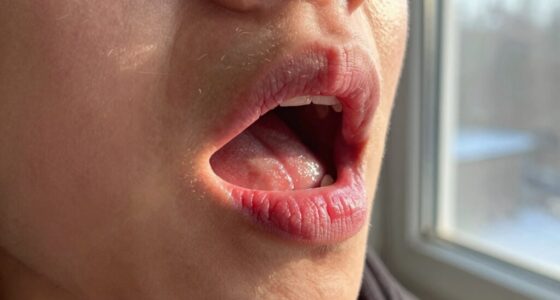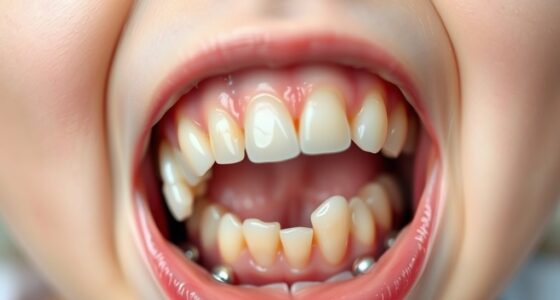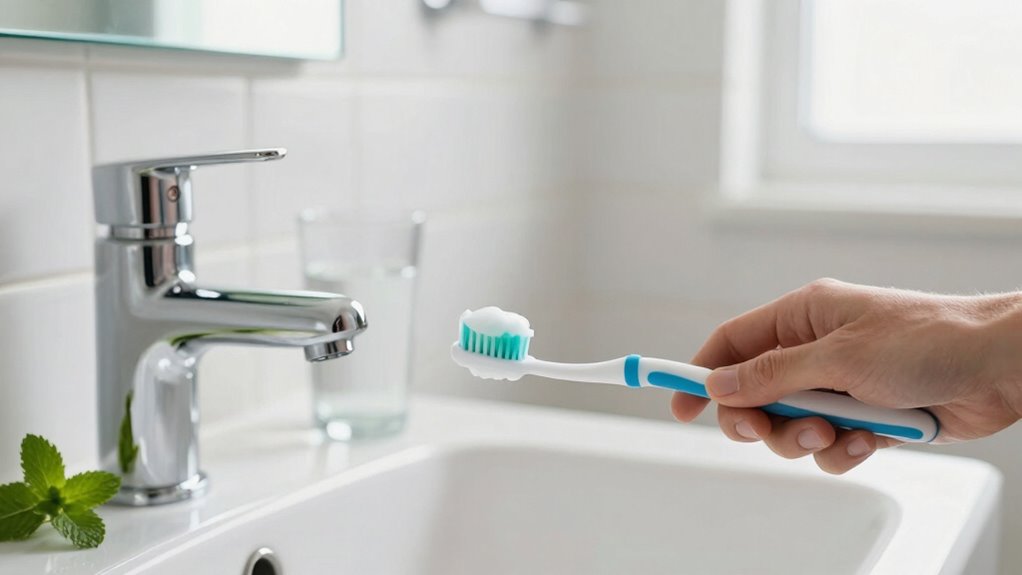

To prevent morning breath from lasting all day, focus on good oral hygiene by brushing thoroughly, including your tongue, and using an antibacterial mouthwash. Stay hydrated by drinking water throughout the day and chew sugar-free gum to boost saliva production. Eat crunchy, water-rich fruits and veggies to naturally clean your mouth. Consistently floss and schedule dental check-ups. Keep exploring ways to maintain fresh breath longer and enjoy all-day confidence.

Turn the school run and nap time into listening time
- Thousands of audiobooks, podcasts and originals
- Listen on your phone, tablet or Echo — also offline
- Cancel anytime
Key Takeaways
- Brush teeth thoroughly, including tongue, and use mouthwash to remove bacteria and freshen breath immediately after waking.
- Stay well-hydrated throughout the day to promote saliva production, which naturally cleans the mouth.
- Incorporate crunchy, water-rich fruits and vegetables to clean teeth and stimulate saliva flow.
- Practice consistent oral hygiene, including flossing and regular dental check-ups to reduce bacterial buildup.
- Chew sugar-free gum or use saliva substitutes to maintain moisture and freshen breath during the day.

Morning breath can be more than just an unpleasant inconvenience; if left unchecked, it can linger throughout the day. The good news is, you can take simple steps to prevent it from becoming a persistent problem. Starting with breath freshening techniques is a smart move. Brushing your teeth thoroughly as soon as you wake up helps remove the bacteria and food particles that have accumulated overnight. Don’t forget to brush your tongue too, since it’s a haven for bacteria that cause bad odors. Using a mouthwash with antibacterial properties can give you an extra boost in freshening your breath. Chewing sugar-free gum or mints after brushing can also help temporarily mask morning odors, but keep in mind that these are just quick fixes. To truly tackle the root of the issue, focus on oral hydration, which is often overlooked but essential. When you wake up, your mouth tends to be dry due to reduced saliva production during sleep. Saliva plays a key role in cleaning your mouth naturally, neutralizing acids, and reducing bacteria. Drinking a glass of water first thing in the morning stimulates saliva flow, helping to wash away bacteria and leftover food particles. Maintaining good oral hydration throughout the day is equally important. Regular sips of water not only keep your mouth moist but also prevent the bacteria that cause bad breath from flourishing. If you’re prone to dry mouth, consider using saliva substitutes or chewing sugarless gum to stimulate saliva production. Avoiding caffeine and alcohol, which can dry out your mouth, is also beneficial. In addition, paying attention to your diet can make a significant difference. Incorporate crunchy, water-rich fruits and vegetables like apples, celery, or cucumber into your meals—they naturally clean your teeth and promote saliva production. Limiting sugary foods and drinks minimizes the growth of bacteria that produce foul odors. Finally, don’t underestimate the power of consistent oral hygiene practices. Regular dental check-ups help identify and treat underlying issues like cavities or gum disease that contribute to bad breath. Understanding oral bacteria and their impact on breath can motivate better hygiene habits. It’s about creating a routine that addresses both the immediate odor and the underlying causes. Practicing proper Oral hygiene habits, such as flossing and tongue cleaning, can significantly reduce bacteria buildup. Consistent routines that include Regular dental check-ups can help detect and treat issues early before they worsen. Additionally, being aware of the role of saliva in oral health can encourage more mindful hydration practices. Incorporating saliva production strategies, such as chewing gum, can also be beneficial. With a little effort, you can prevent morning breath from turning into a persistent problem, making your entire day more comfortable and fresh.
antibacterial mouthwash for fresh breath
As an affiliate, we earn on qualifying purchases.
As an affiliate, we earn on qualifying purchases.
Frequently Asked Questions
Can Certain Foods Worsen Morning Breath?
Certain foods can definitely worsen your morning breath. Sugary foods, for example, can fuel bacteria in your mouth, leading to bad odor. Acid reflux triggers, like spicy or fatty foods, can also contribute by causing stomach acid to come up, which affects your breath. If you’re battling sugar cravings or acid reflux, cutting back on these foods, especially before bed, can help improve your morning freshness and keep bad breath at bay.
Does Mouthwash Help Eliminate Morning Breath?
Mouthwash can be effective for breath freshening, but it doesn’t eliminate morning breath entirely. It temporarily masks odors and kills some bacteria, but poor dental hygiene and dry mouth are bigger culprits. To truly combat morning breath, brush and floss thoroughly, stay hydrated, and consider using a mouthwash designed for freshening breath. Incorporating these habits helps guarantee your morning breath doesn’t stick around all day.
Is Morning Breath Worse if You Sleep With Your Mouth Open?
Yes, sleeping with your mouth open worsens morning breath because it allows more air to dry out your mouth, creating a perfect environment for oral bacteria to thrive. Your sleep position matters—lying on your back with your mouth open increases this risk. To reduce bad breath, try to breathe through your nose, stay hydrated, and maintain good oral hygiene, which helps control oral bacteria and keeps breath fresher all day.
How Does Hydration Affect Morning Breath?
Think of your mouth as a bustling river, where hydration benefits flow in to keep it clear. When you’re well-hydrated, saliva production increases, washing away the bacteria that cause bad breath. This helps prevent morning breath from lingering all day. Drinking enough water guarantees your mouth stays moist and bacteria at bay, turning a dry, stale morning into a fresh start that lasts. Stay hydrated, and breathe confidently all day long.
Can Tongue Scraping Improve Morning Breath?
Yes, tongue scraping can improve morning breath by removing bacteria and debris that cause bad odors. Regular tongue cleaning is a key part of good oral hygiene because it reduces the buildup of bacteria on your tongue’s surface. Incorporate tongue scraping into your morning routine to help freshen your breath and prevent lingering odors throughout the day. Consistent oral hygiene habits make a noticeable difference in managing morning breath effectively.
Conclusion
To keep morning breath from lingering all day, stick to a consistent oral hygiene routine and stay hydrated. Remember, bad breath affects nearly 50% of adults at some point, so taking proactive steps makes a real difference. By brushing, flossing, and rinsing with mouthwash, you can guarantee fresh breath that lasts. Don’t forget, regular dental check-ups also play an essential role in maintaining oral health and confidence throughout the day.
Cold & flu season Picks
humidifiers
As an affiliate, we earn on qualifying purchases.